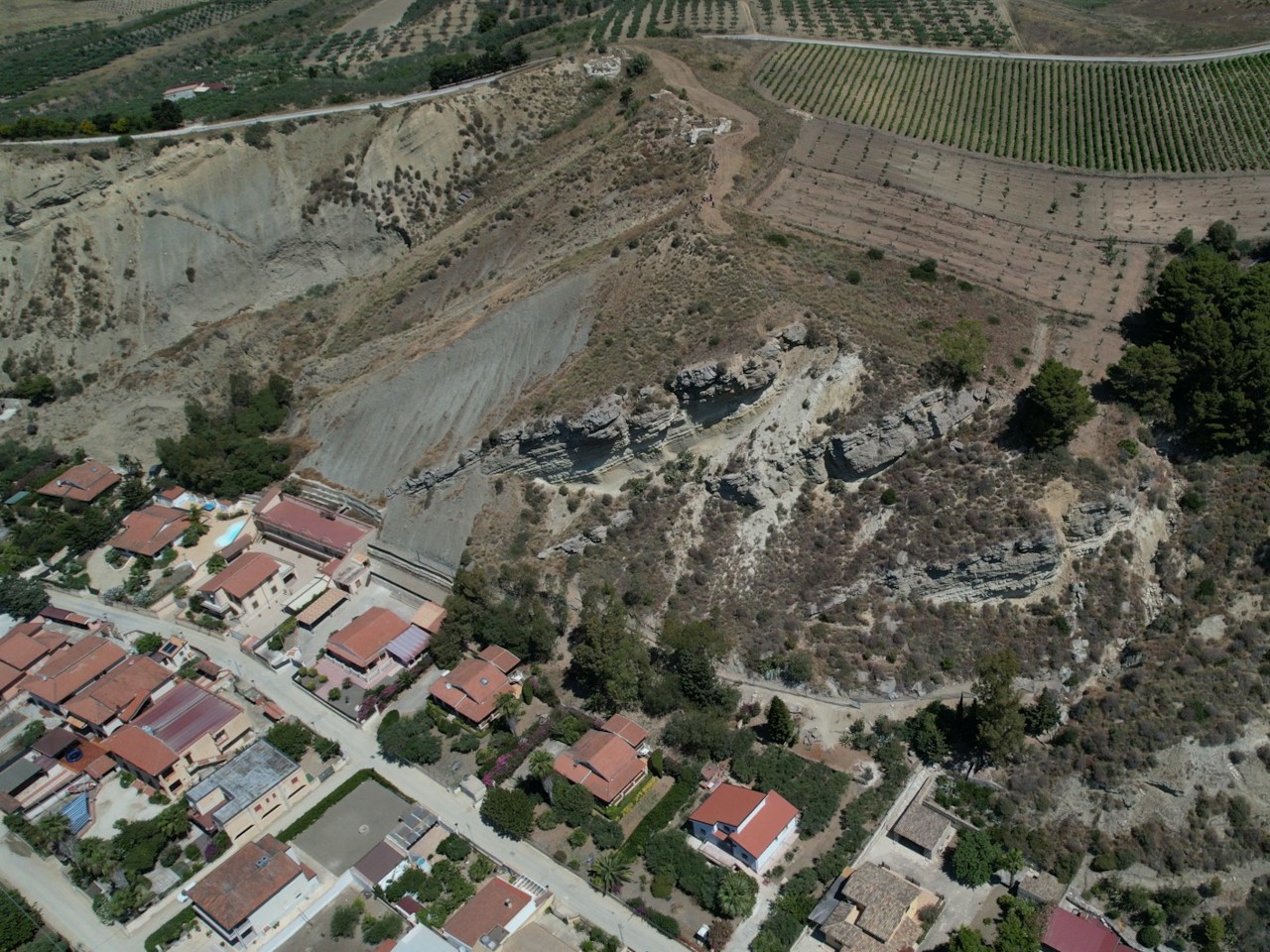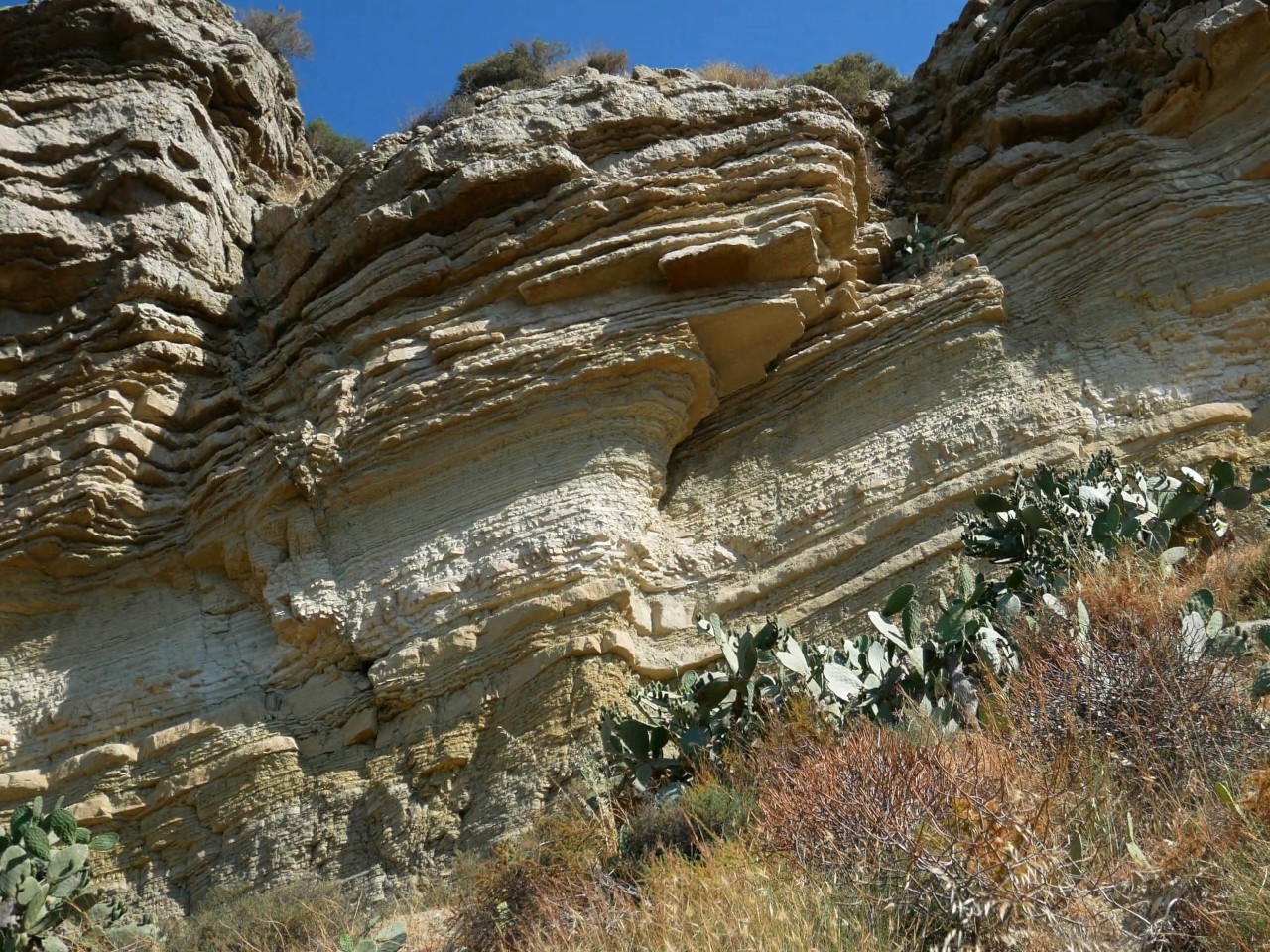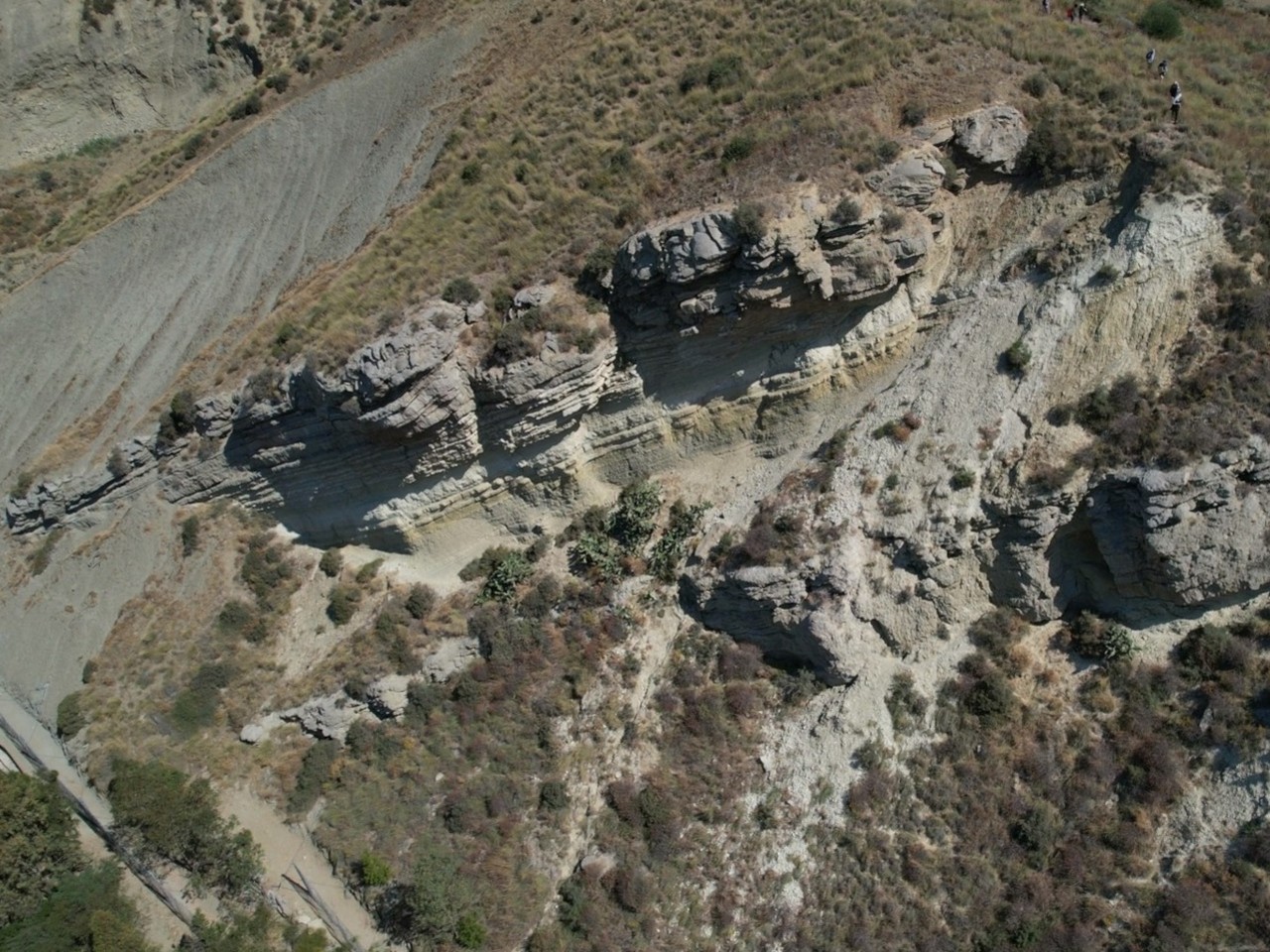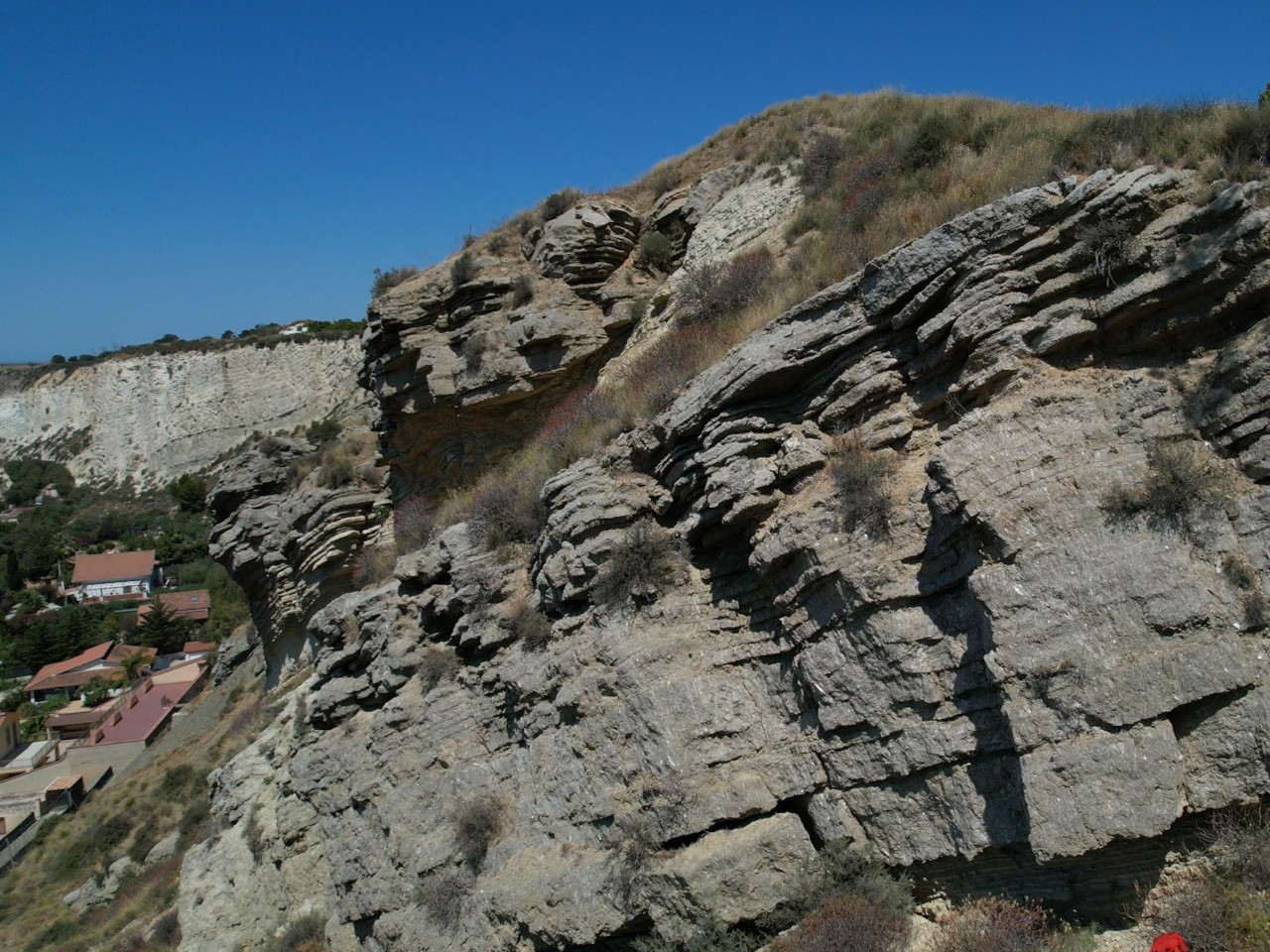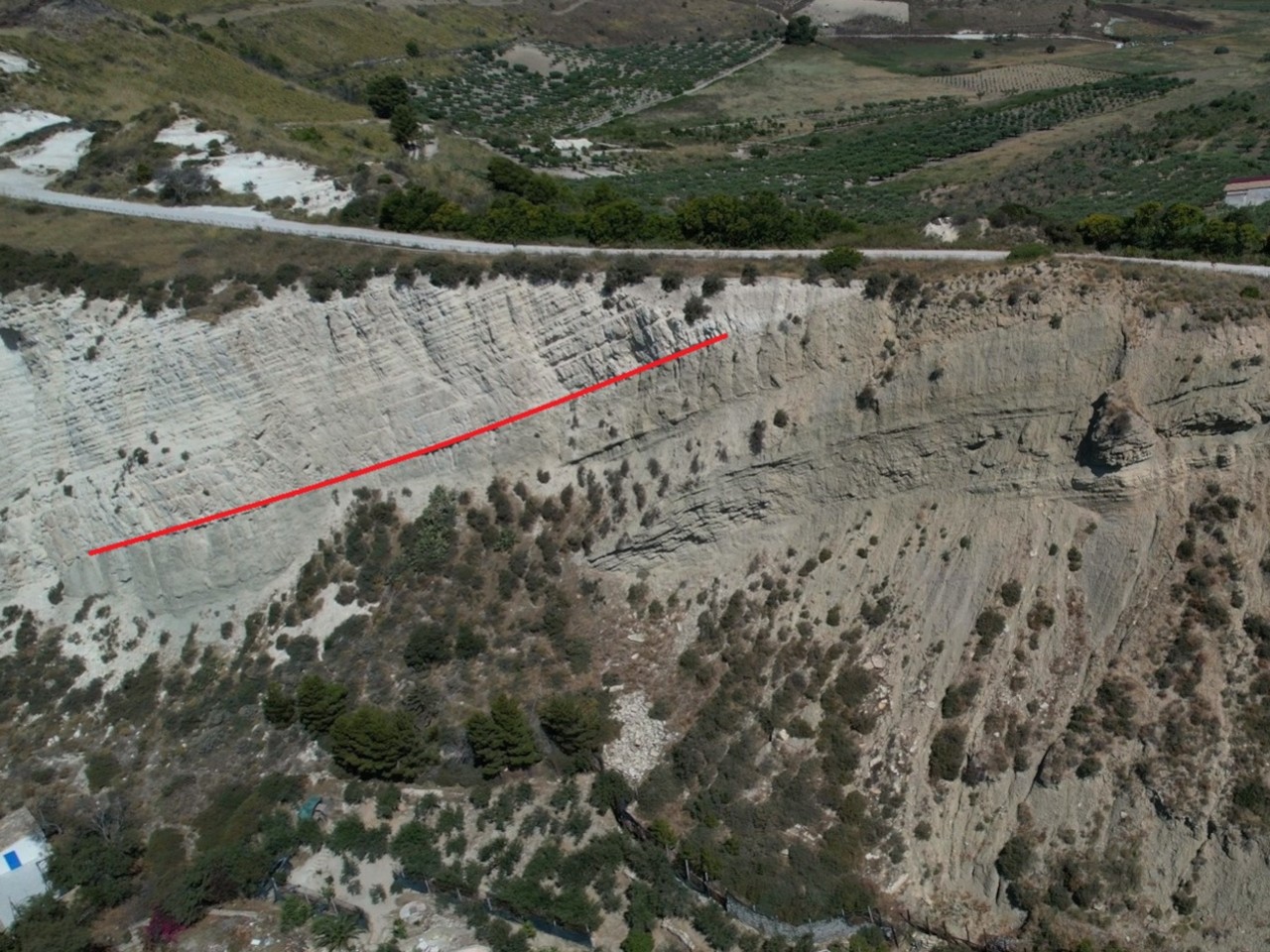
Eraclea Minoa section is an assembling of outcrops surrounding the village of the same name at the southwestern coast of Sicily. The outcrops consist of gypsum and selenite with the age of 5.9-5.33 Ma. Such evaporites deposited because the water of the salt Mediterranean evaporated and left behind the salt and minerals that were dissolved in the water. Depending on the variating water level and supply of fresh water which washed out material from land to the sea, the outcrops show a cyclicity of different layers of material. The Upper unit of the Eraclea Minoa section (the section shown here) is around 195m thick! (Manzi et al., 2009). Such a thick package only formed because what is called a salinity crisis happened during this period of deposition. Due to collision of the African and Eurasian continental plates, the gateway (the Gibraltar strait) feeding the Mediterranean Sea with water from the Atlantic became sparse, which is why the evaporation dominated over the influx of new water. This led to the Mediterranean Sea drying up partly depositing these evaporites seen at Eraclea Minoa during what is called the Messinian Salinity Crisis.
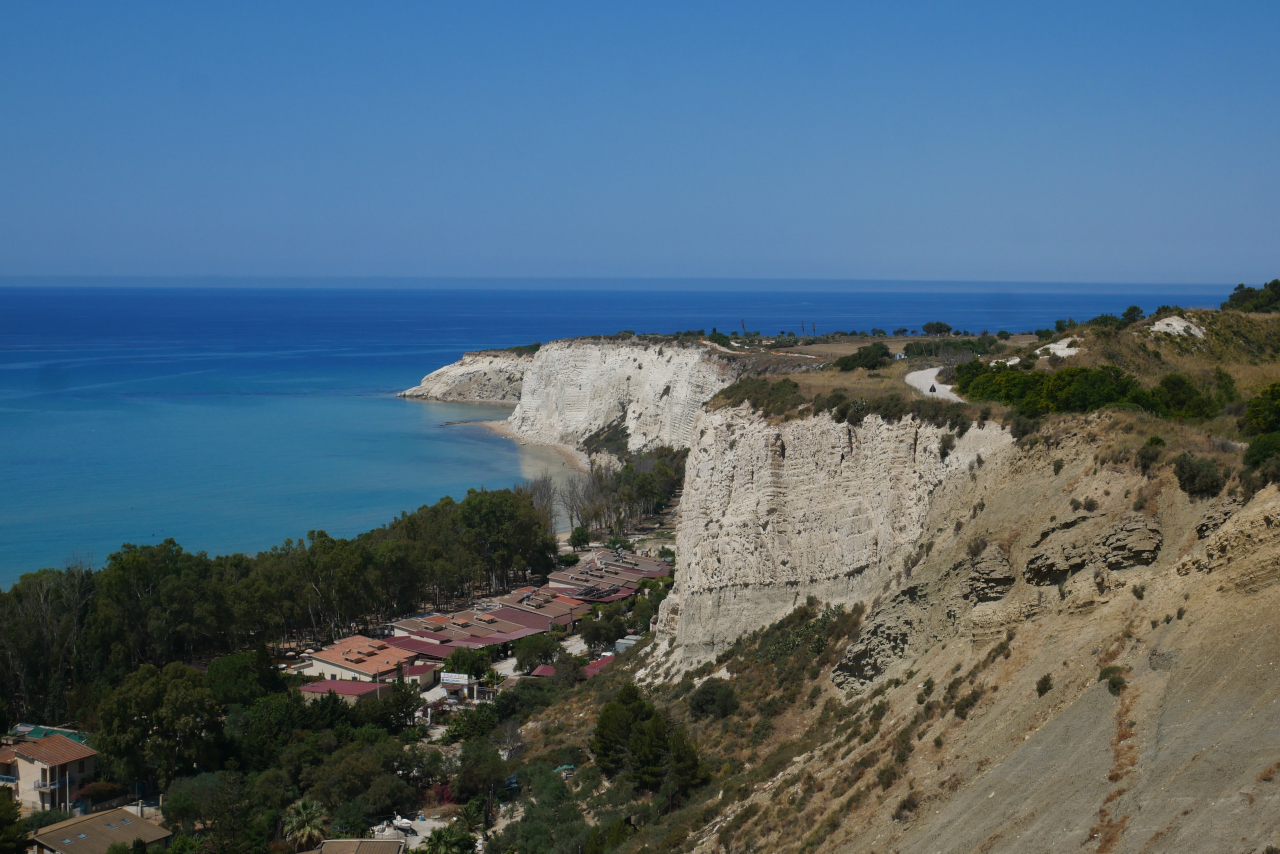
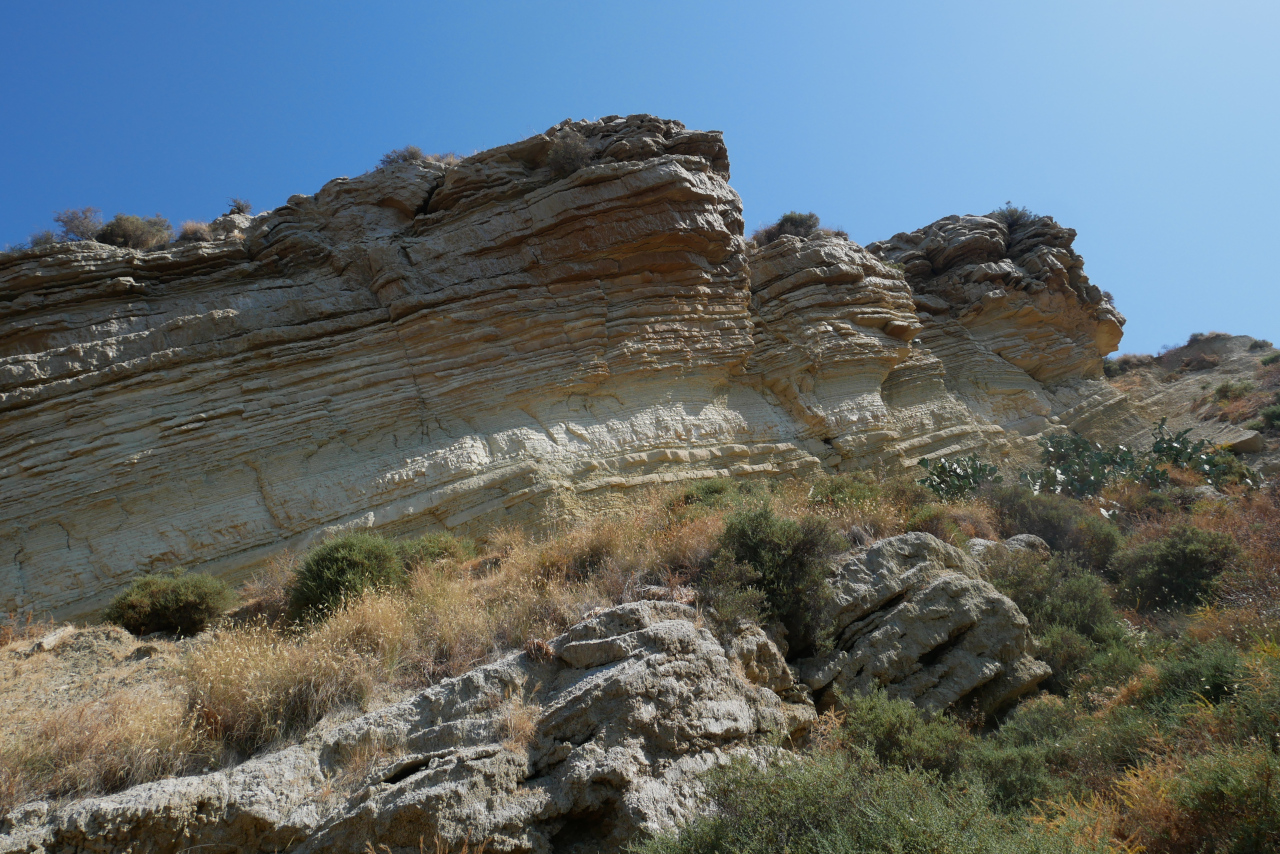
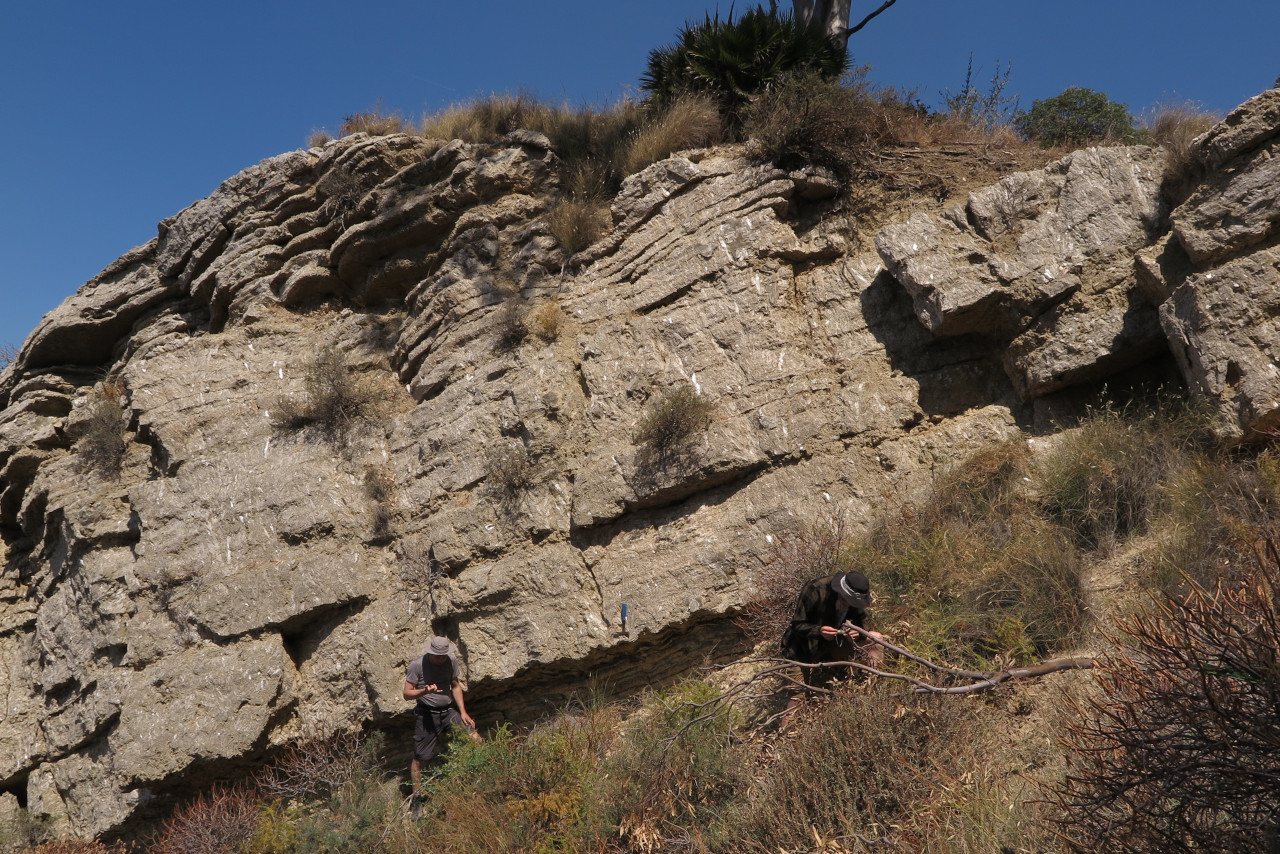
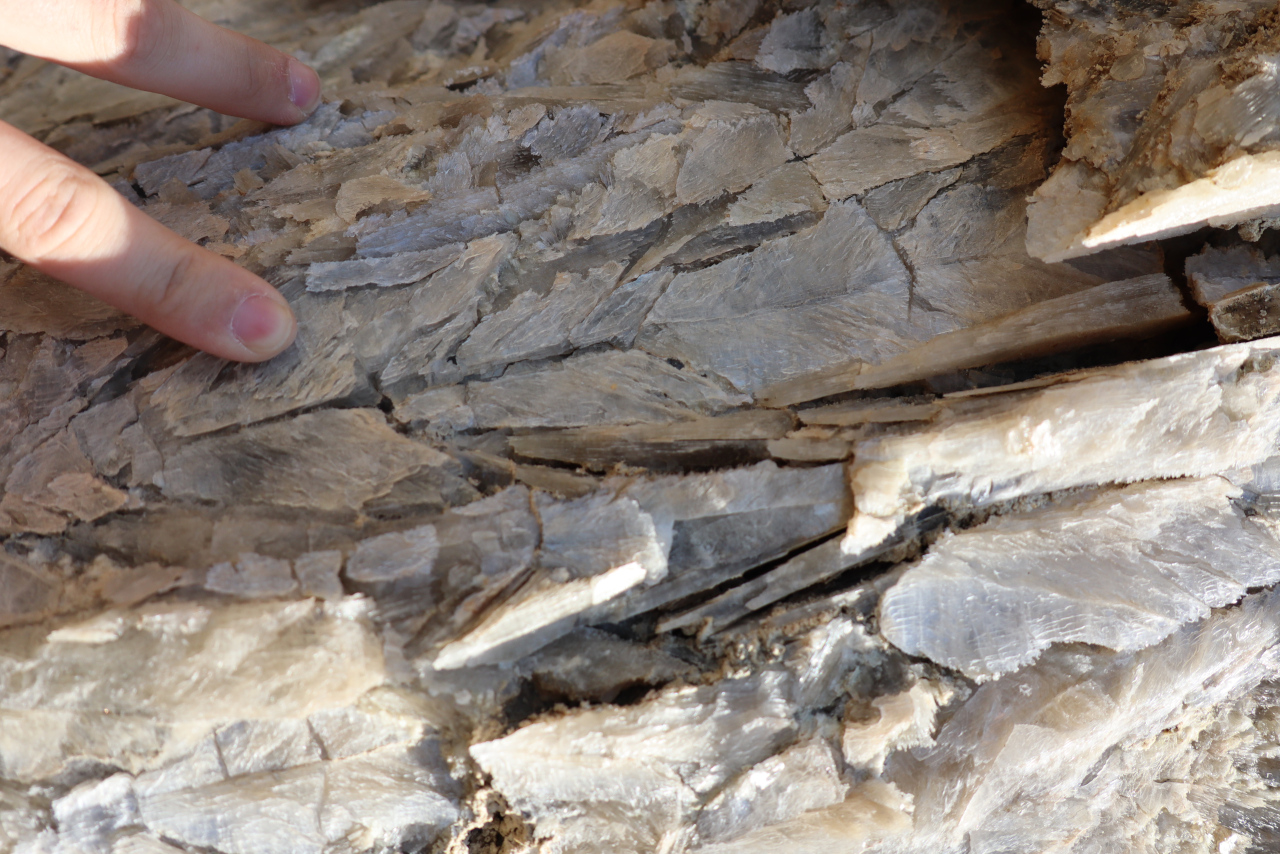
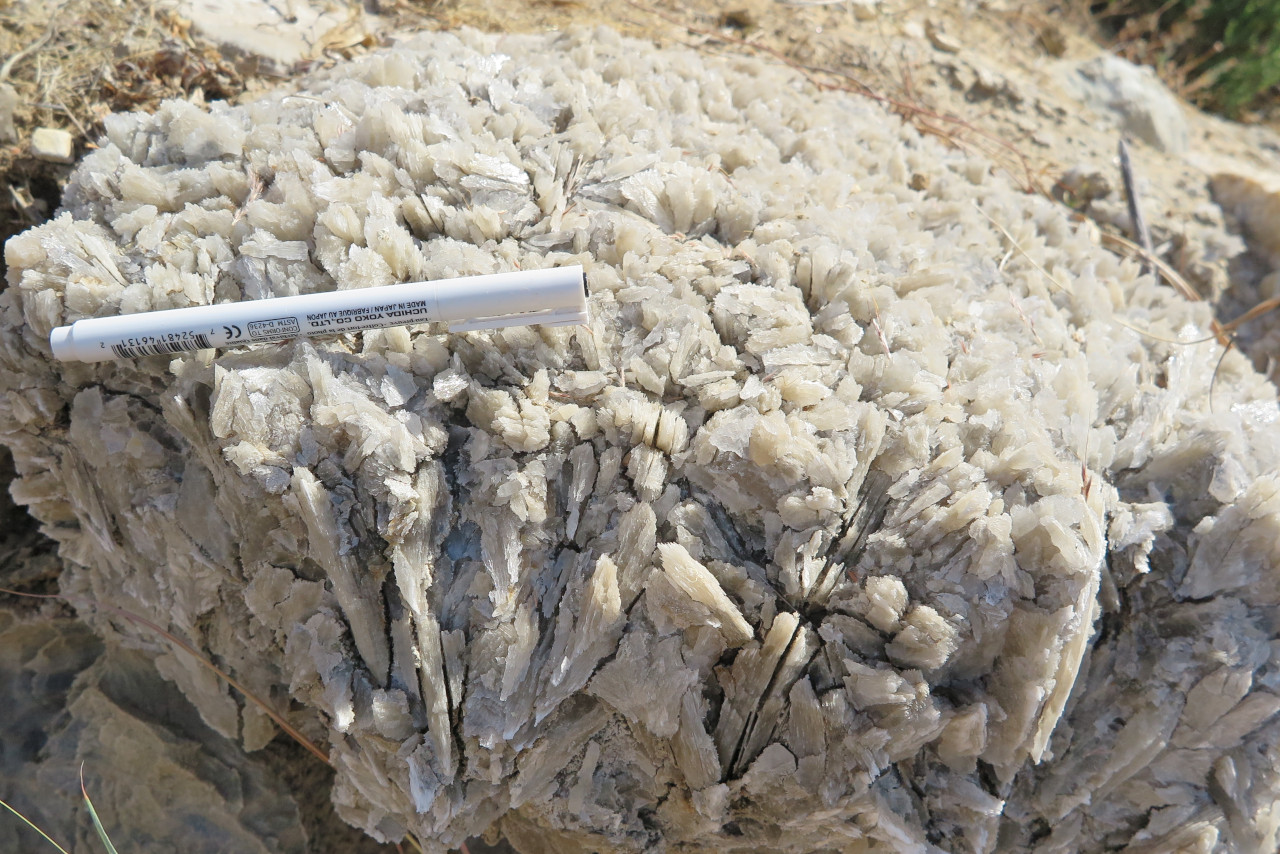
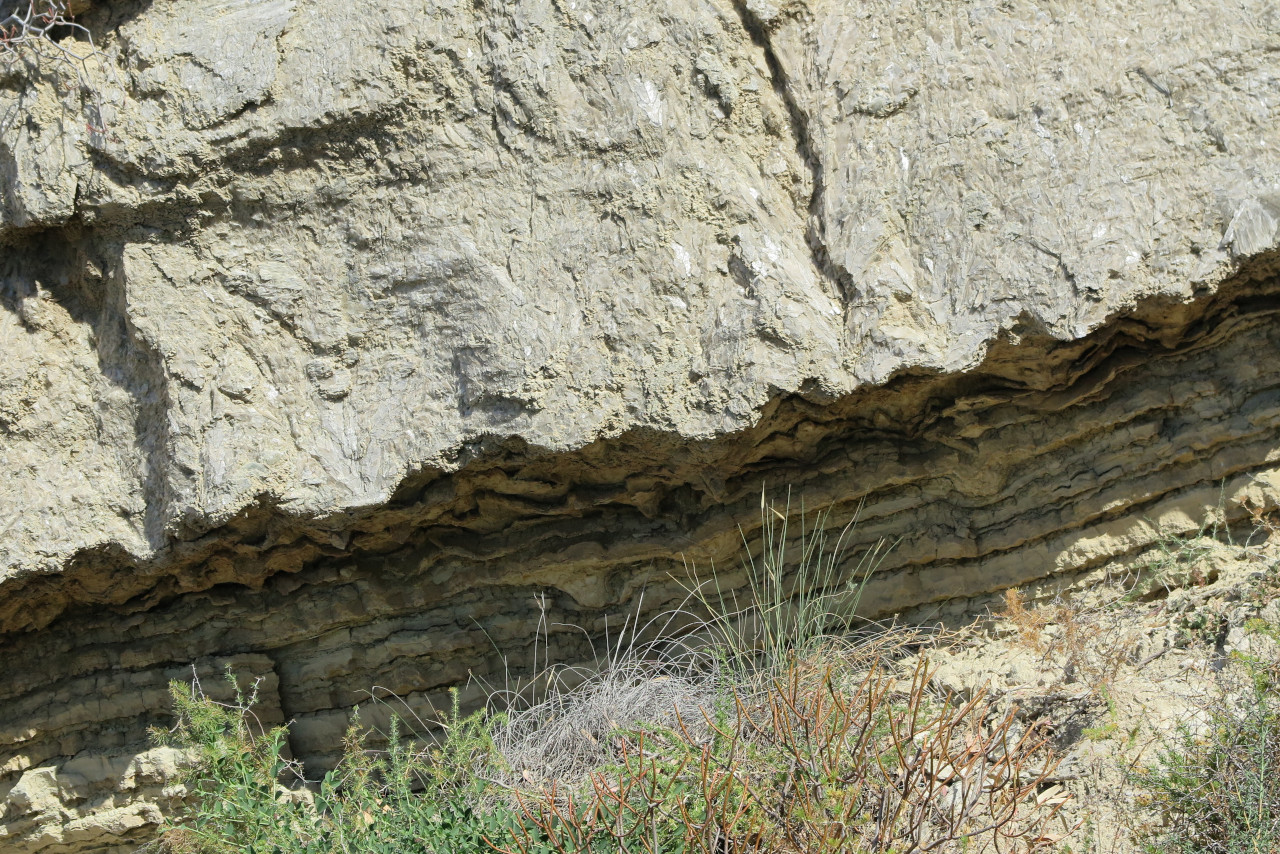
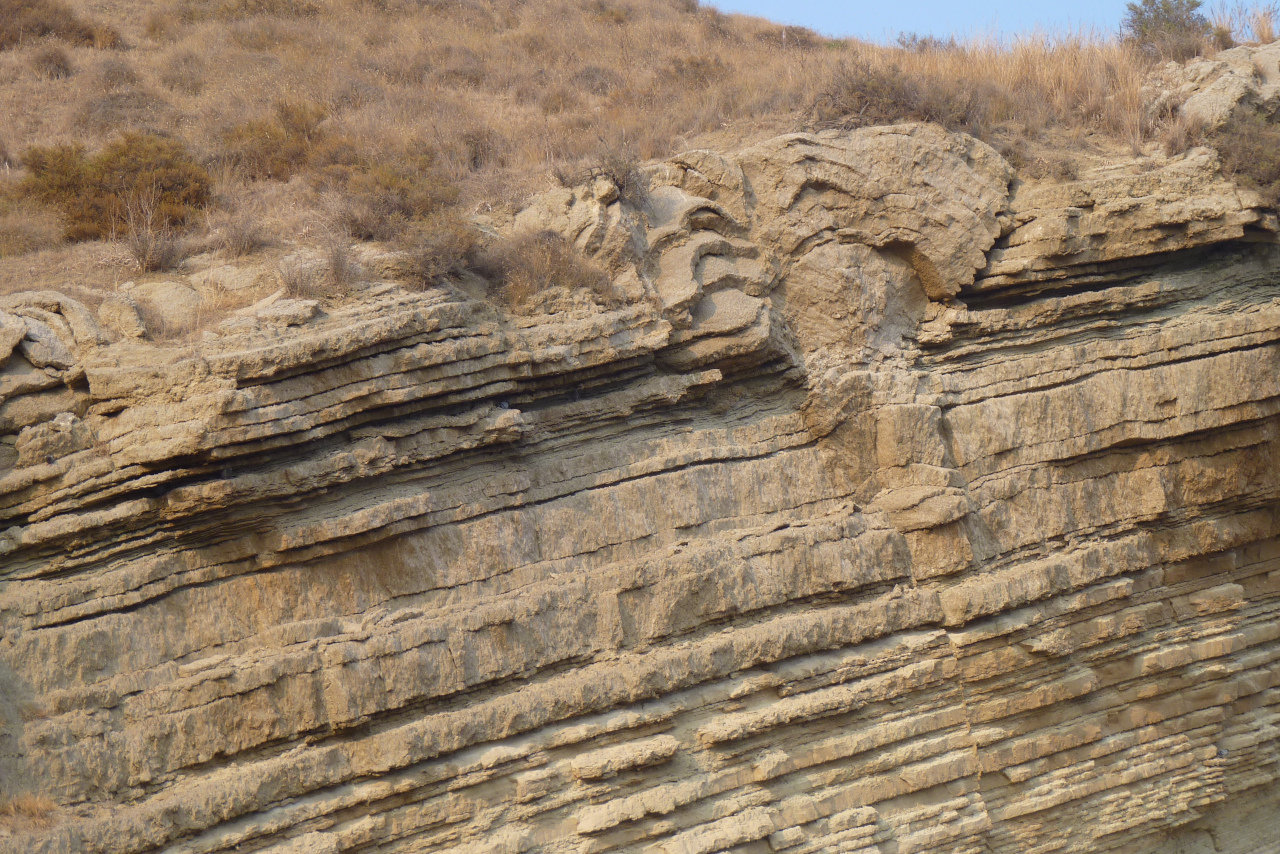
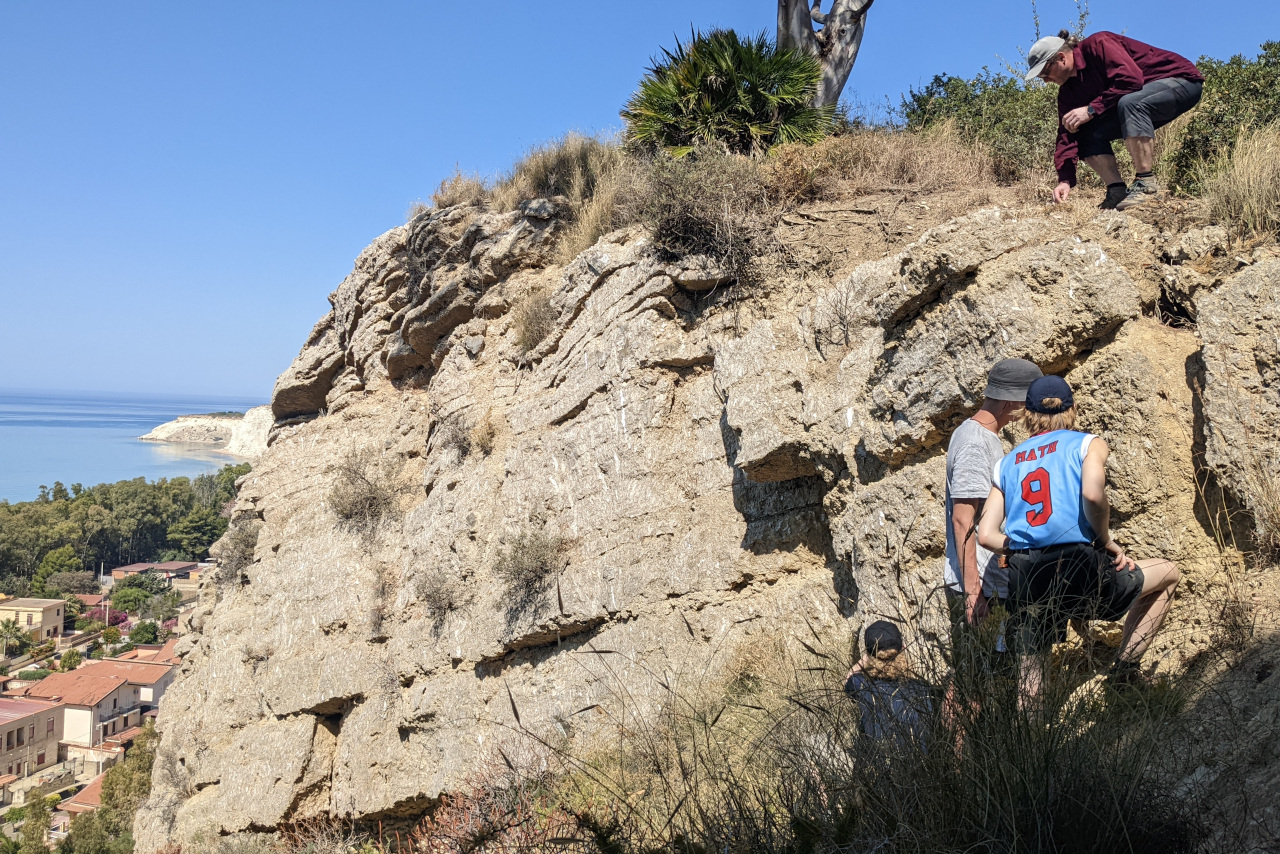
The outcrop of the Eraclea Minoa section is located at the shoreline in the southwestern part of Sicily and is famous for its thick package of evaporitic sediments dominated by gypsum and marls deposited during the Messinian age.
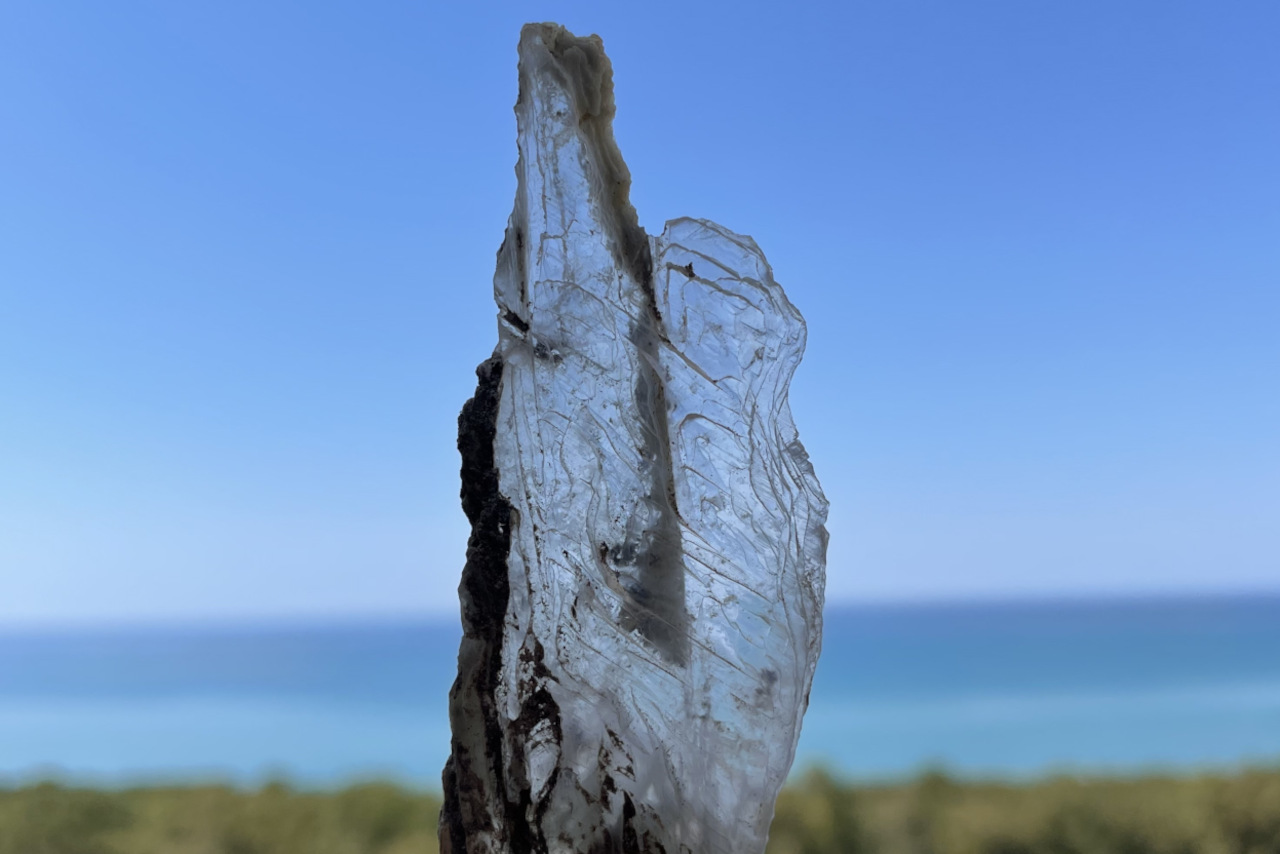
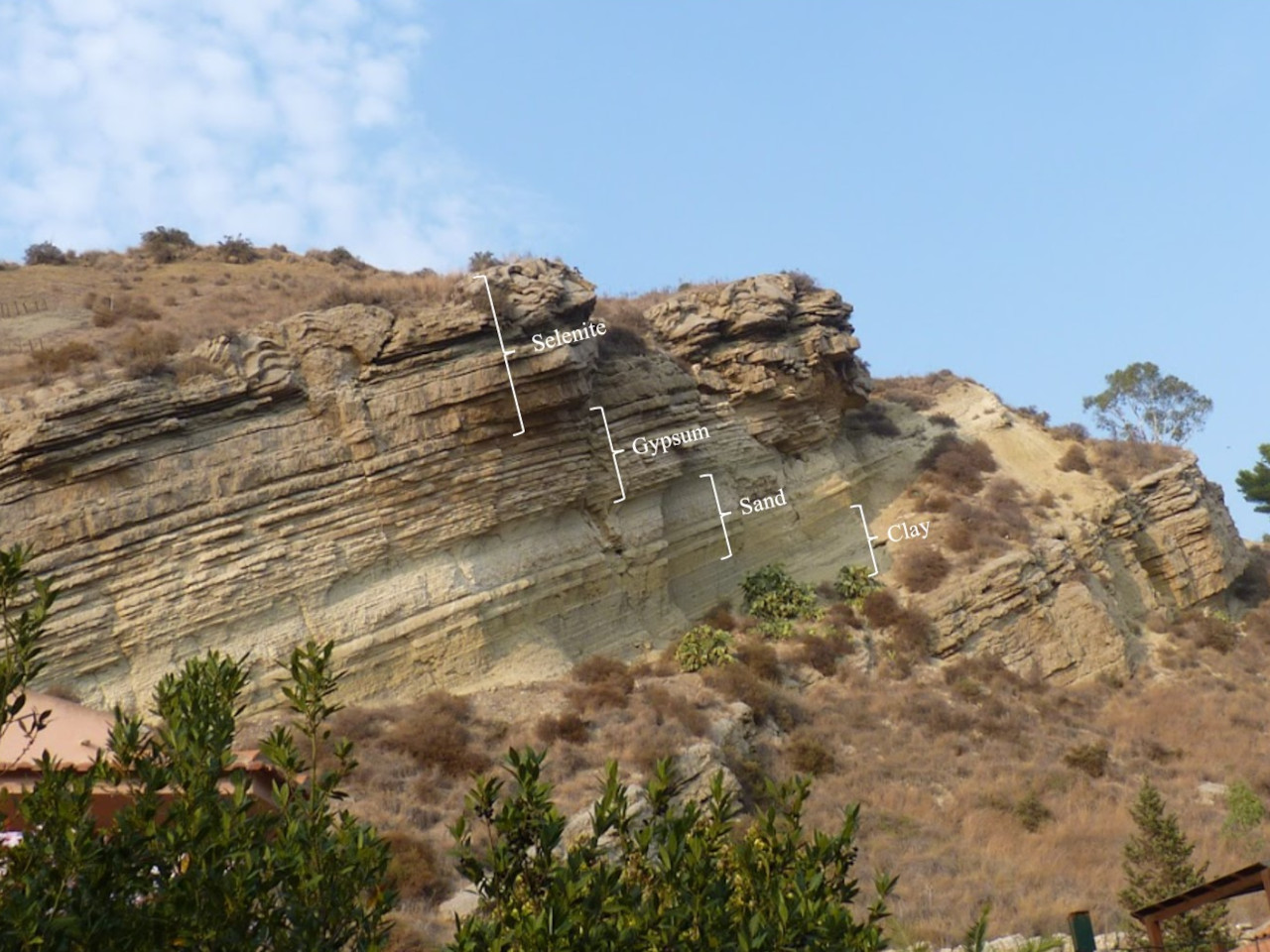
The part of the full section which we present here is called the Upper Gypsum Unit and comprises the latter part of the Messinian age (5.9 – 5.33 Ma), during what is also referred to as the Messinian Salinity Crisis. This unit shows an interesting repeating pattern, or cyclicity, each cycle consisting of clays evolving into sand, then gypsum and in the end massive selenite (Manzi et al., 2009) – a hydrated variant of gypsum (CaSO4·2H2O). The Upper Gypsum Unit comprises 6-7 cycles. The orbital forces causing these cycles are called precession cycles having an average duration of ~21 thousand years controlled by the revolution of the Earth’s orbit. The change in insolation during such a precession cycle dictates and affects the precipitation which plays an important role for the level of dilution of the ocean water, and hence the conditions for deposition of evaporites.
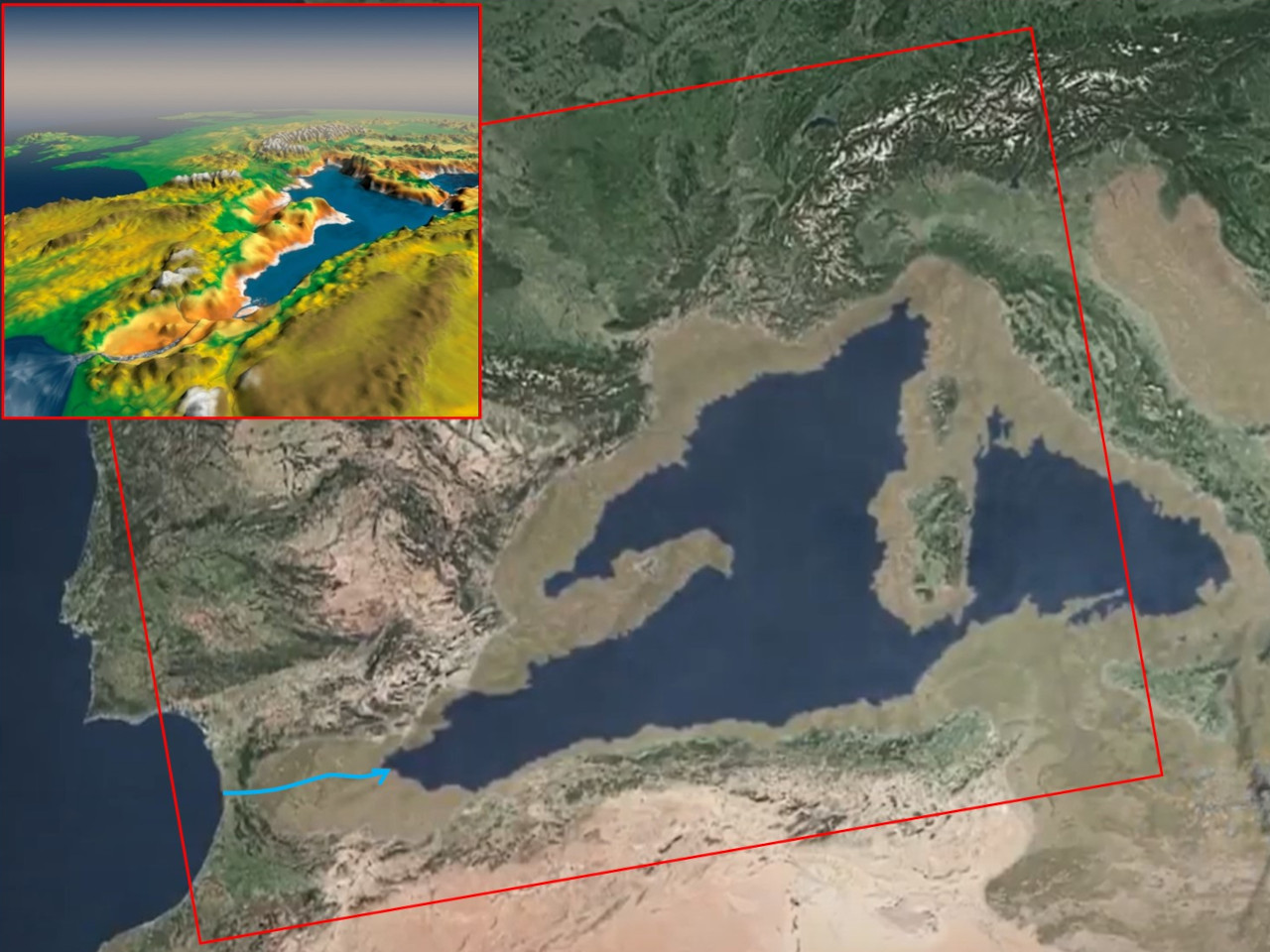
The Messinian salinity crisis was an event in the late Messinian where the Mediterranean Sea dried up partly. The connection between the Atlantic Ocean and the Mediterranean Sea became sparse, due to tectonic uplift processes given rise to by the collision between the African and Eurasian continental plates, which caused the flux of water from the one ocean to the other to be diminished; but the strait between the oceans never completely closed (Garcia-Castellanos & Villaseñor, 2011). The surface water from the Atlantic kept floating over the barrier feeding the Mediterranean with new salty water, while the deep circulation from the Mediterranean back to the Atlantic was more or less fully cut off (image-02). This is understood from the fact that the thickness of evaporites deposited during the crisis corresponds to evaporation of 8 times the current volume of water in the Mediterranean Sea – even a total dry up of a completely closed Mediterranean Sea wouldn’t have been able to produce the occurring thicknesses of deposits.
The last cycle of evaporites is overlain by thick siltstones (Arenazzolo Fm) deposited under more brackish conditions during what is called the Lago Mare event, a time with higher water level and more diluted water conditions in the latest part of the Messinian.
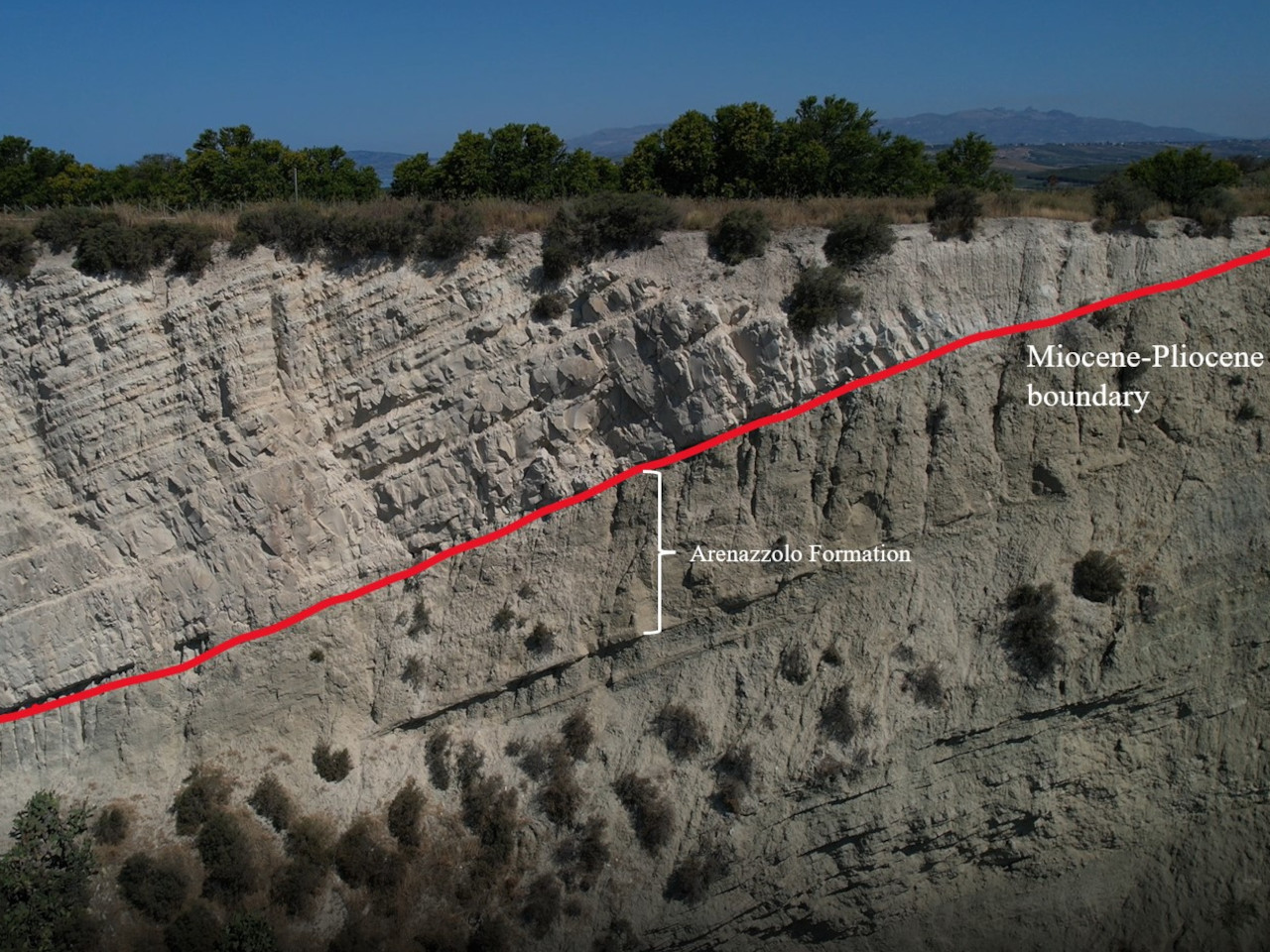
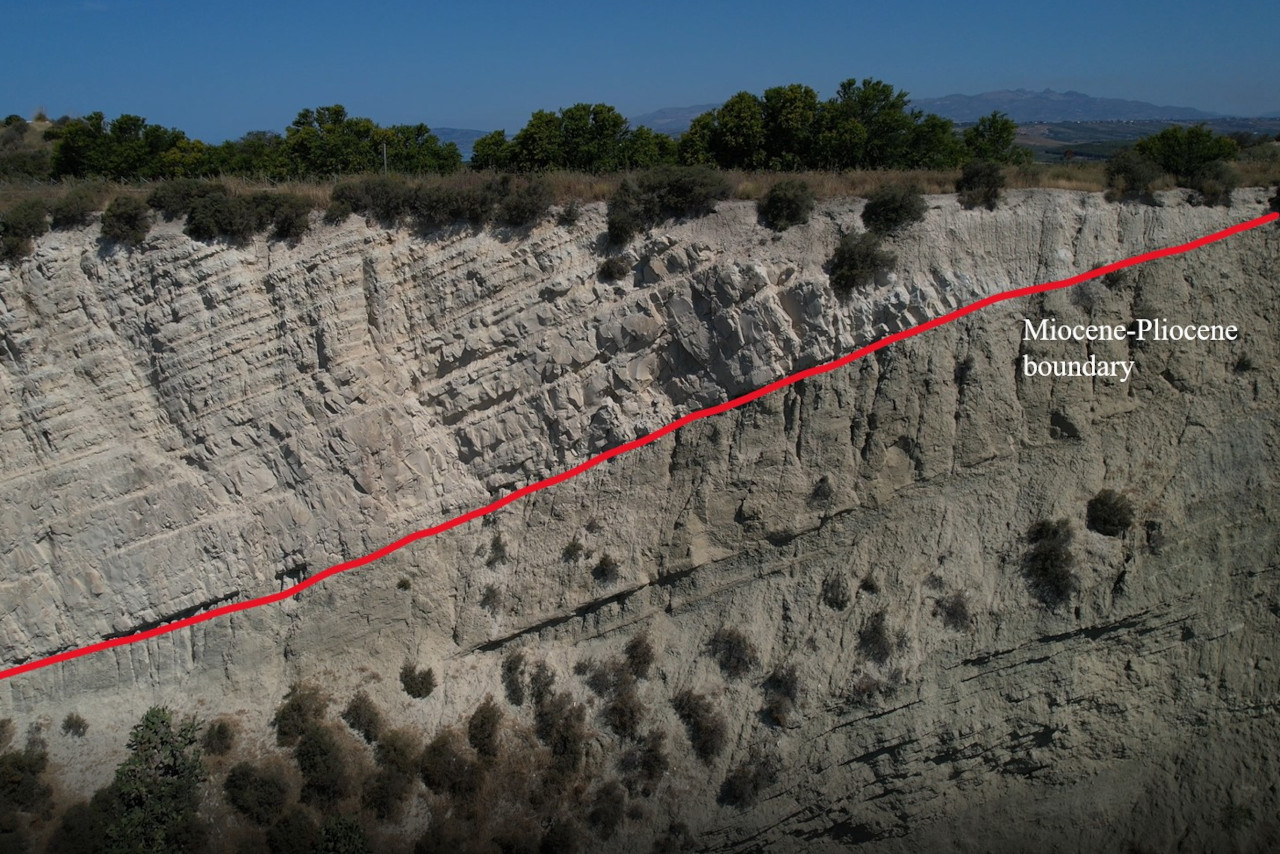
When looking at the succession at Eraclea Minoa it is seen that just above the Upper Gypsum Unit, a whiter formation of alternating white limestone and white to pale grey/brown marls are deposited. This unit is the Trubi Formation which attests to the replacement of the evaporitic sequences with deeper marine deposits. Therefore, the base of these sediments is said to mark the end of the Messinian Salinity crisis. Erosion and breakdown of the restrained Gibraltar strait led to a reflooding of the Mediterranean 5.33 Ma years ago. The flooding marks the transition to Zanclean age and is therefore called the Zanclean flooding. And by the way, the flooding surface here at Eraclea Minoa is the GSSP of the base of the Pliocene, marking the boundary between Messinian and Zanclean age.