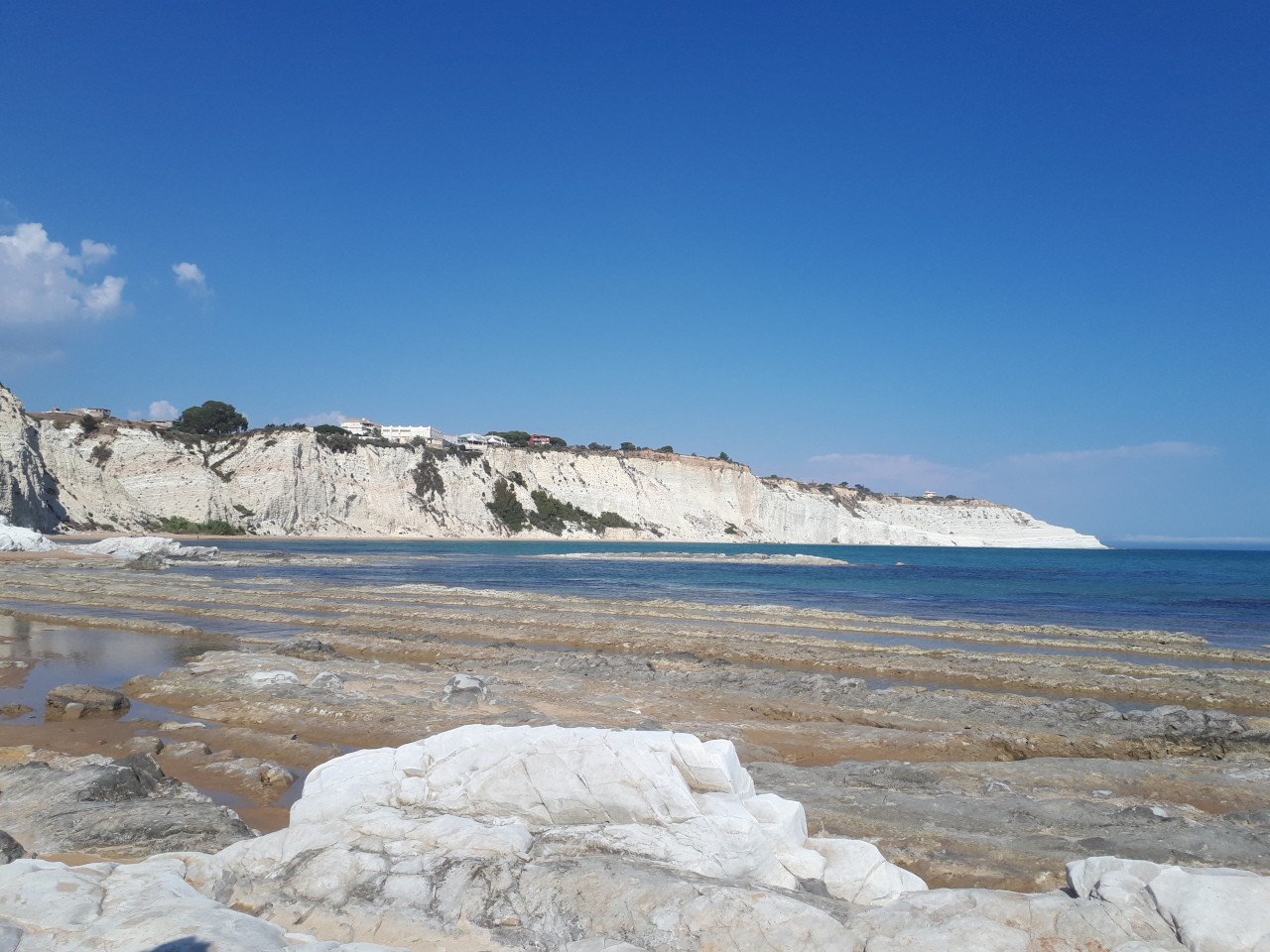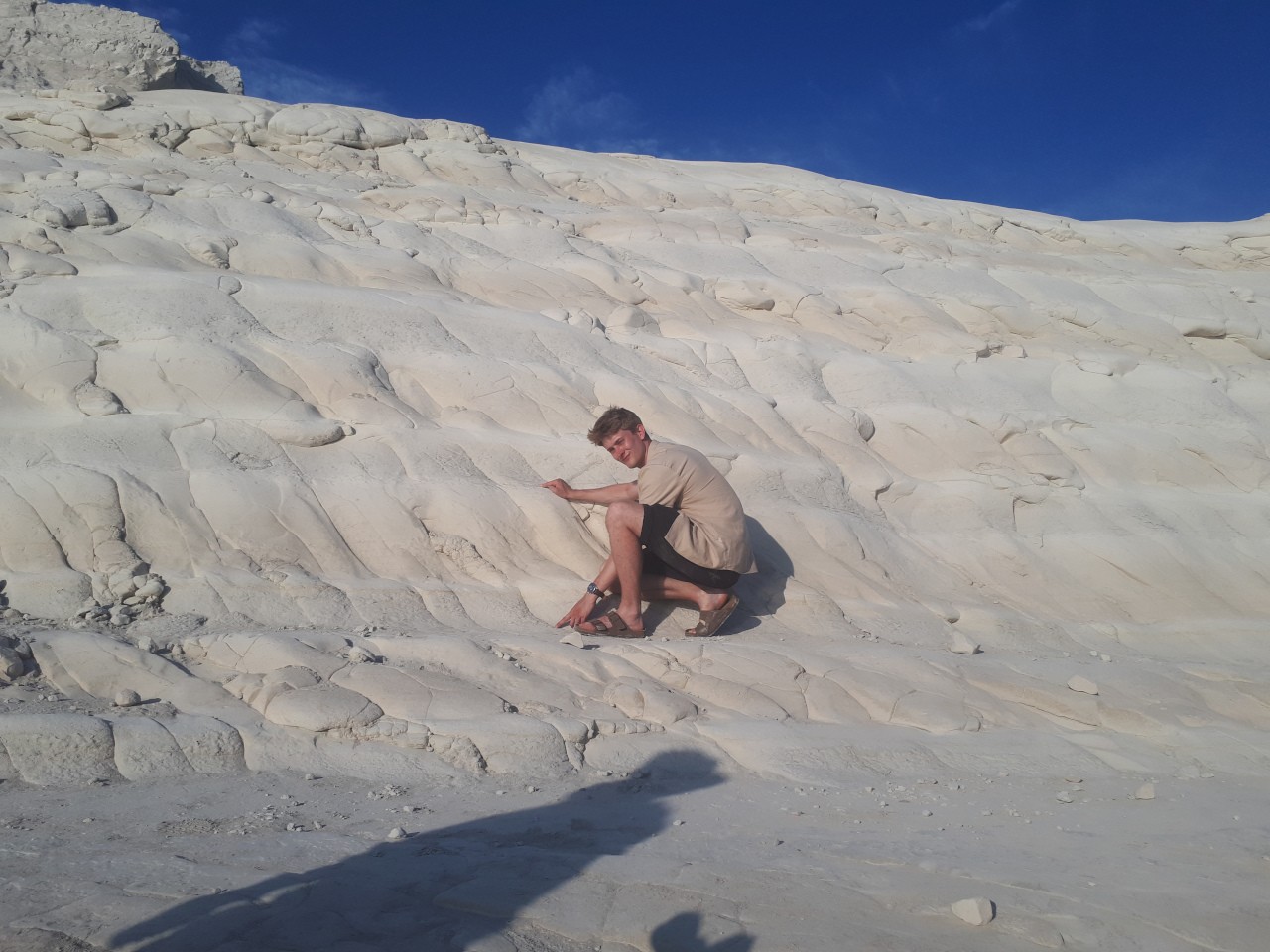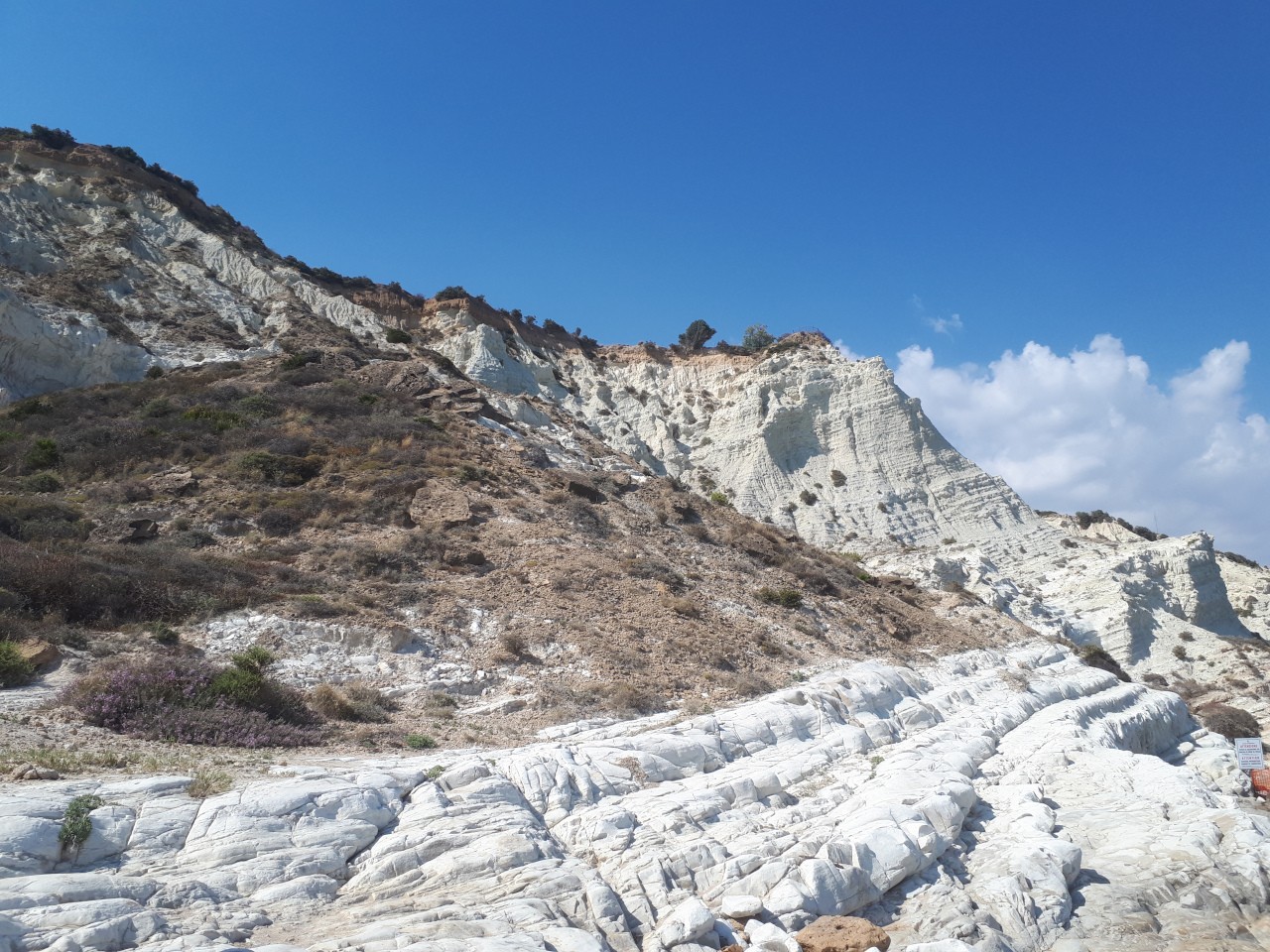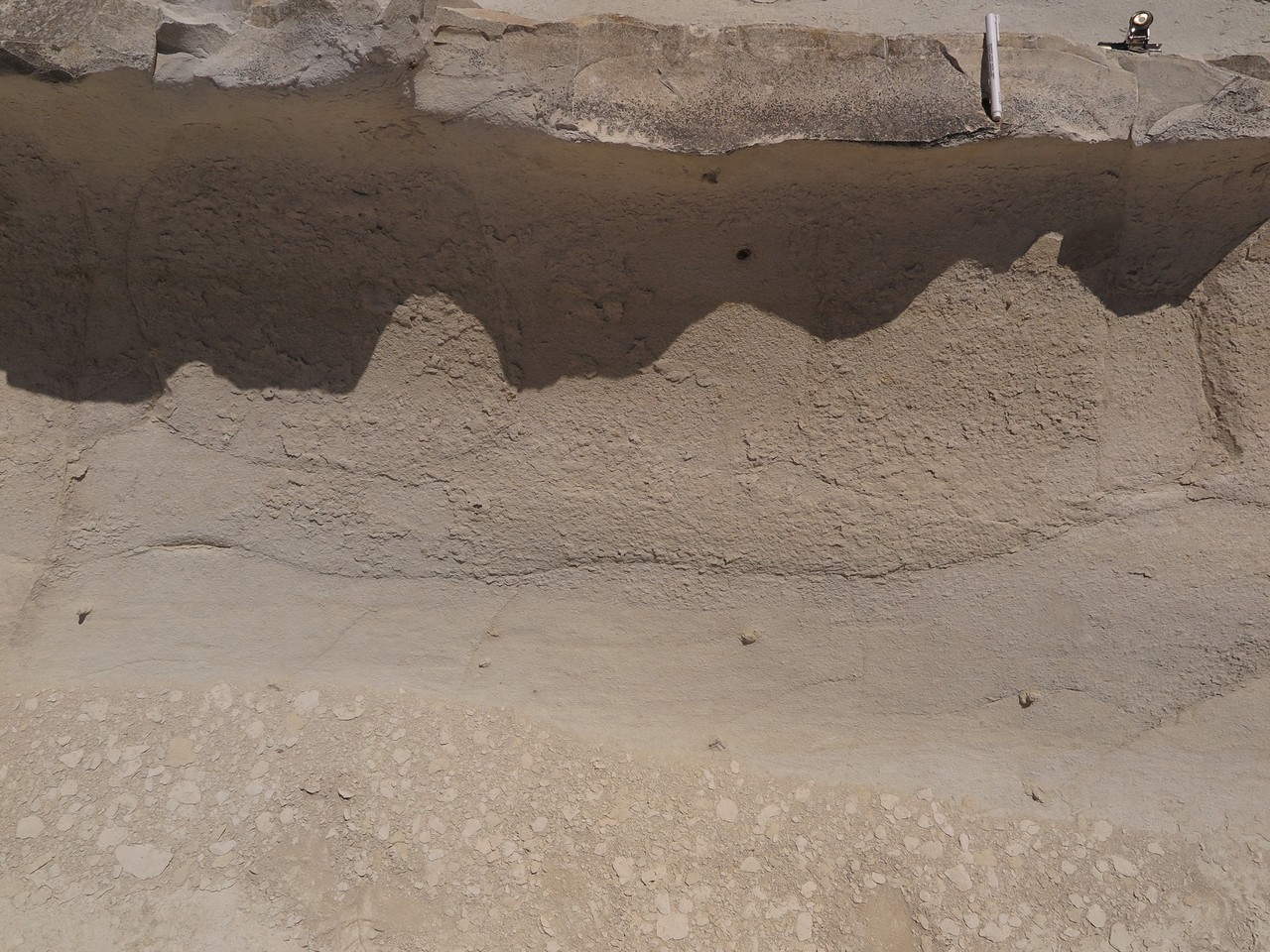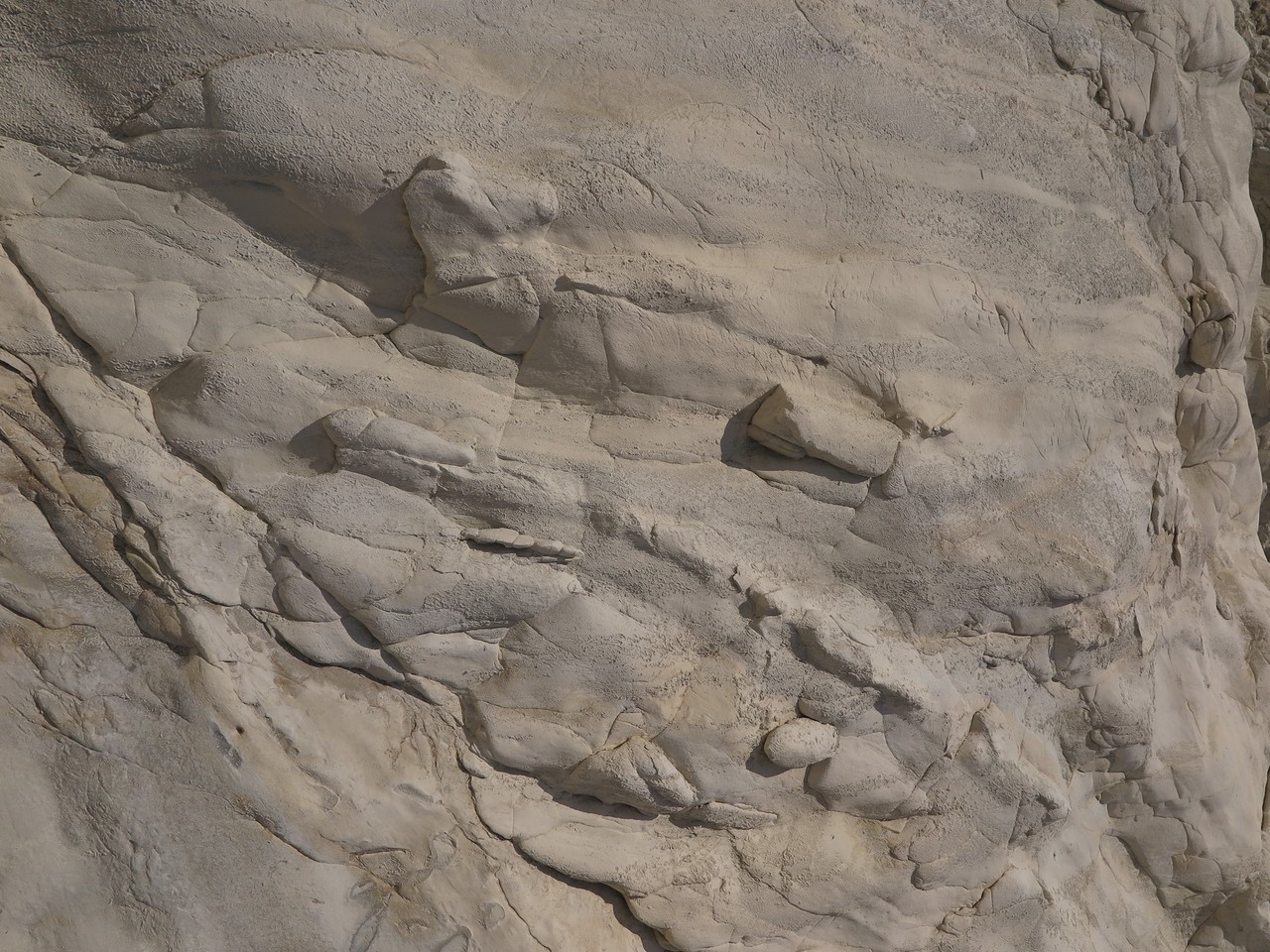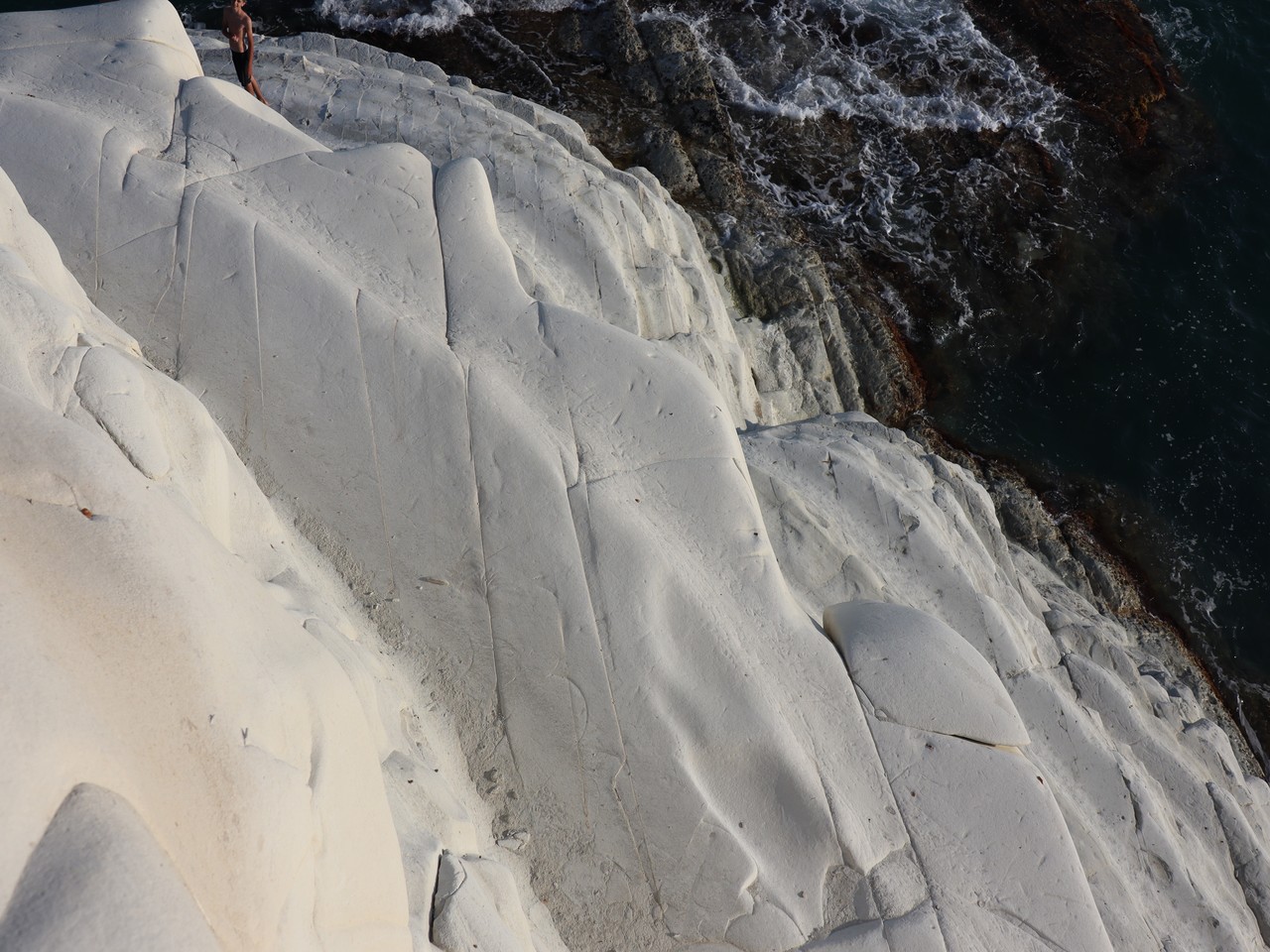
At the very base of Punta di Maiata is the uppermost part of Messinian sediments. Most of the outcrop is of Zanclean age, the end of Salinity crisis. The transition from Messinian´s non-marine silico-clastic sediments to Zanclean at 5.3 Ma that is also visible at the top of the Eraclea Minoa section marine marls from pelagic ooze. In both sections, there are apparent several electro-magnetic polarity reversals that help with age dating. At Punta di Maiata, there are small-scale precession cycles visible as colour alteration from grey to white, beige, white, from which grey and beige layers are CaCO3 poor. There is also increasing number of marine fossils used for stratigraphy. The second level of Punta di Maiata shows possibly a synsedimentary resetting of the geomagnetic record, possibly due to slumping, that is not present at the base of Zanclean neither at Punta di Maiata nor at Eraclea Minoa. The sequence begins with non-marine alluvial sediments from upper messinian, that are now buried under the beach sediments, followed by marine Zanclean sediments that towards the top get disturbed by slumping.
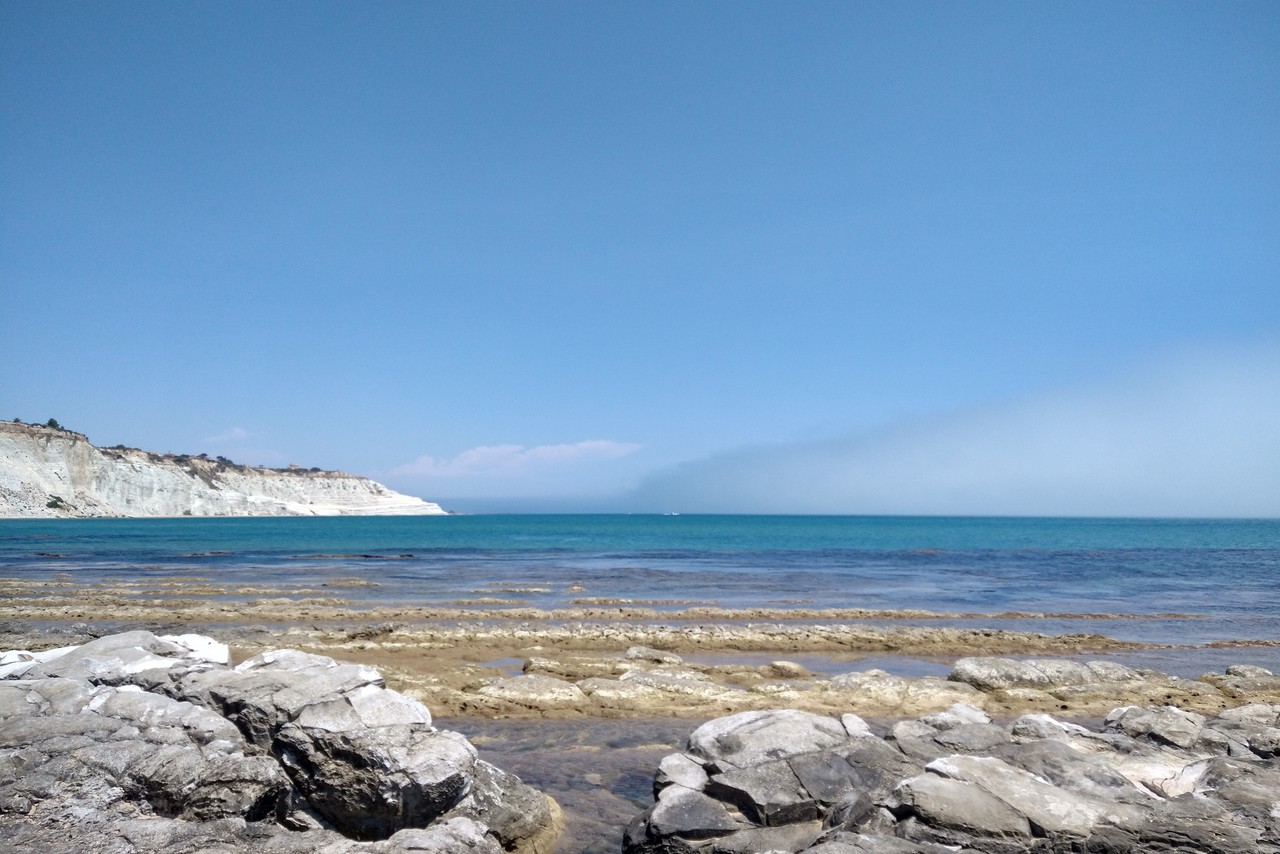
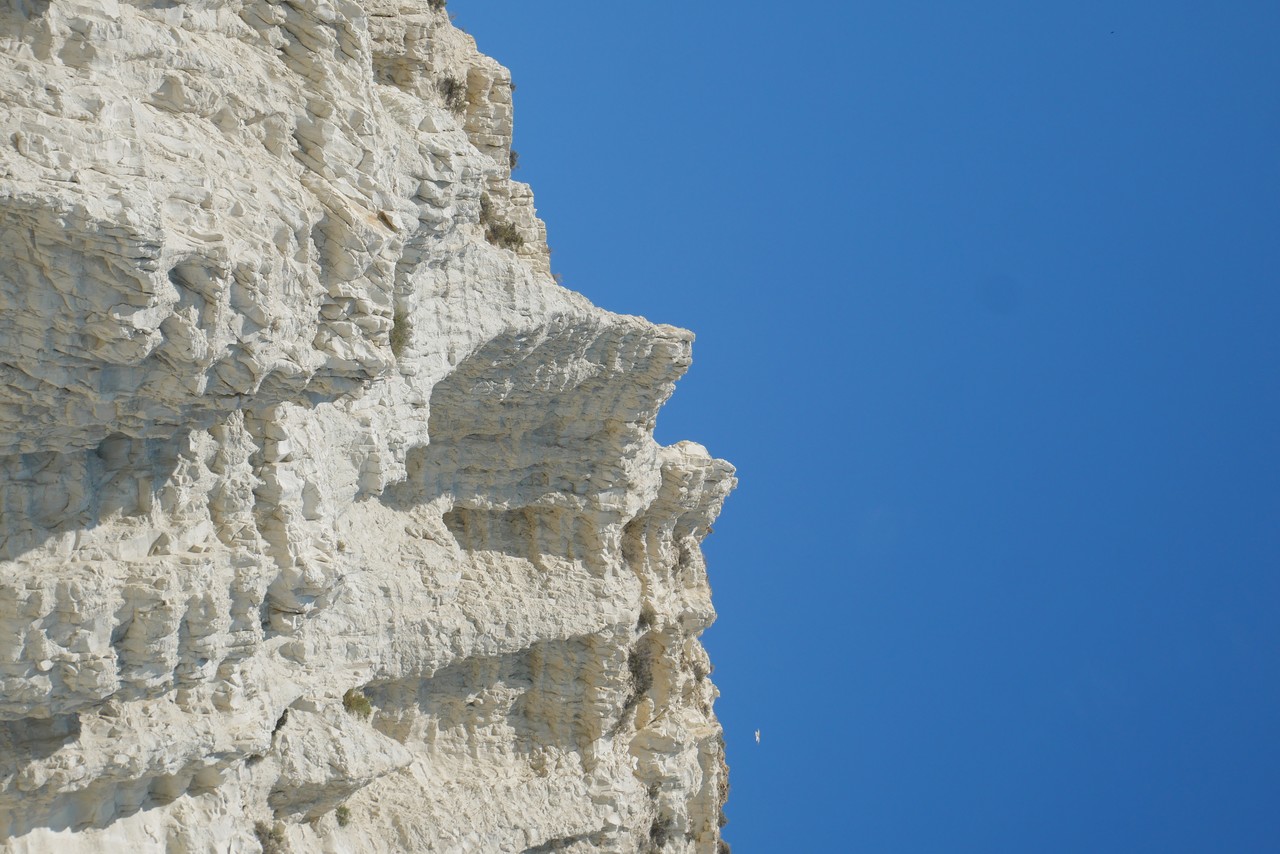
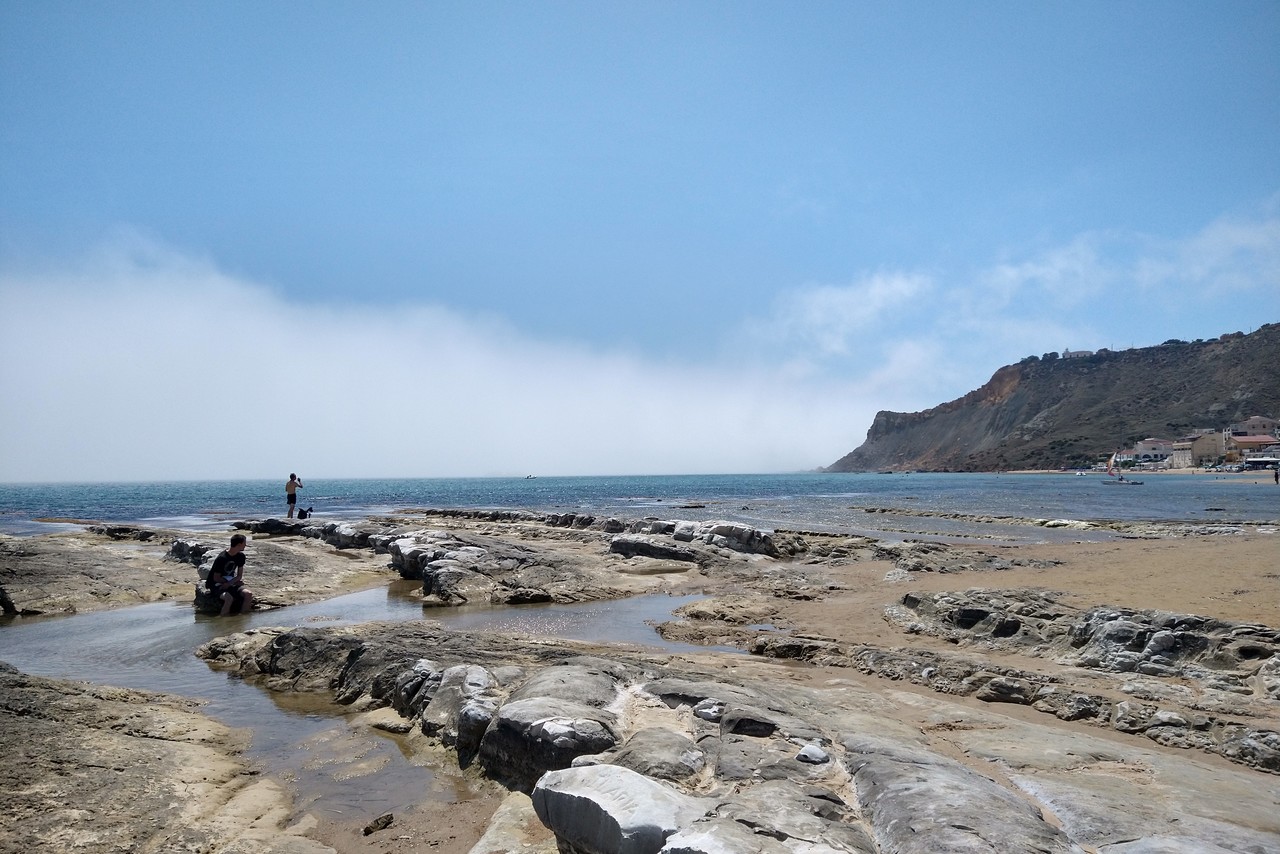
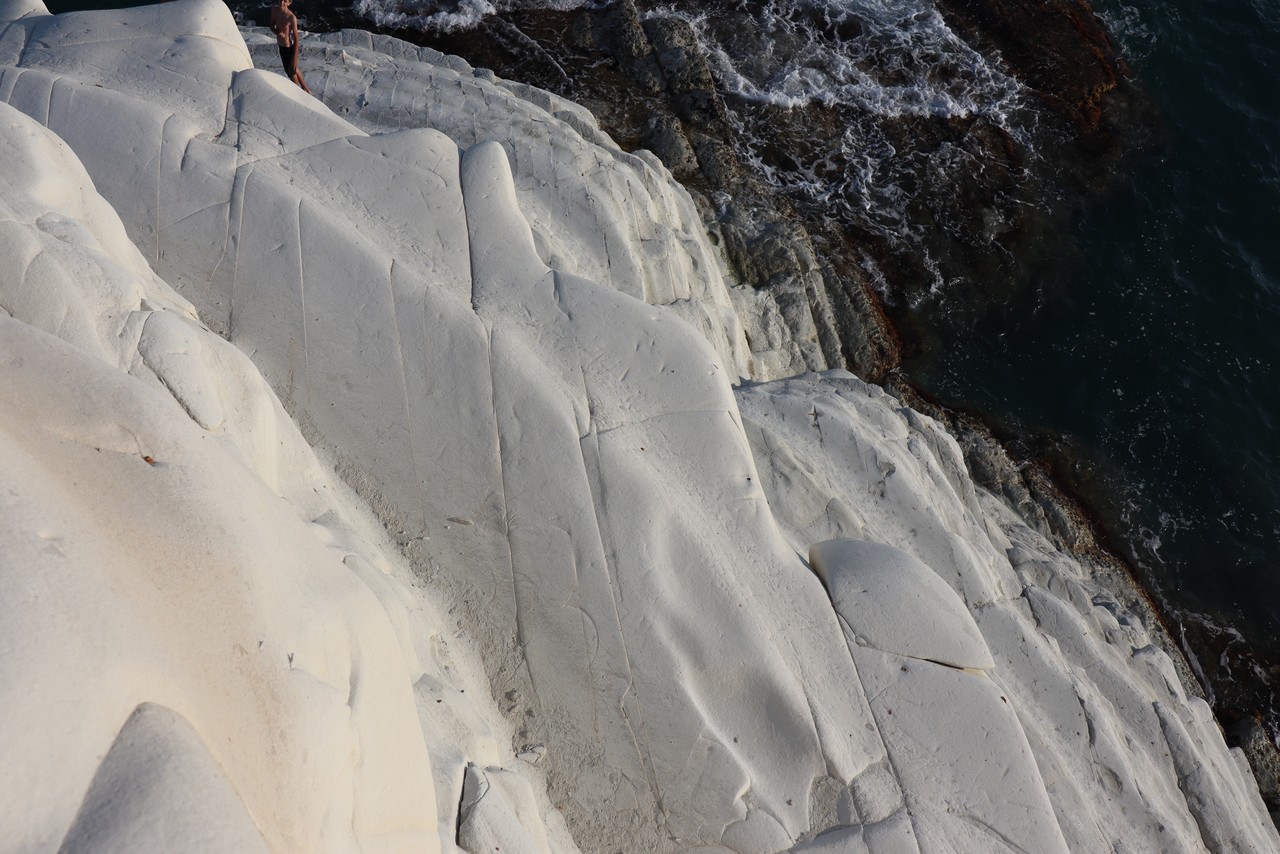
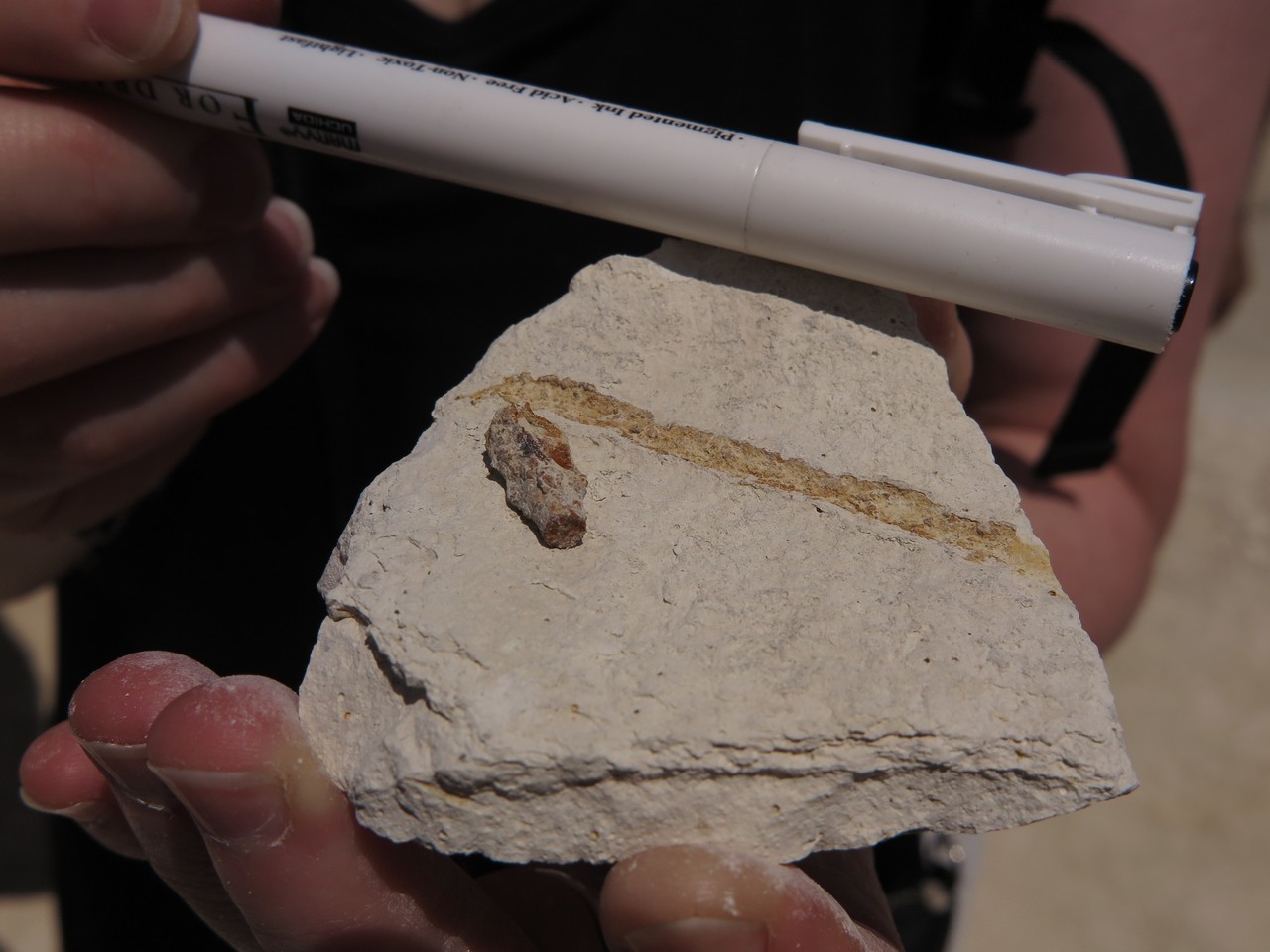
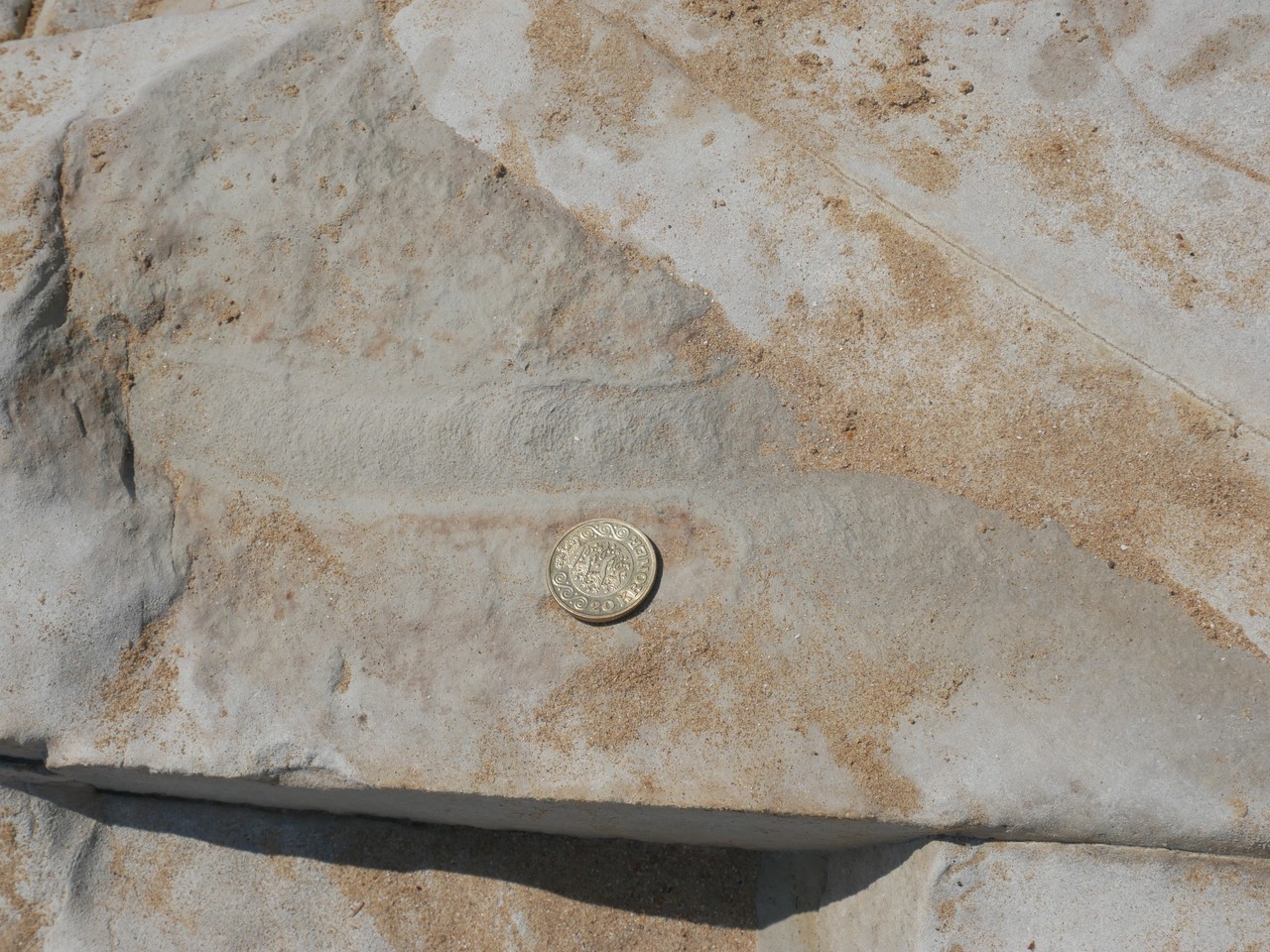
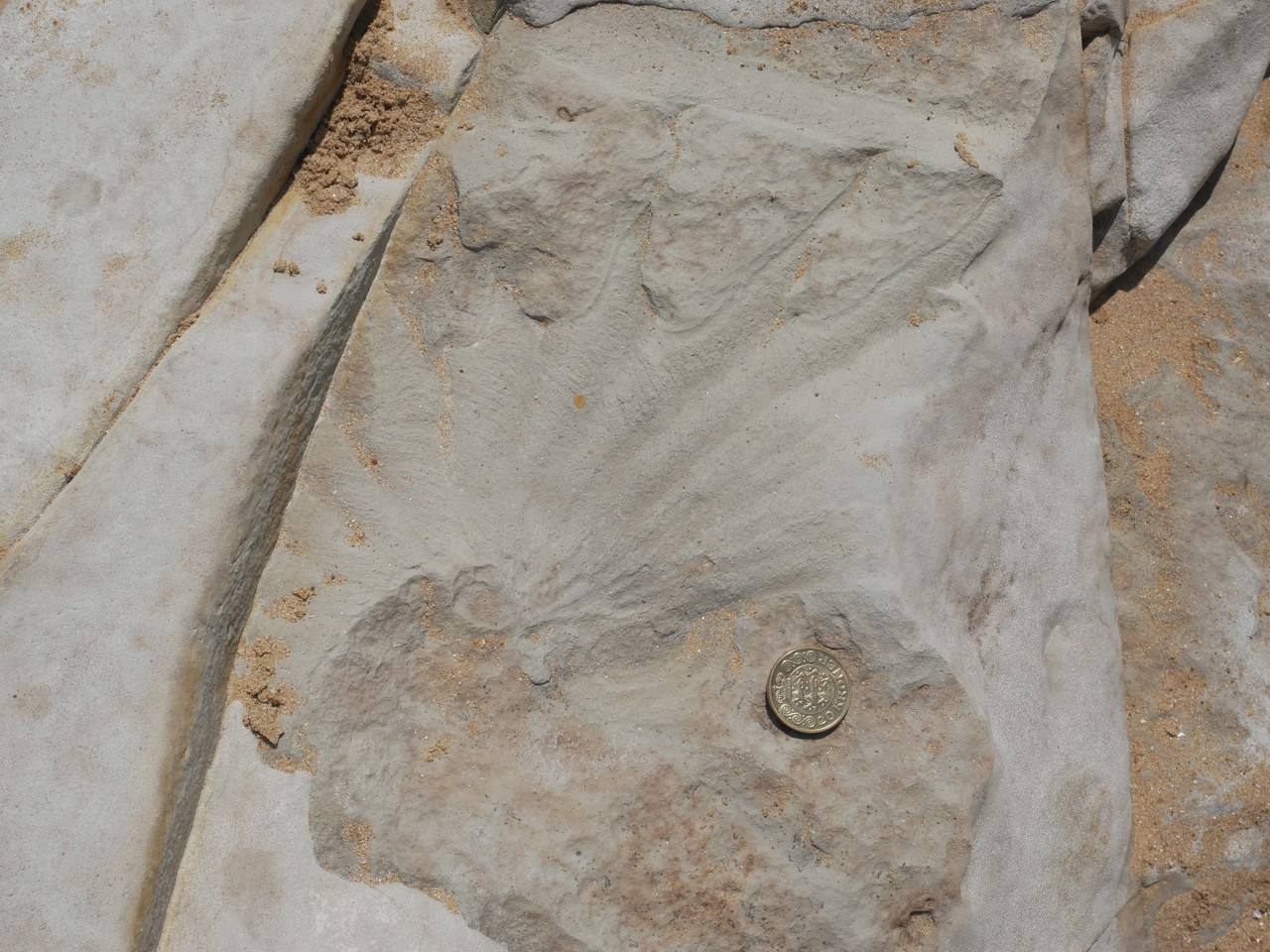
Compared to the deposits of the Messinian, we can observe fossils in the sediment that are only found in deeper offshore oceanic settings. For example, Zoophycos and Rhizocorallium, trace fossils which represent burrowings of worm-like creatures, feeding in the sediment, that are often pyritized. A it is possible to distinguish (mainly under magnifying glass) tiny bubbles of fossilised foraminifera. The assemblage dominated by Zoophycos is typical of low energy deep water environments, and attests to the return of fully marine conditions in the Mediterranean after the Zanclean flood. These trace fossils are particularly abundant on the upper surface strata of limestone beds. At this locality, we can see alternations of thin white limestone beds, white to pale grey marls and pale brown marls, forming a succession of stairs along the cliff and giving its Italian name of “Scala”, because of the difference of weathering between marl and limestone. These alternations show nearly always the same sequence. Grey marl at the base, followed by a thin white limestone bed, then the brown marl which is more limy than the grey marl, and finally a second white limestone bed that may be thicker than the first one. To explain this feature, we have to go to the theory of astronomical climate change. Today, what is responsible for seasonality on Earth is the tilt, which is the angle of the axis of rotation of the Earth with respect to the ecliptic, and that is the trajectory of the Earth around the sun in a year. The gravitational pull of planet Earth by other bodies in the solar system, such as the Moon or the Sun, induces that the axis of the Earth wobbles like a top which affects seasonality and the amount of energy received from the Sun through time. This phenomenon is called the precession of the equinoxes and leads to a climatic cycle of 21 ka. It has been found that the cycles of layers observed here correspond to precession cycles of around 21 ka, occurring between two grey layers. The grey marl, corresponding to the phase of insolation maximum, is deposited under warmer and more humid climate and contains a lot of organic material and clays. The beige marl is deposited during more temperate climate conditions and lower insolation. Between grey and beige layers are white limestones corresponding to a phase of even lower insolation, characterised by cooler and drier climate. At Punta di Maiata, we can count up to 44 of these precession cycles, hence a total duration of nearly 1 Ma, with the base of the exposed series being around 4.65 Ma ago and the top around 3.65 Ma.