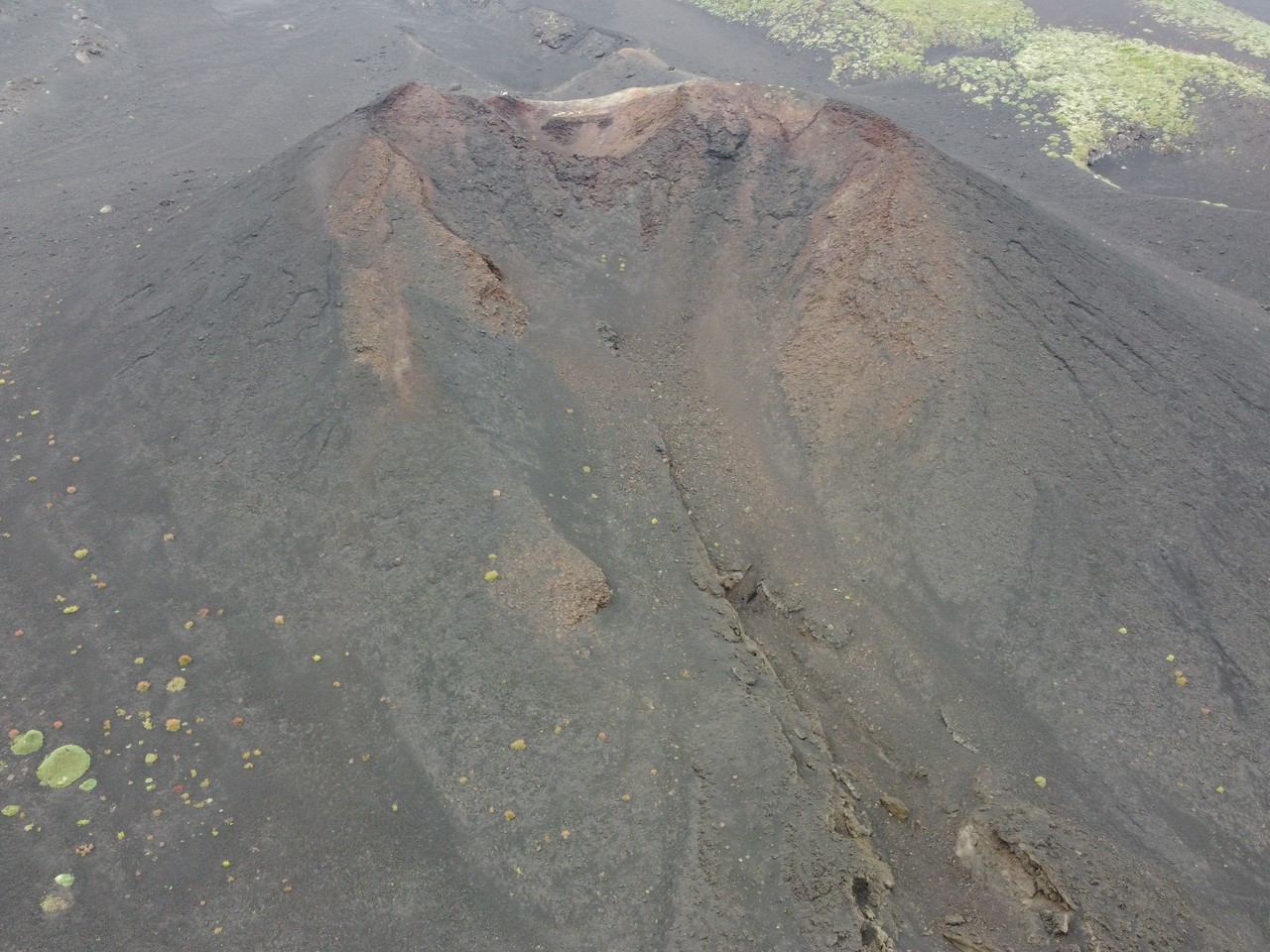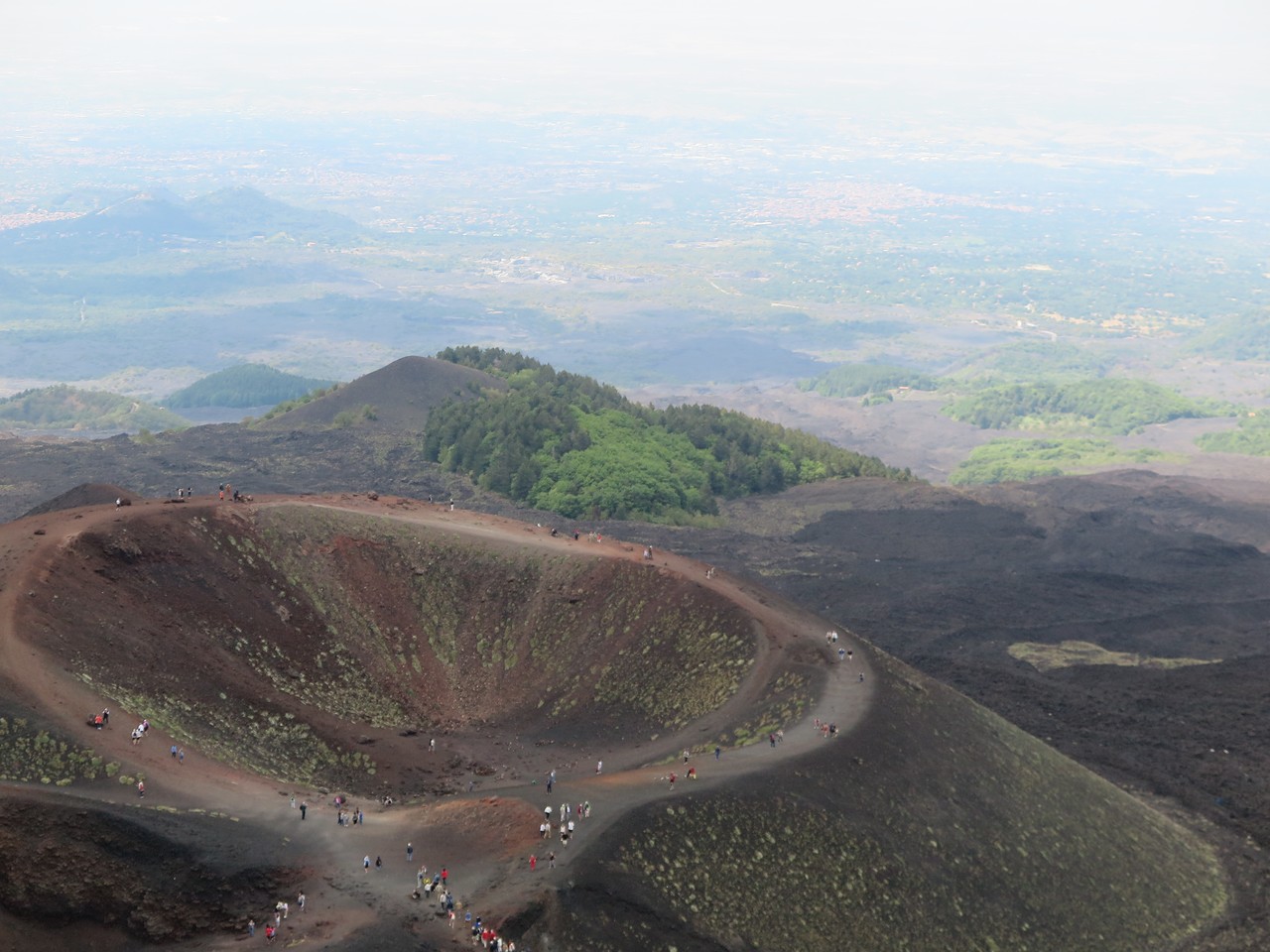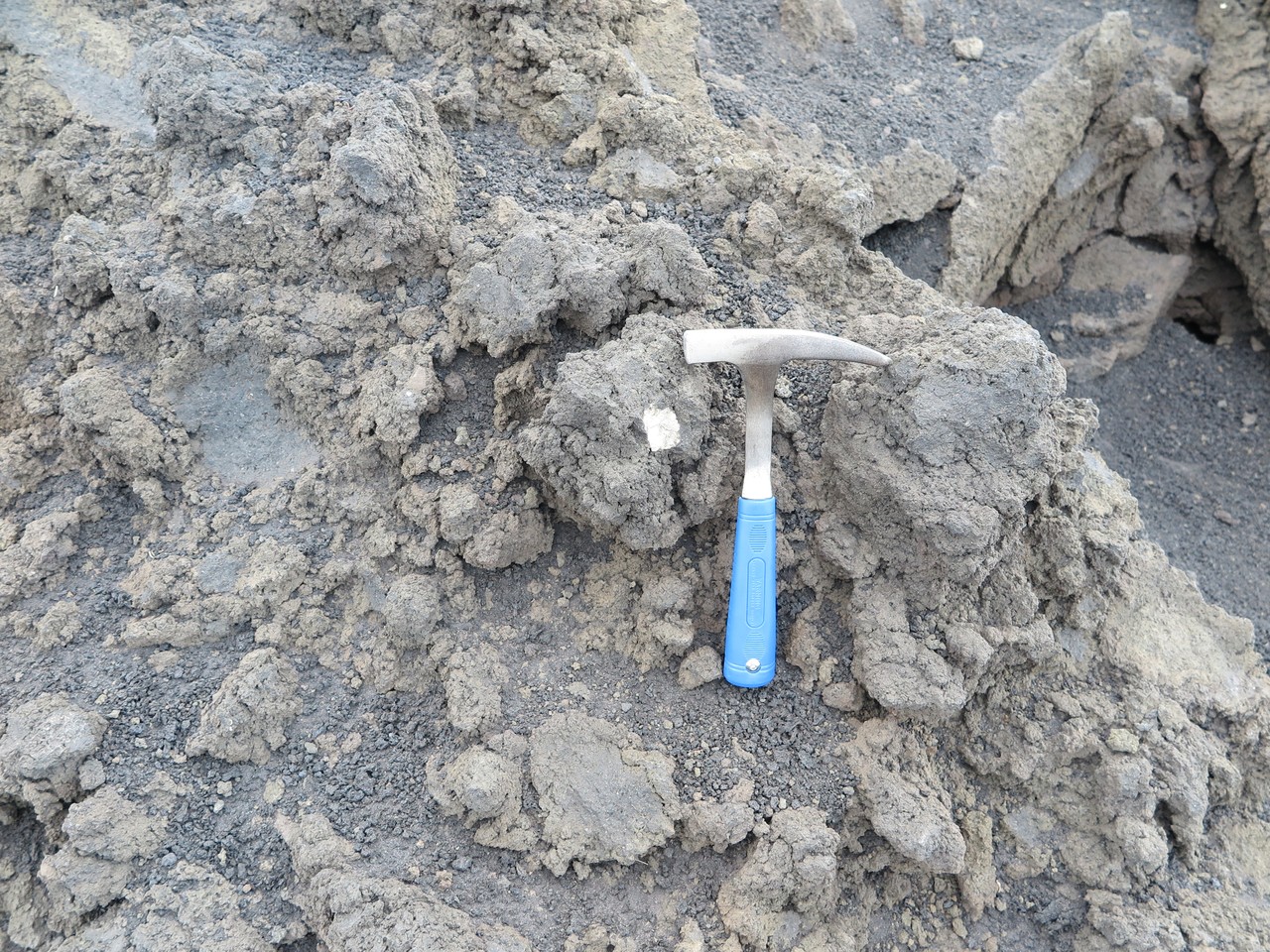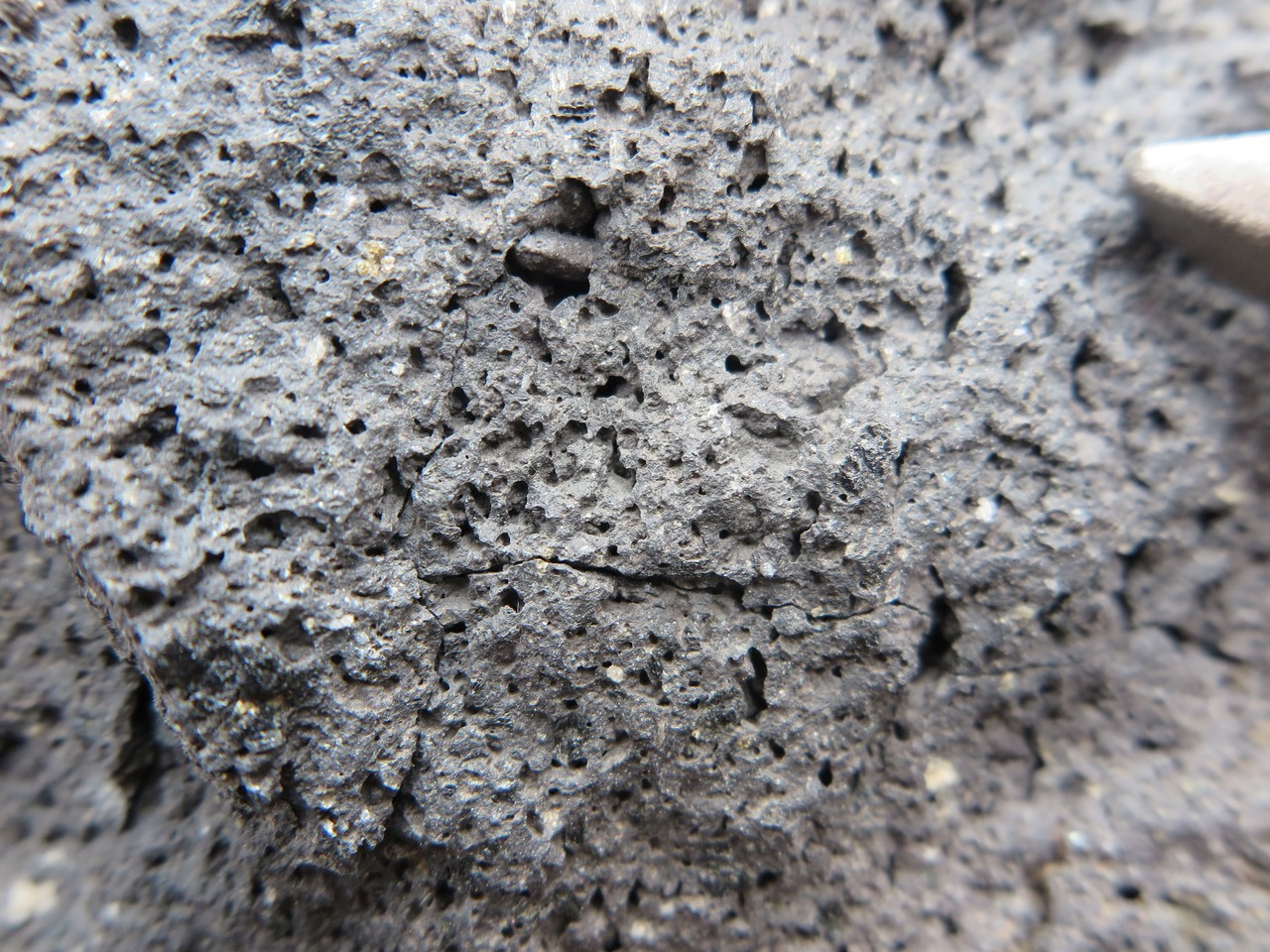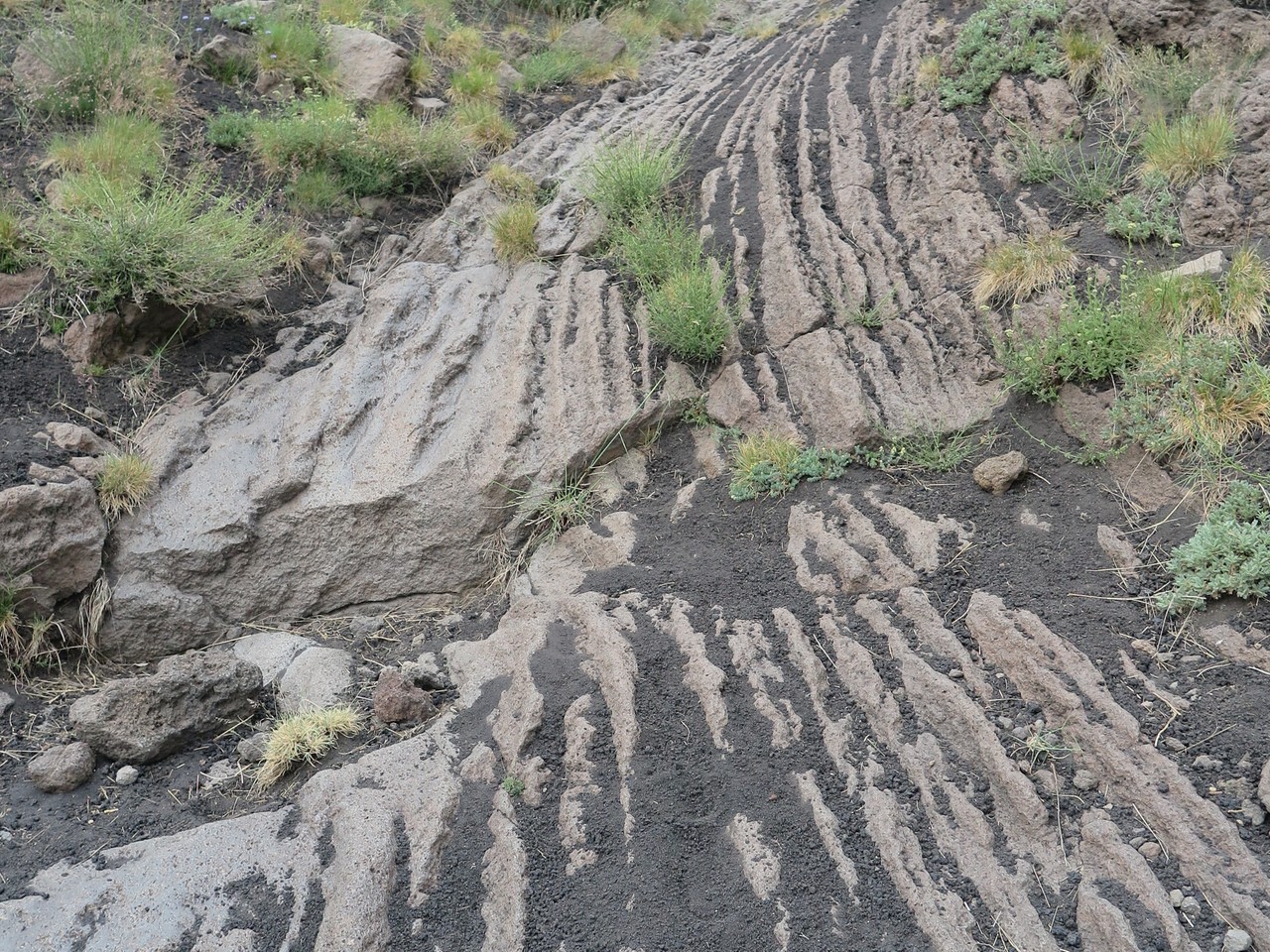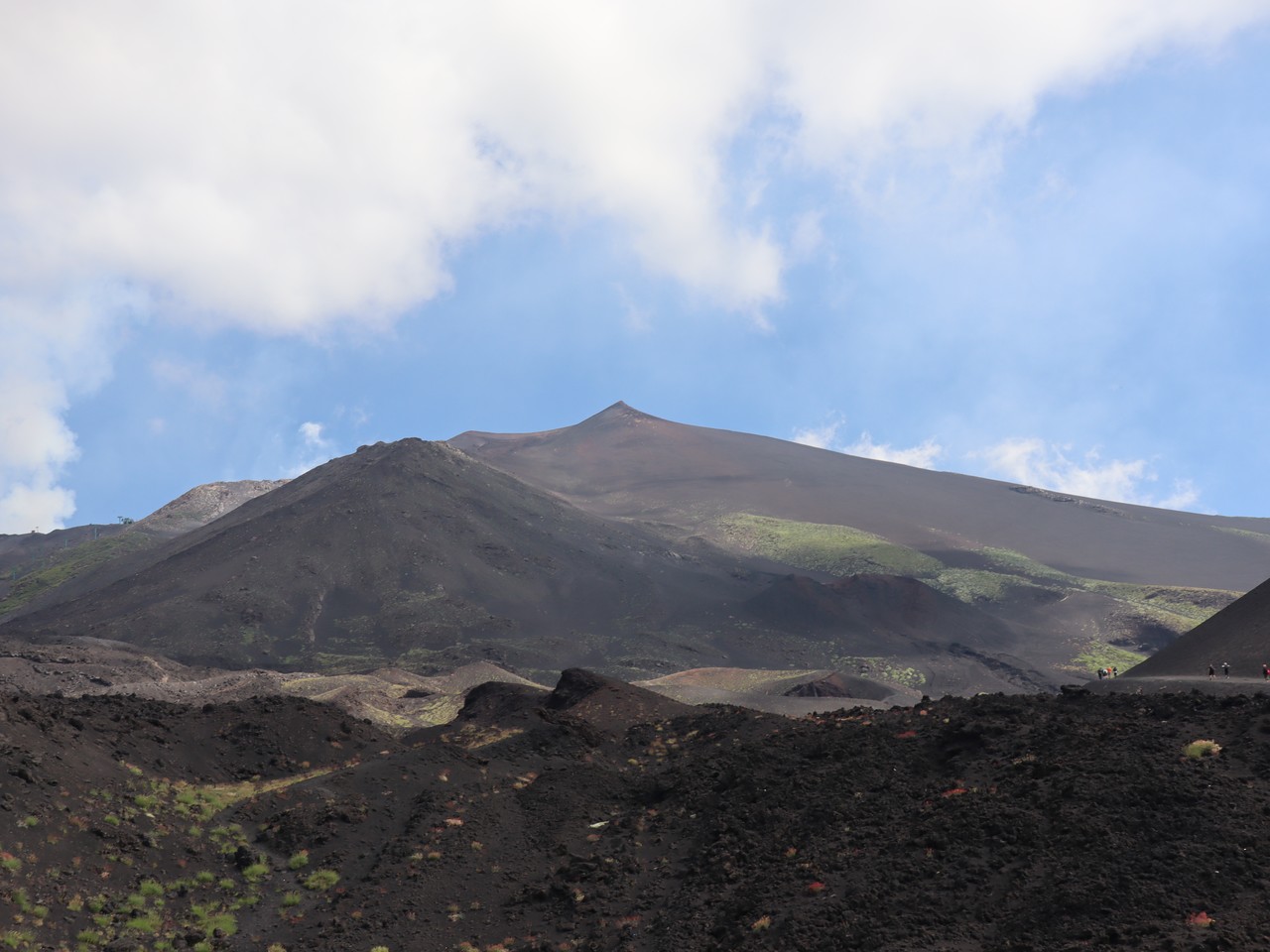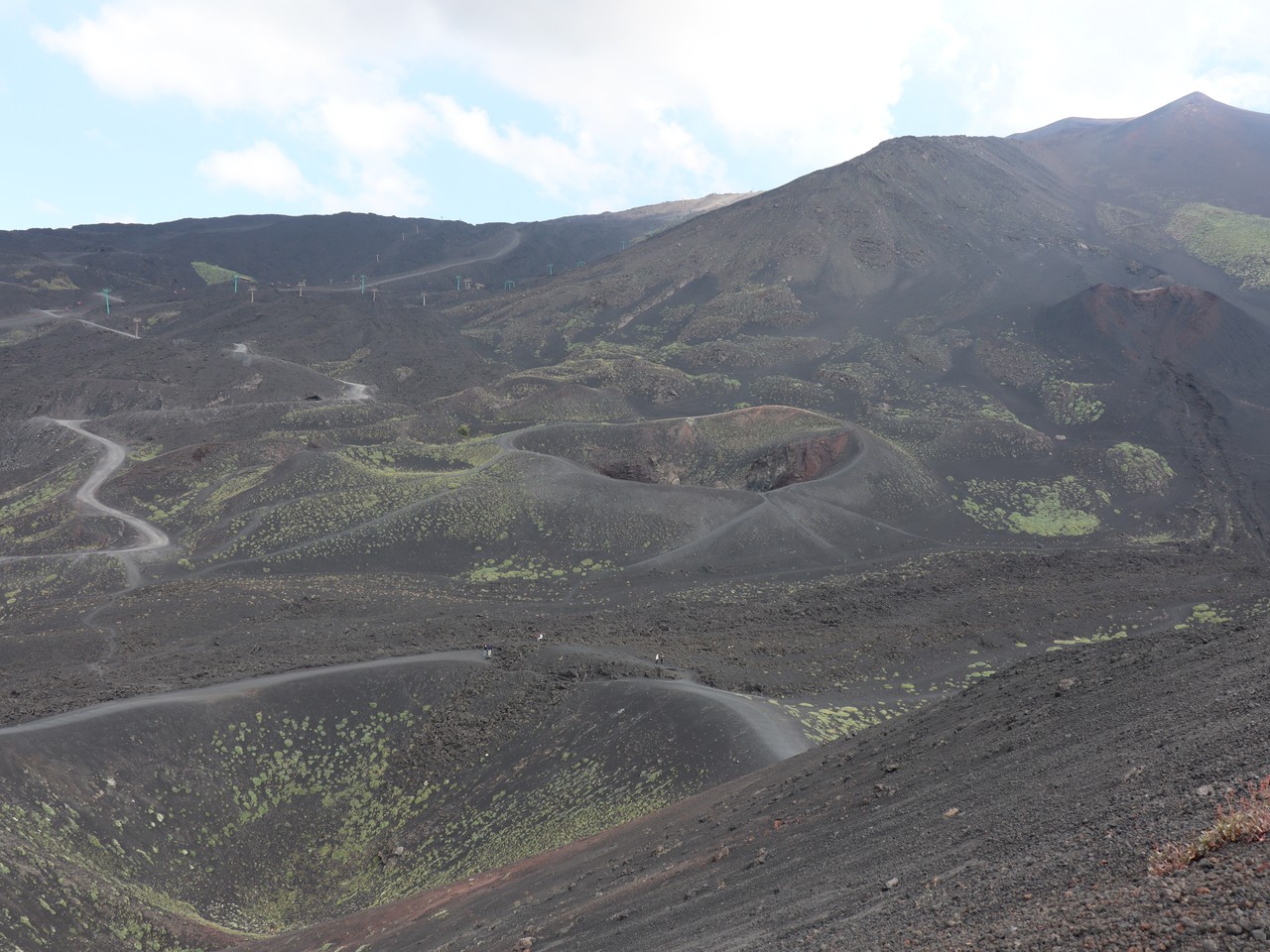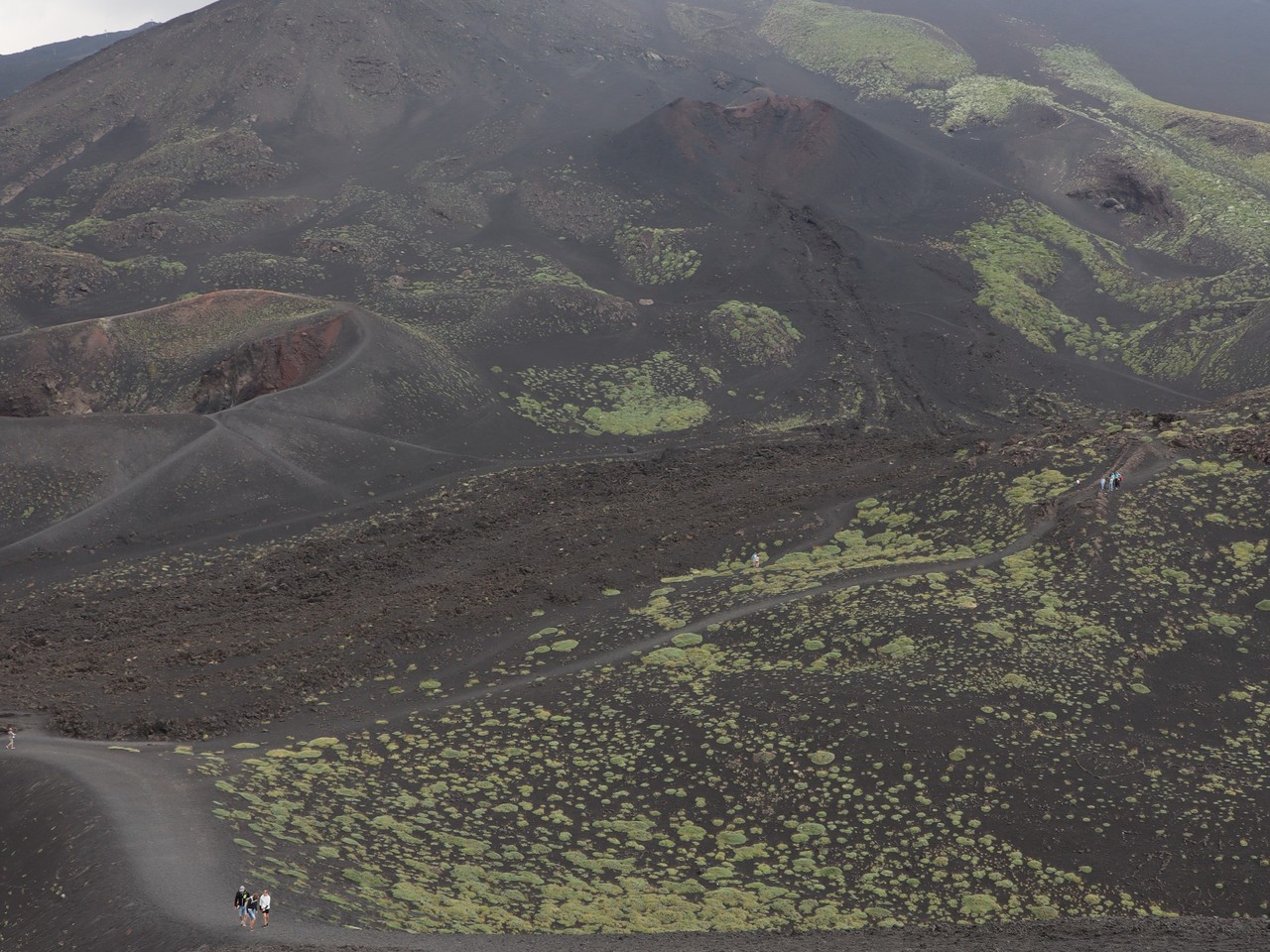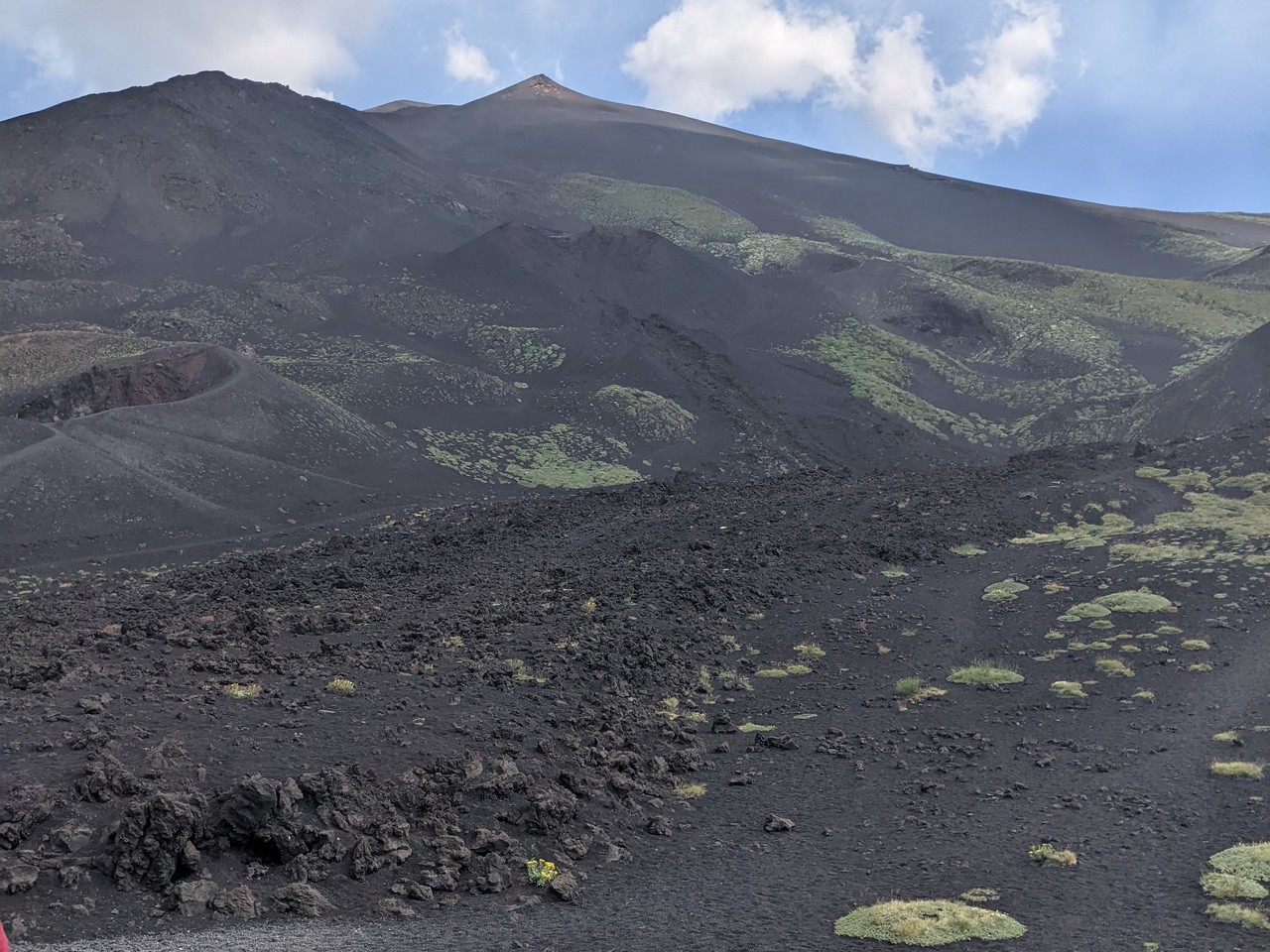
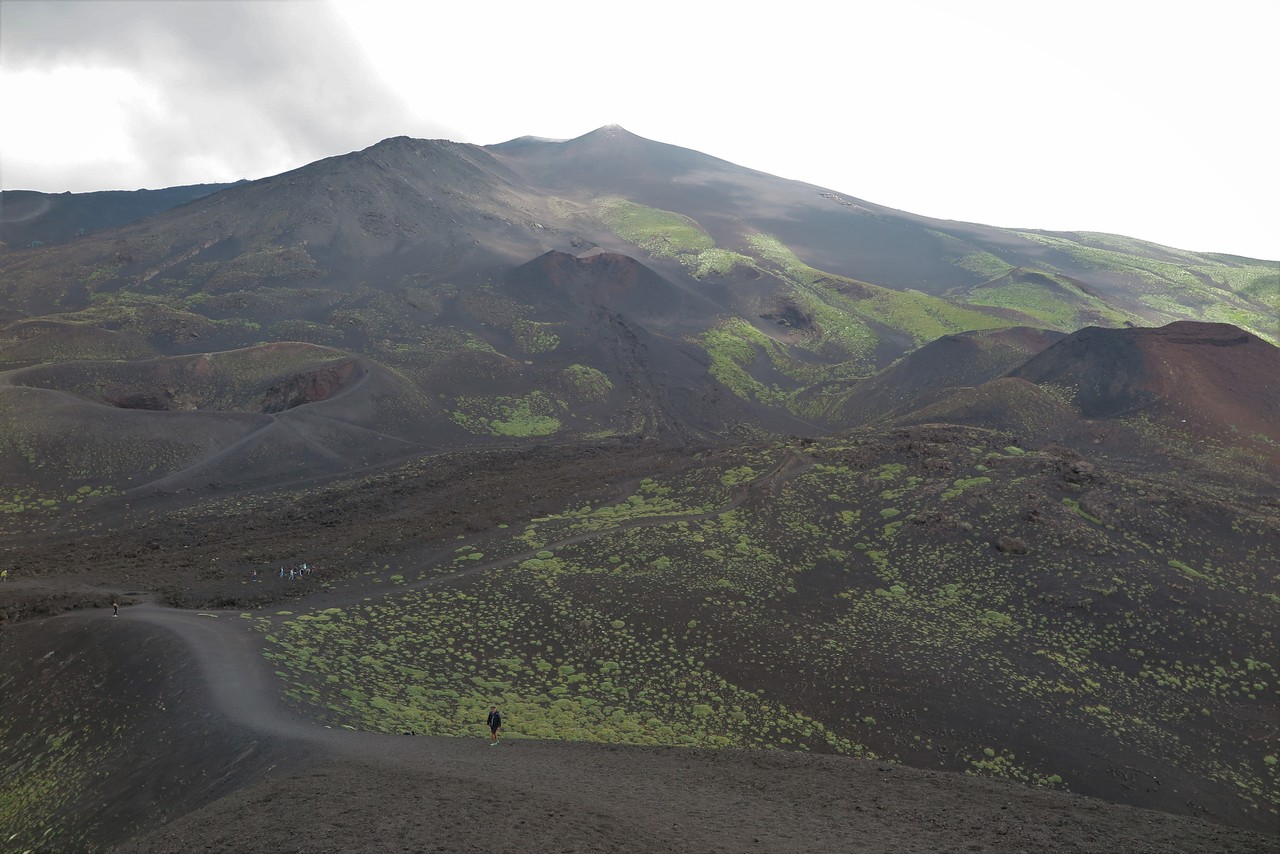
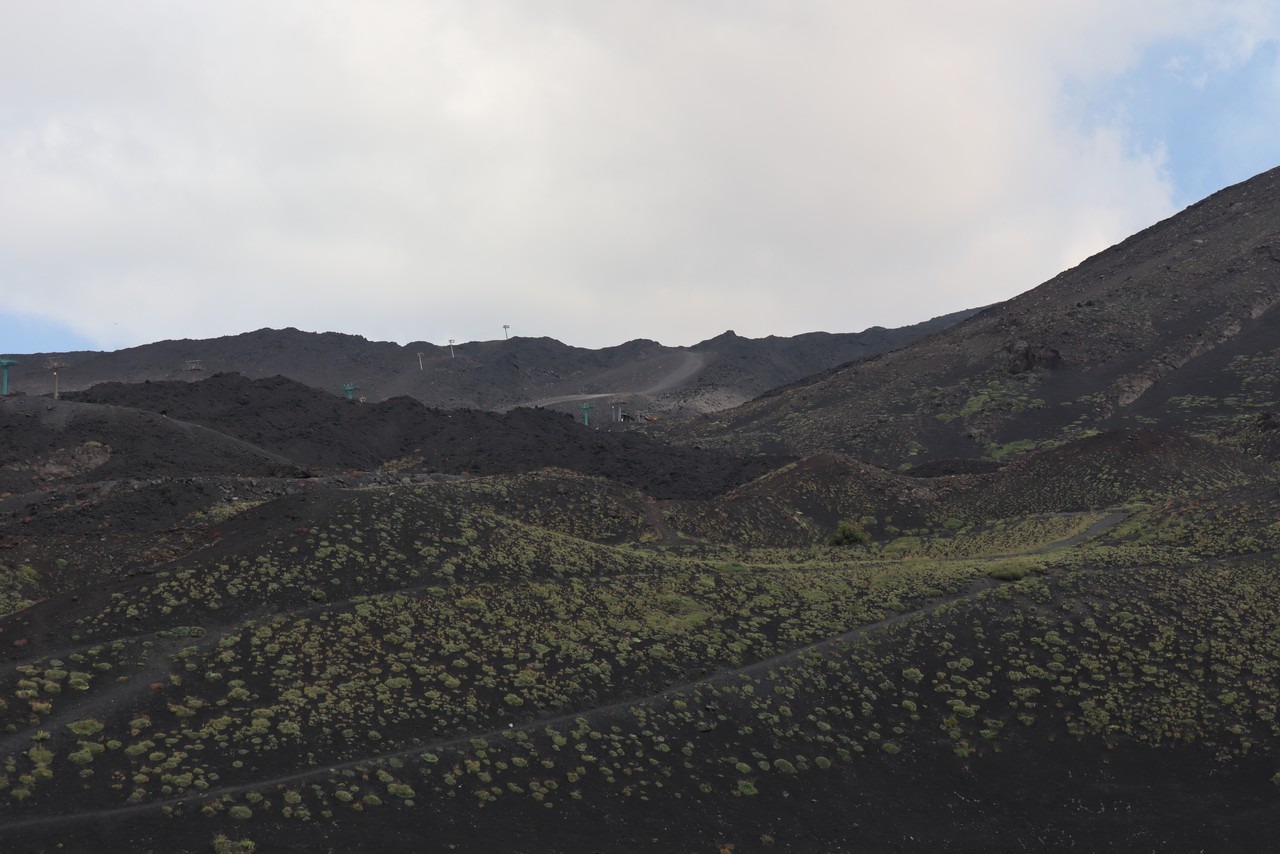
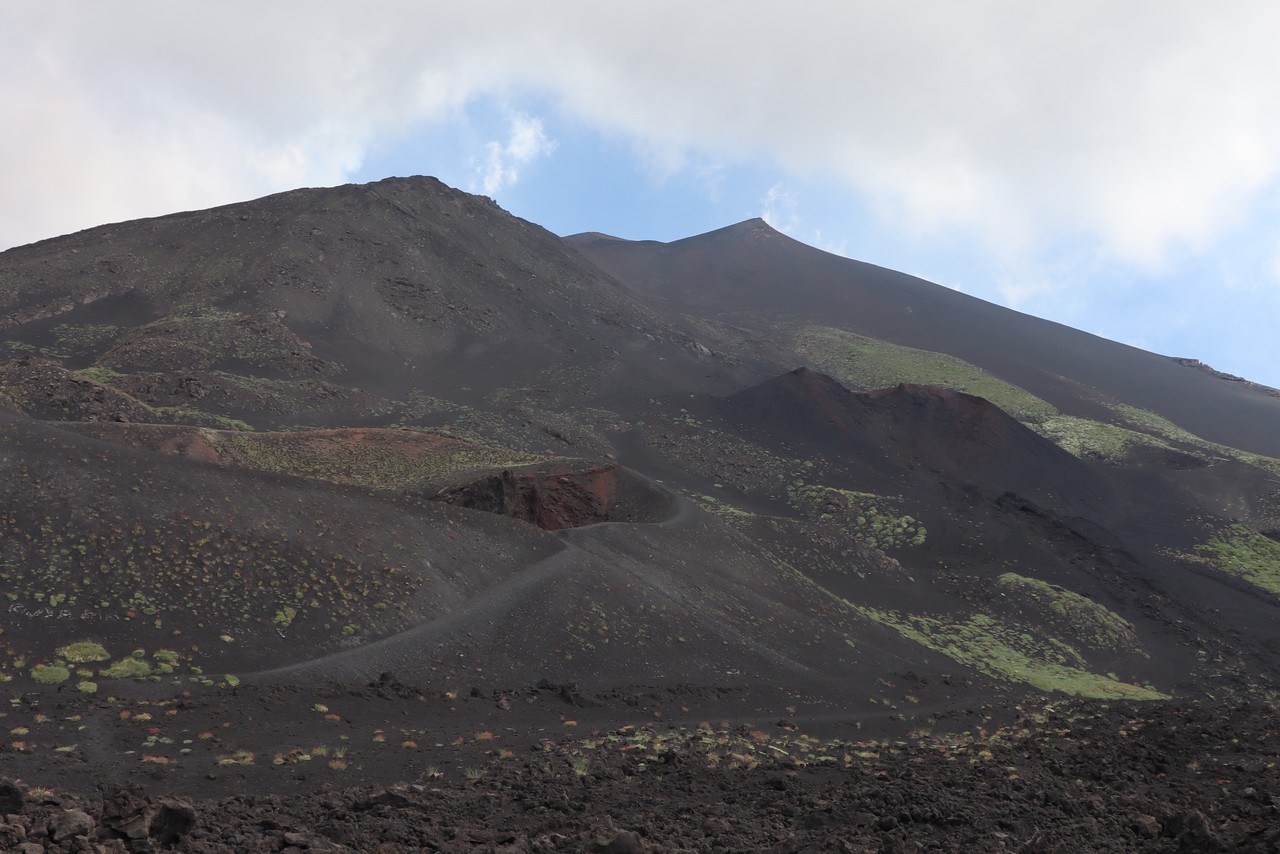
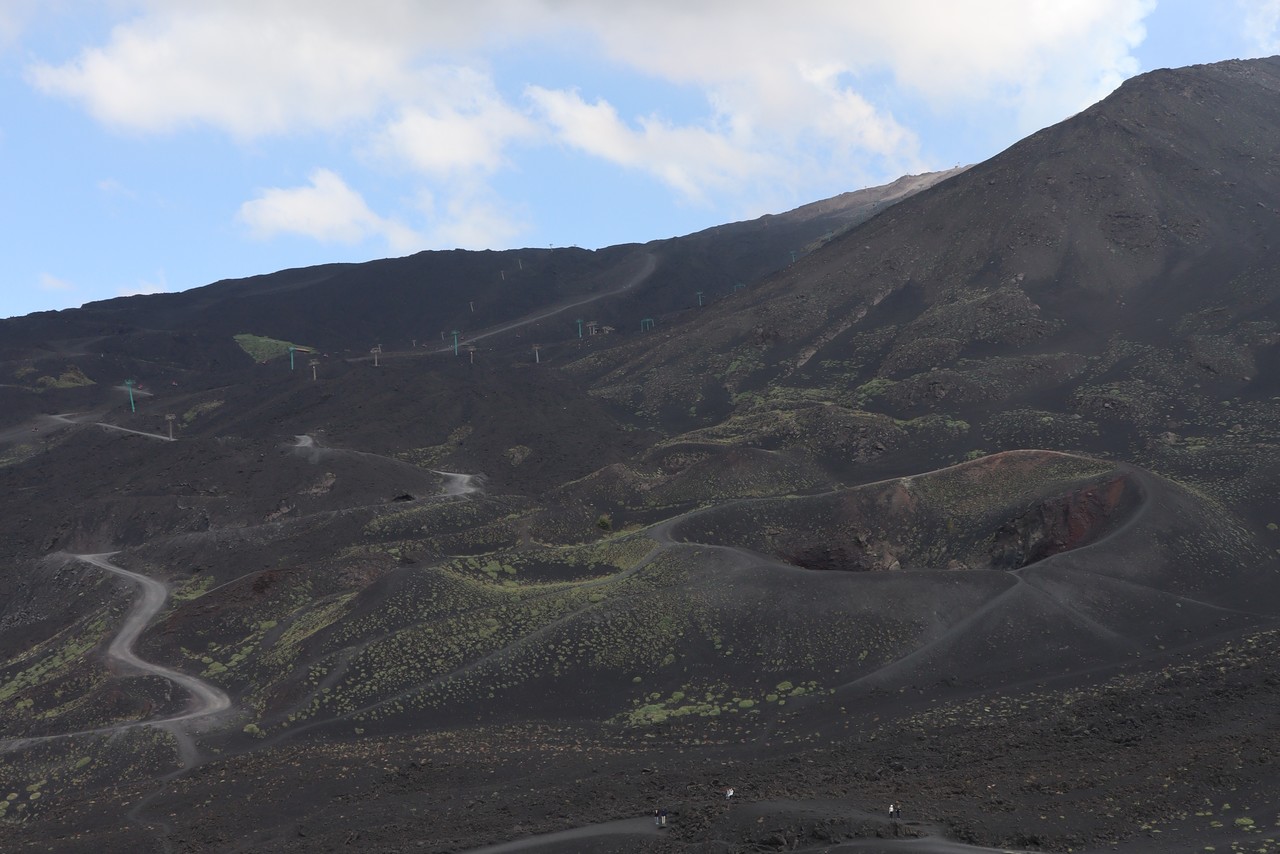
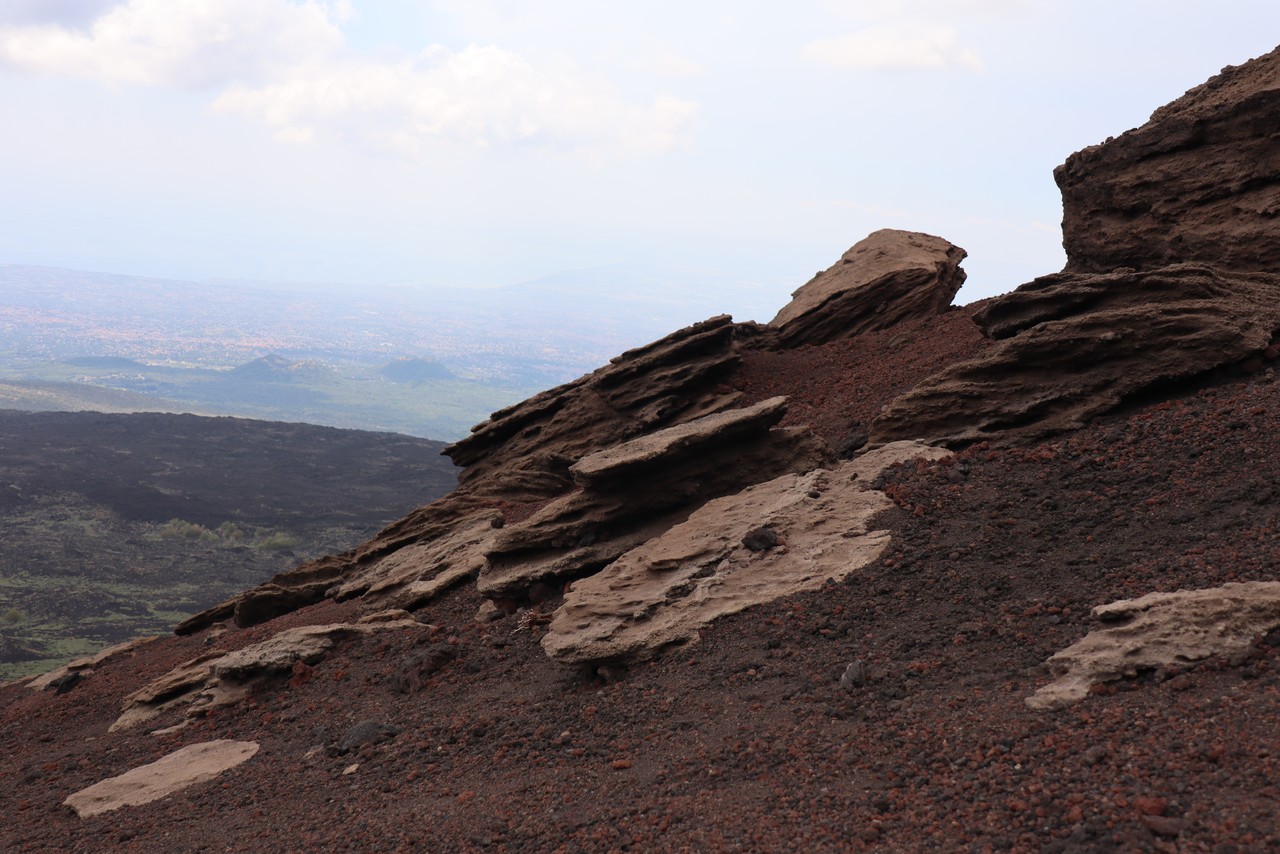
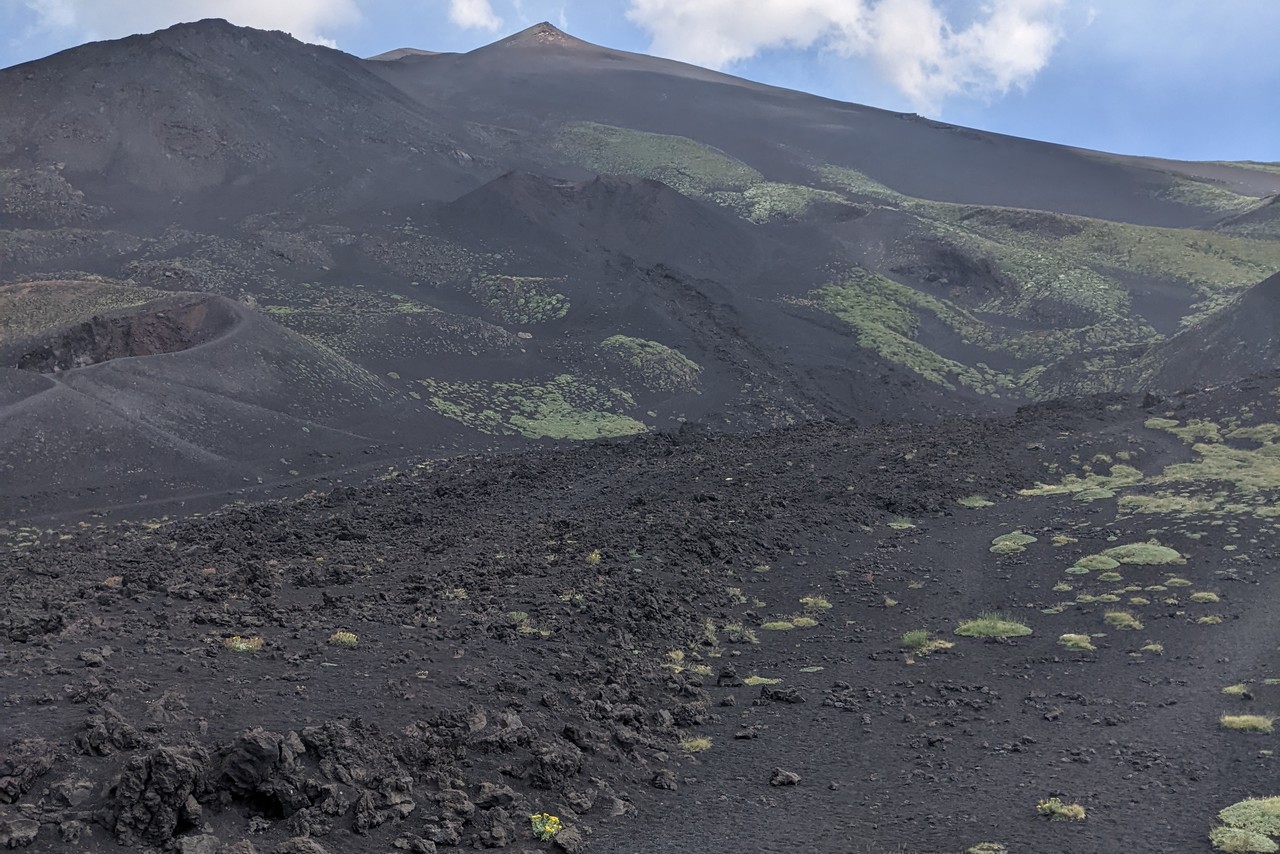
Etna is peaking up at 3375m above sea level and still an active stratovolcano, as we can see for the 2001 eruption. Indeed eruptions occurred in a frequence of 1-2 years. This eruption occurred in the southern flank of Etna, as you can see at the volcanic crater Crasteri Silvestri. Recent activies of Etna show an effusive style of eruption: lava flow propagated on the floor whose velocity of displacement depends of the topography. Volcanic products are very porous with weak densities, mainly composed by glass and some crystals such as clinopyroxenes and pagioclases. This is a basaltic composition, a typical geochemistry found in effusive eruptions. Etna also has phreatomagmatic activity, which means violent explosions and abundant tephra deposits (seen as thin light layers on the field).

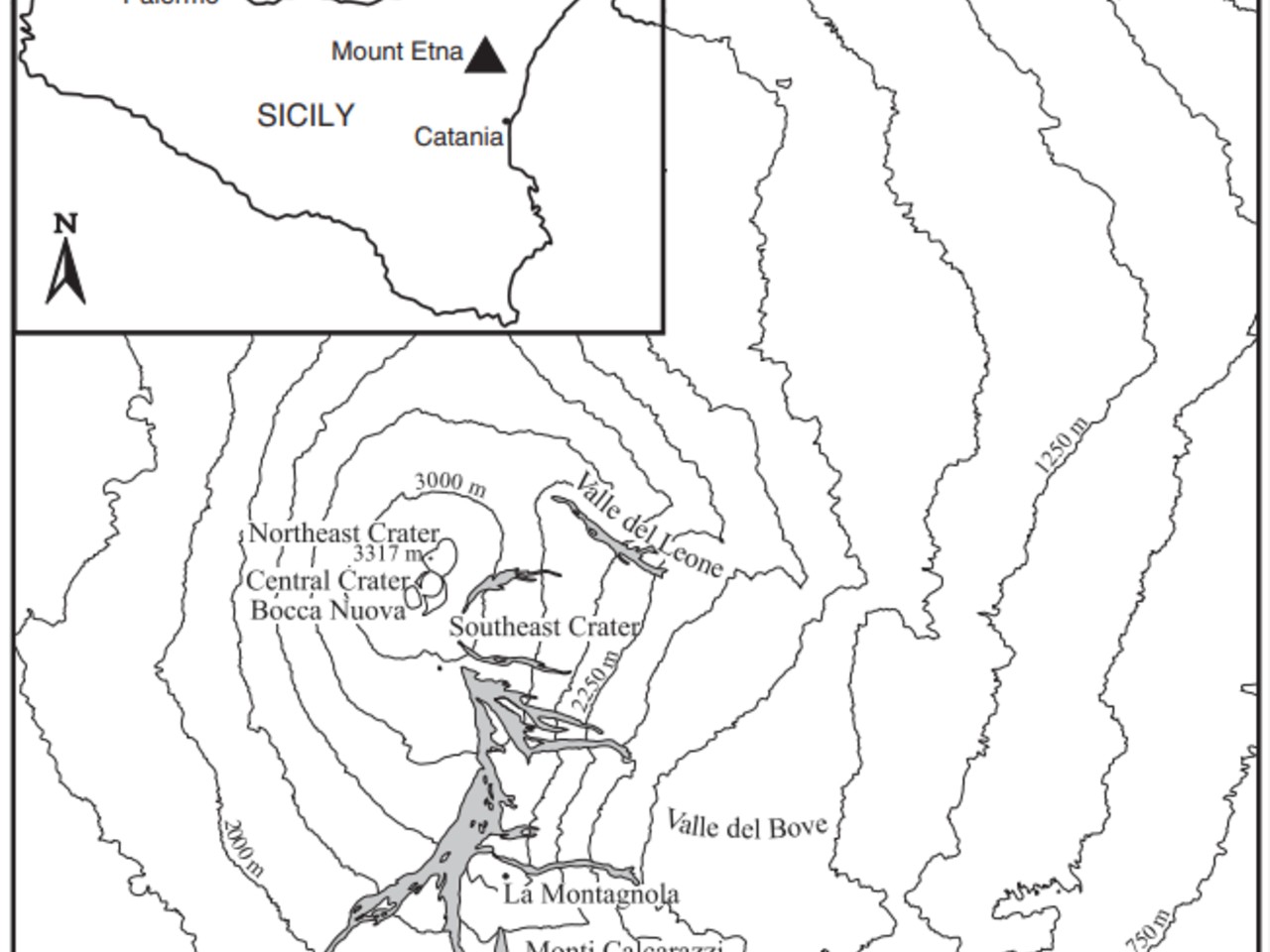
Map showing the distribution of lava flows from 2001 eruption, in the southern flank of Etna.
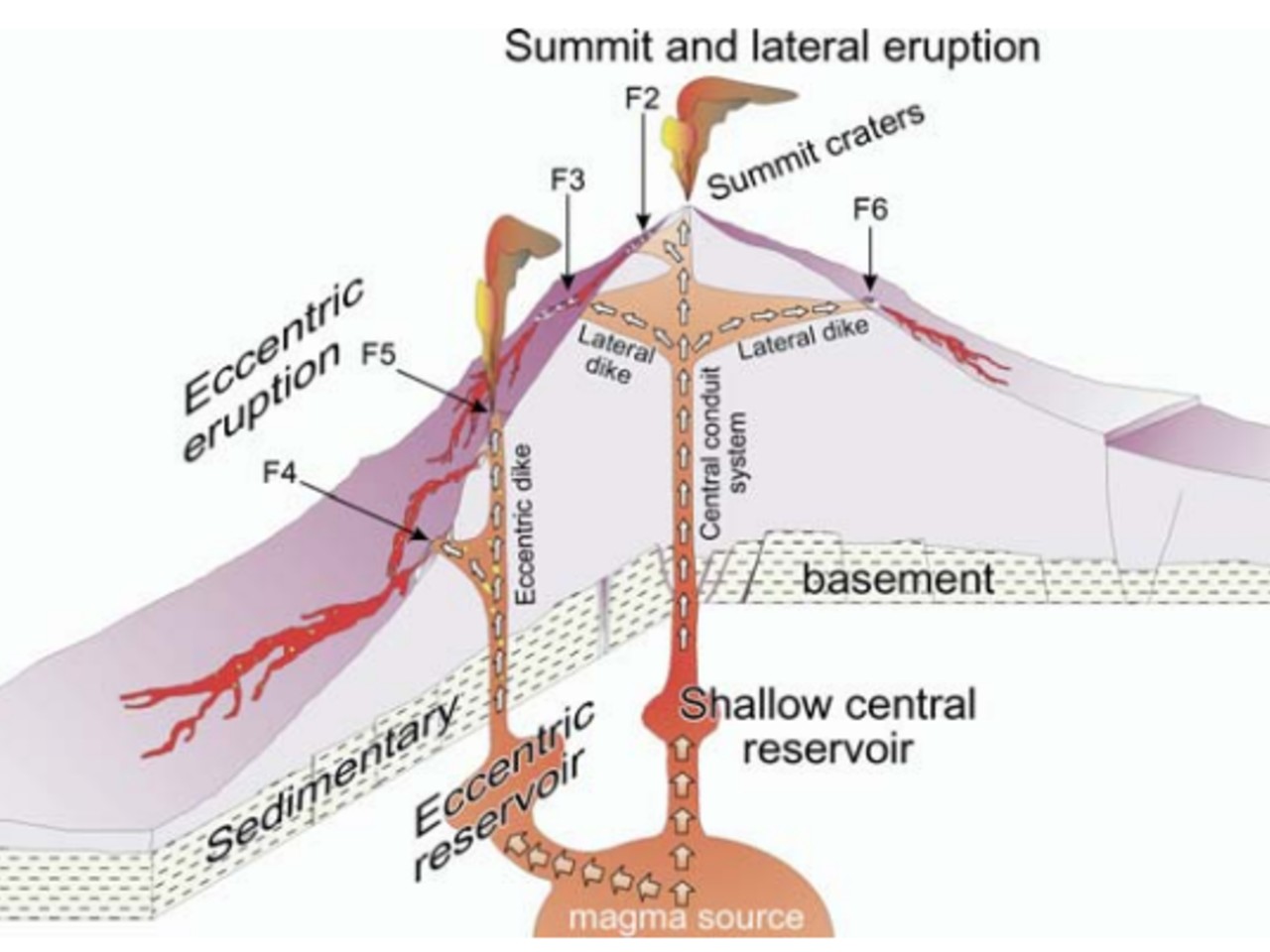
Two magmas have been involved during 2001 eruption: one which drains laterally from the conduits and is erupted from fissures further downslope, and one which is erupted vertically from an eccentric reservoir, in contact with the sedimentary substratum. Phreatomagmatic activity occured mostly by volcanic products coming from the eccentric dyke.