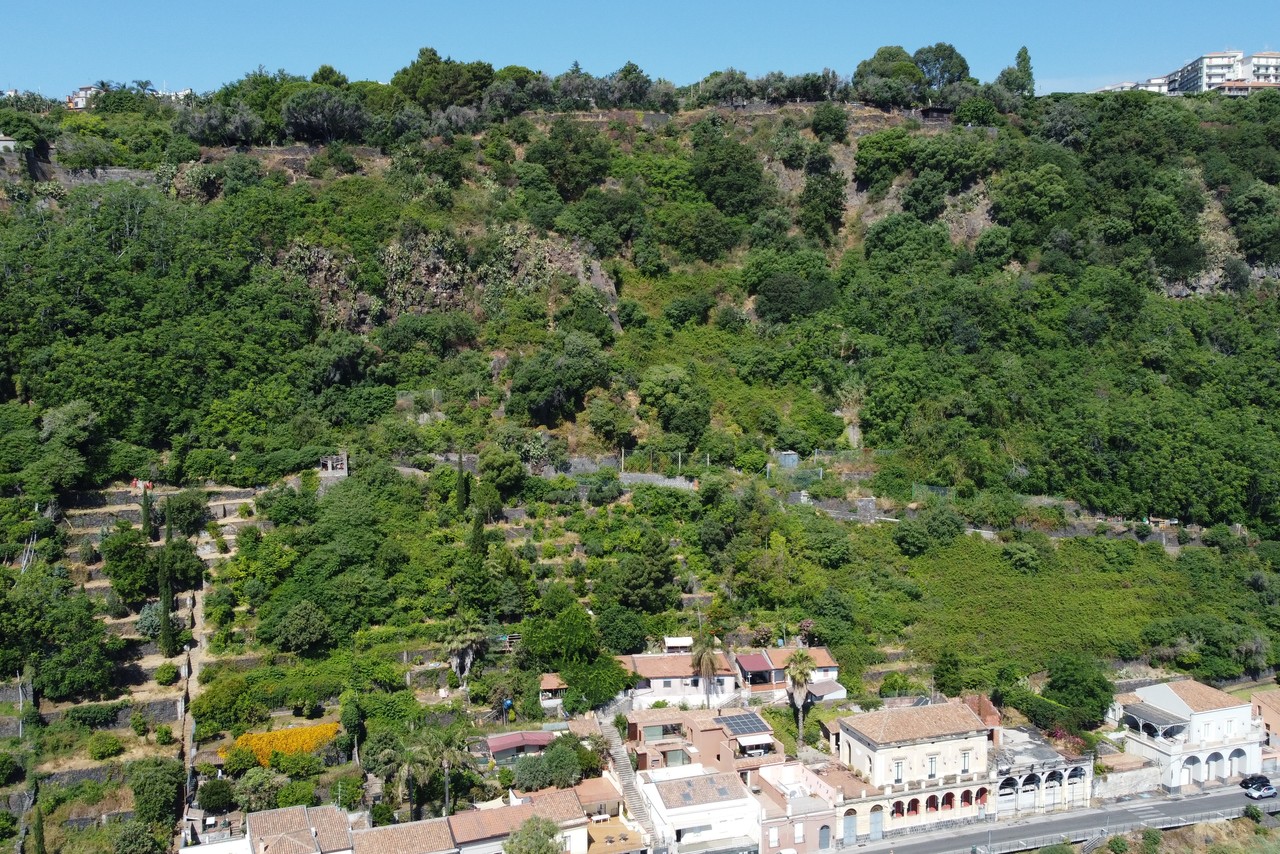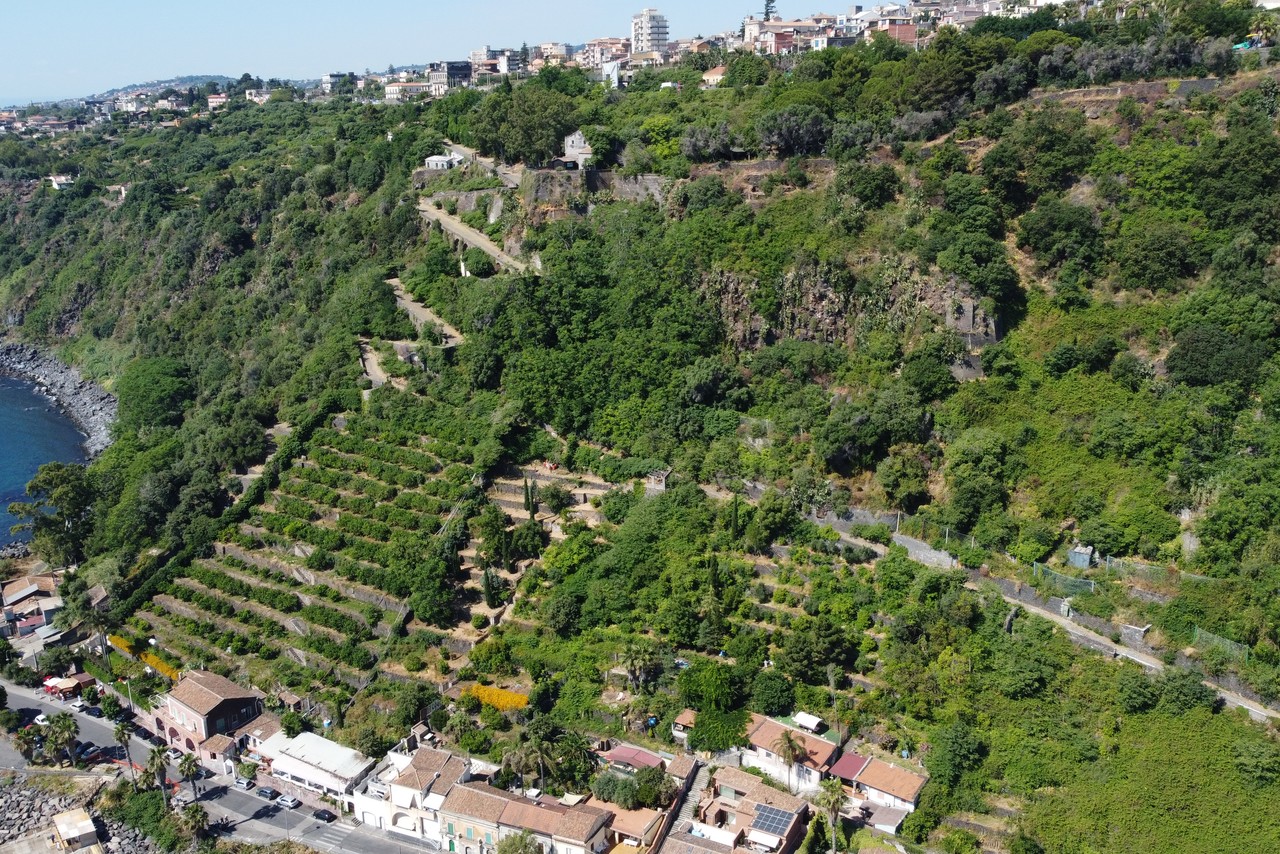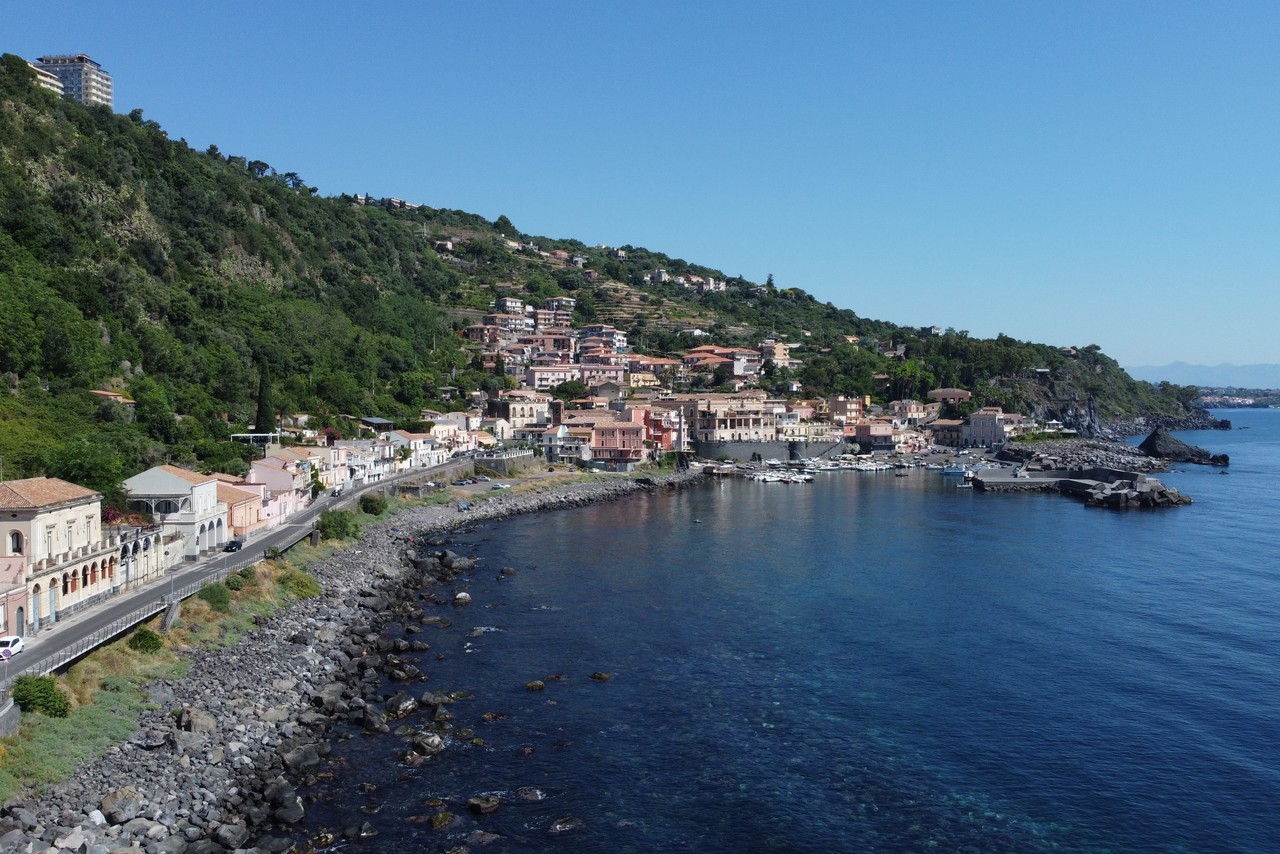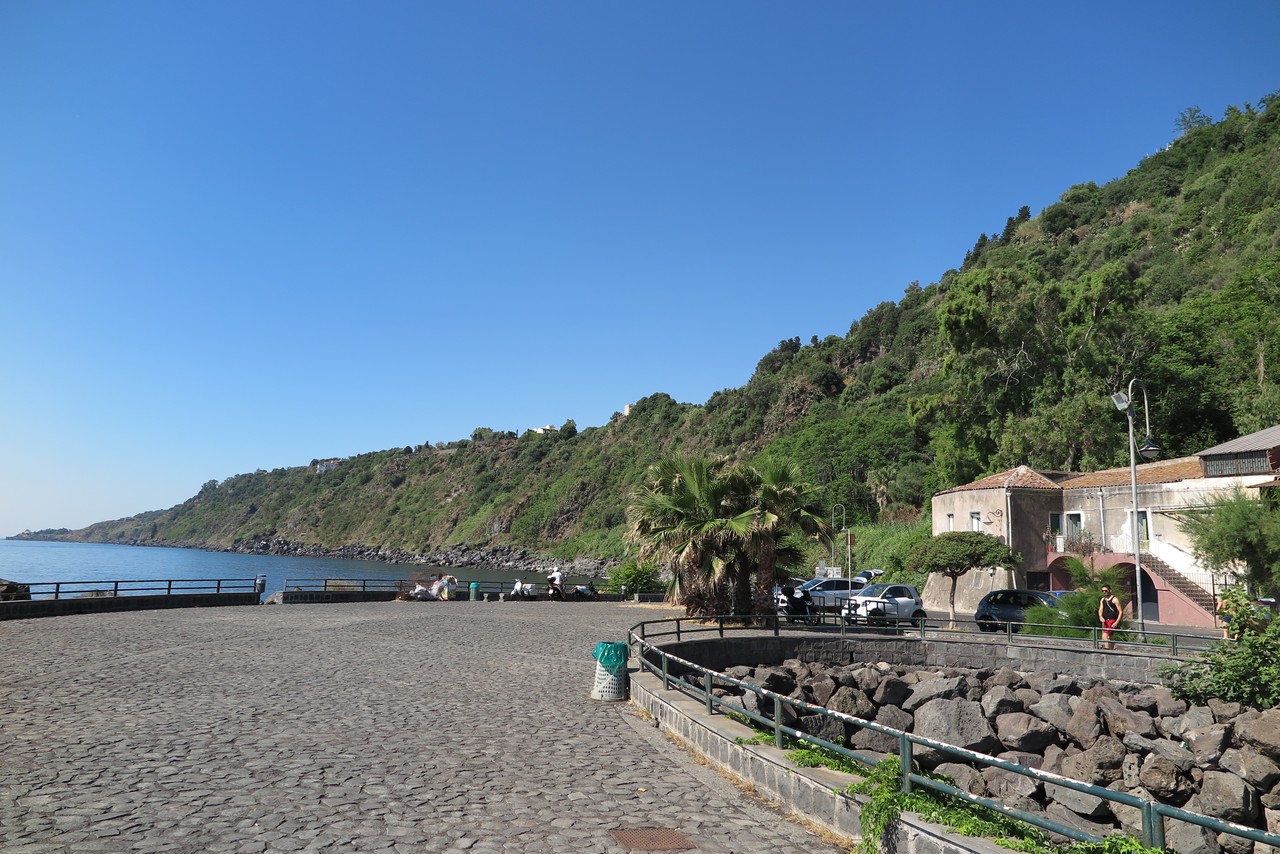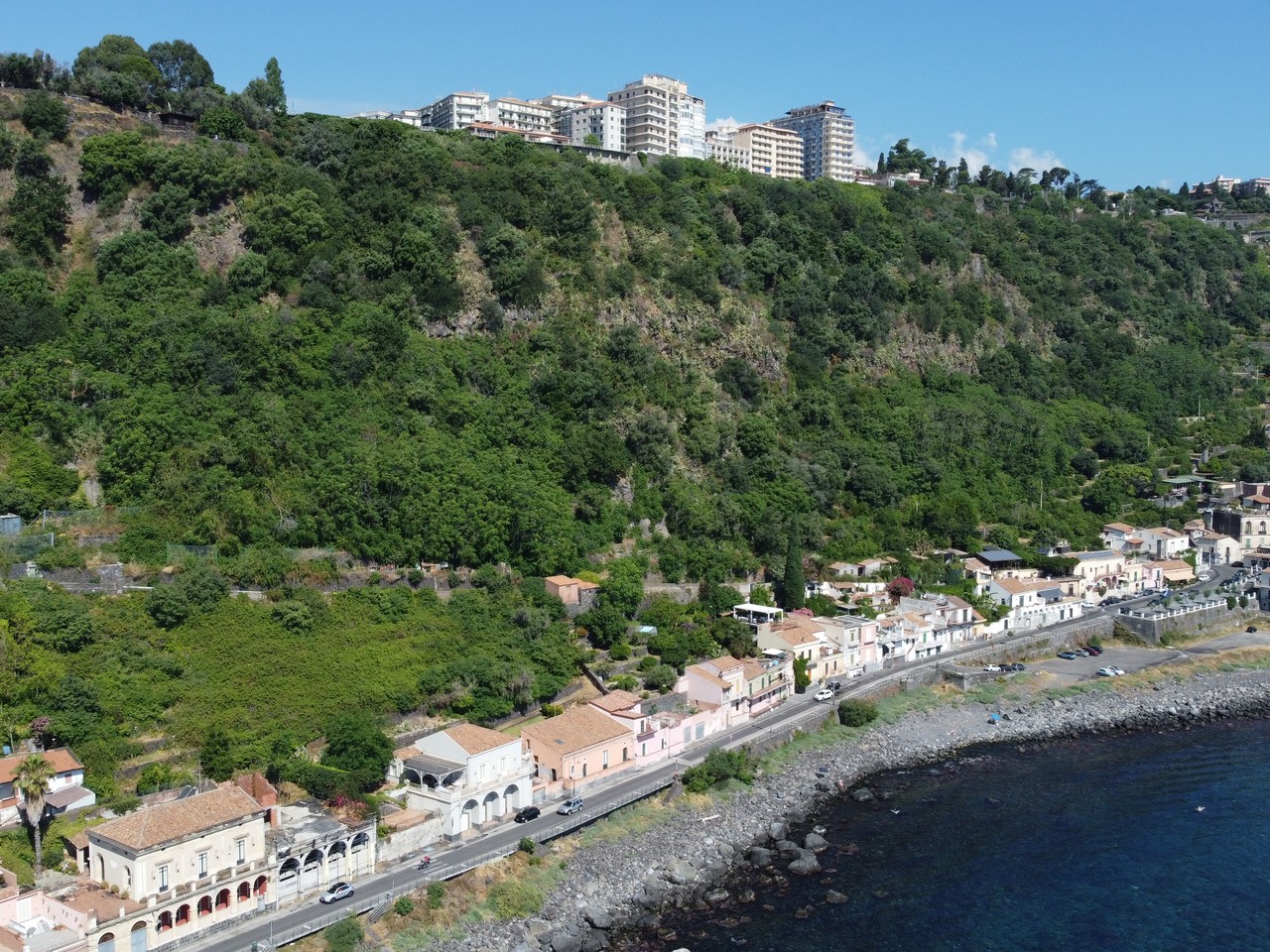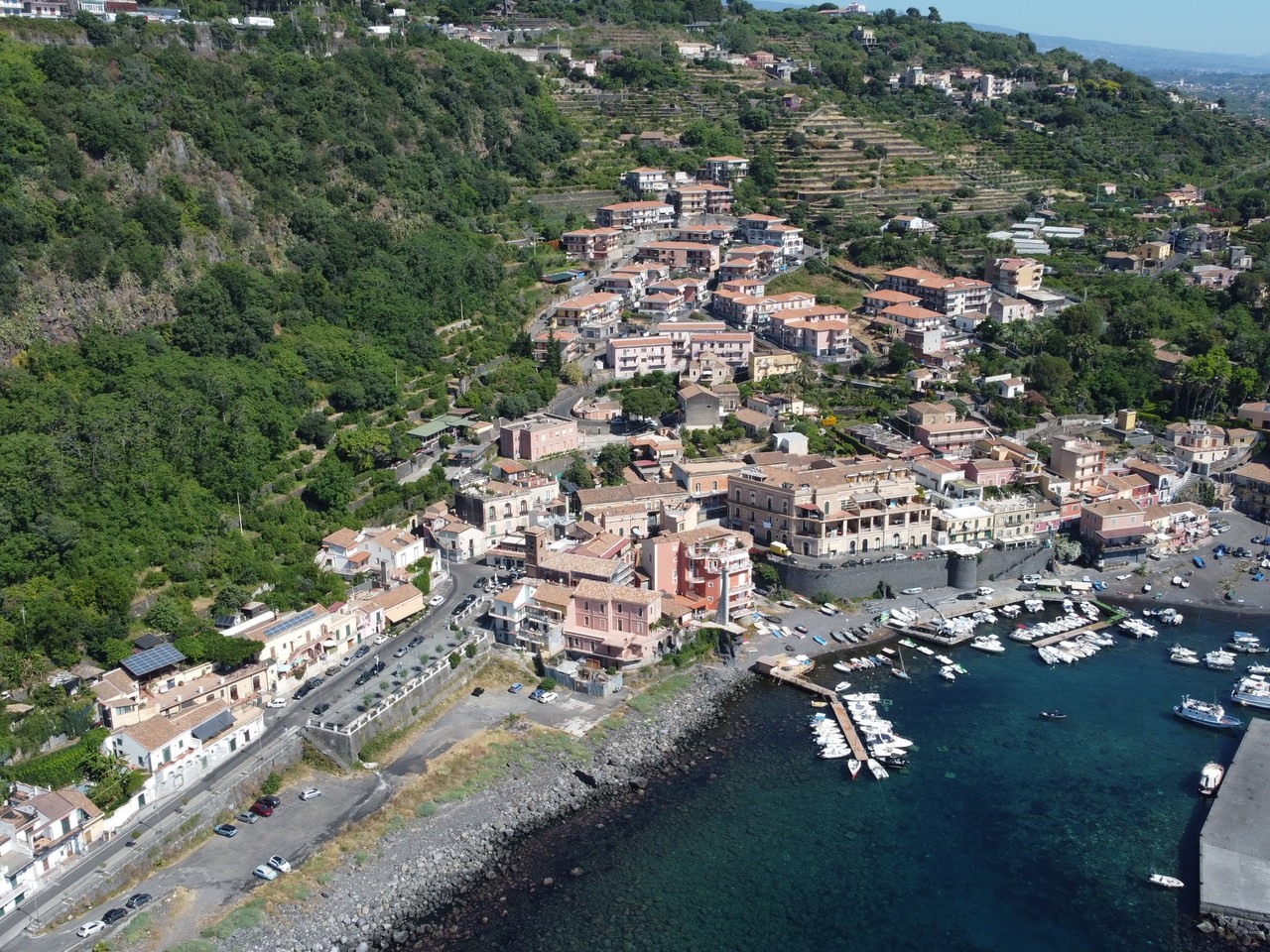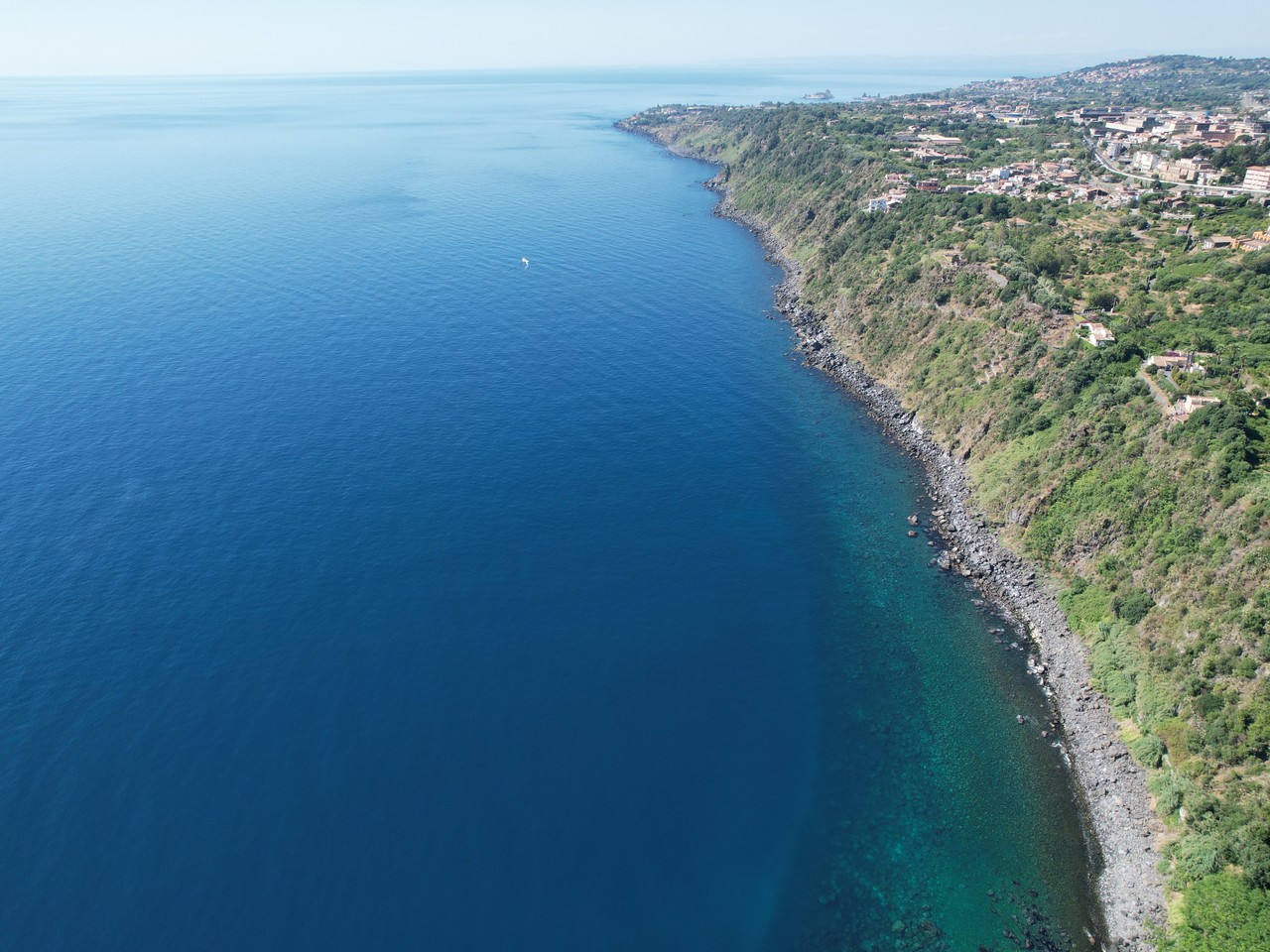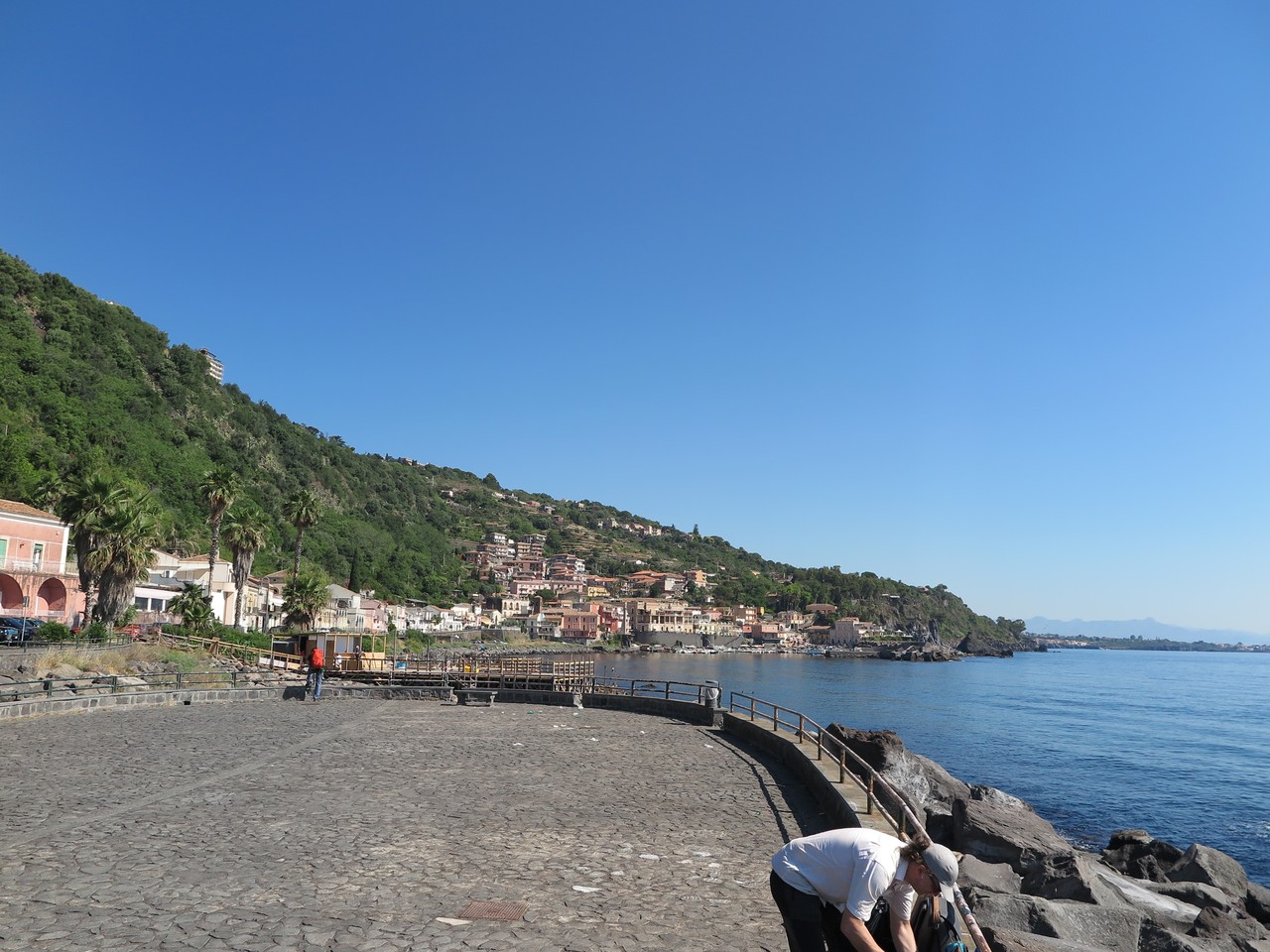
In the small town of Acireale, located on the west coast of the Ionian Sea, there is a picturesque cliff. The fact is, that 120-meter scarp is an active fault, which is cut through volcanic deposits derived from old lava flow.
The fault in Acireale has a length of about 7 km and shows rectilinear fault scarps up to 120 m high. This NNW trending fault is characterised by oblique kinematics with right-lateral components. Its creation is estimated to be when the Etna was uprising about 220 ka ago, whereas the lava flow is 60 – 120 ka old. The Aci Reale fault is still active and it’s one of the most active dislocations on the eastern flank of the volcano. In that way the lava flow was gradually cutted by fault during numerous earthquakes.
The Acireale fault represents the southern segment of the Timpe Fault System. This is the most important system of faults located on the eastern flank of Etna, comprising active parallel east-facing faults, characterised by frequent, low magnitude and very shallow seismic events. At the same time it is considered as a potential source of major historical earthquakes and tsunamis in Eastern Sicily in historical times. Generally these structures are connected with normal-oblique faulting related to WNW-ESE regional extension.