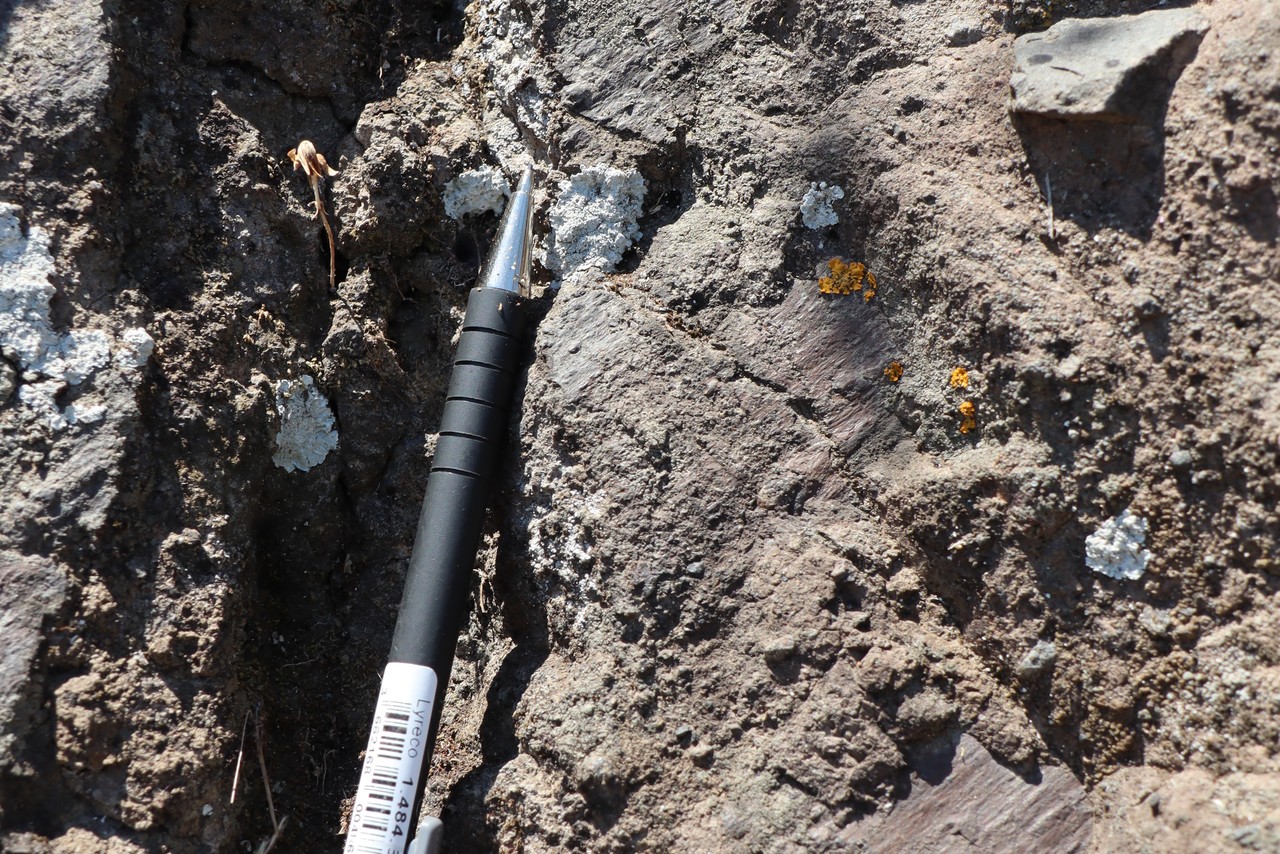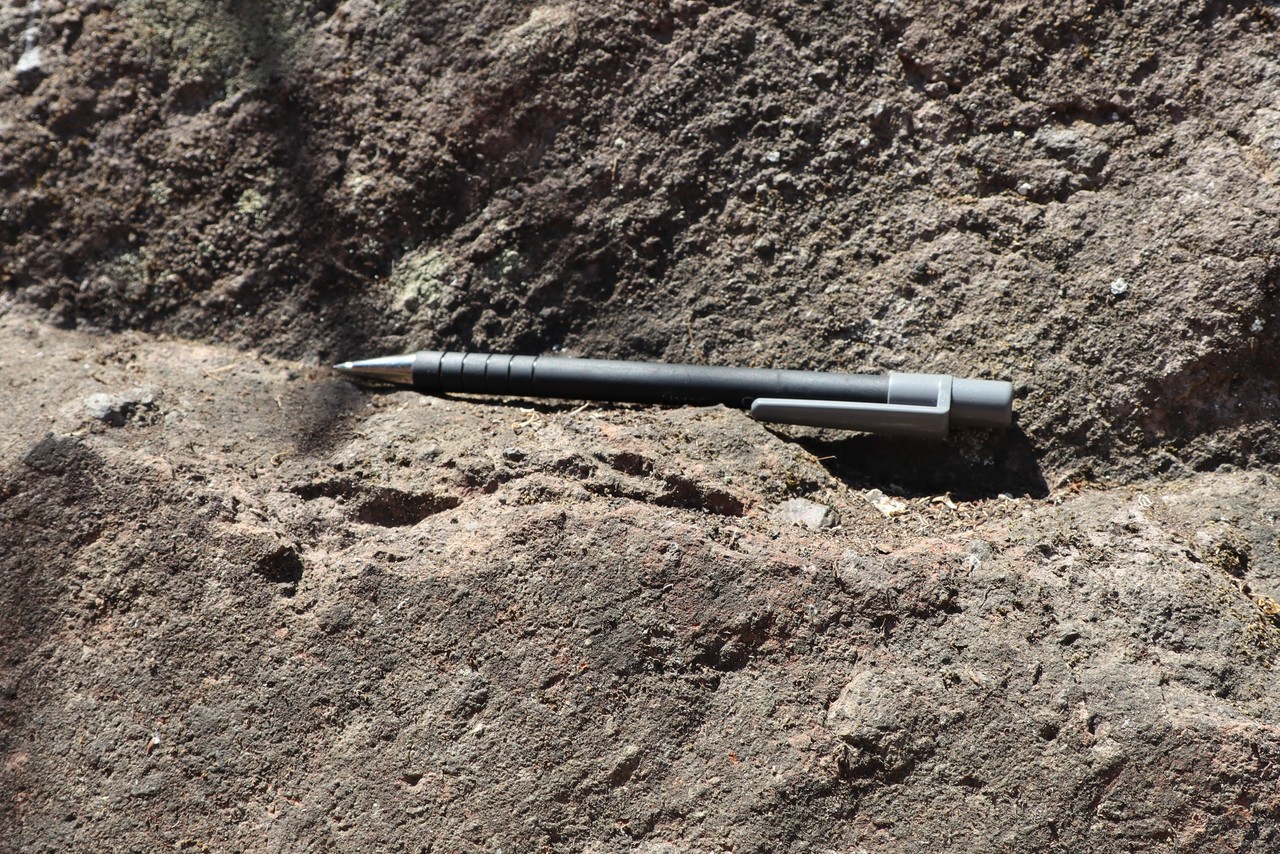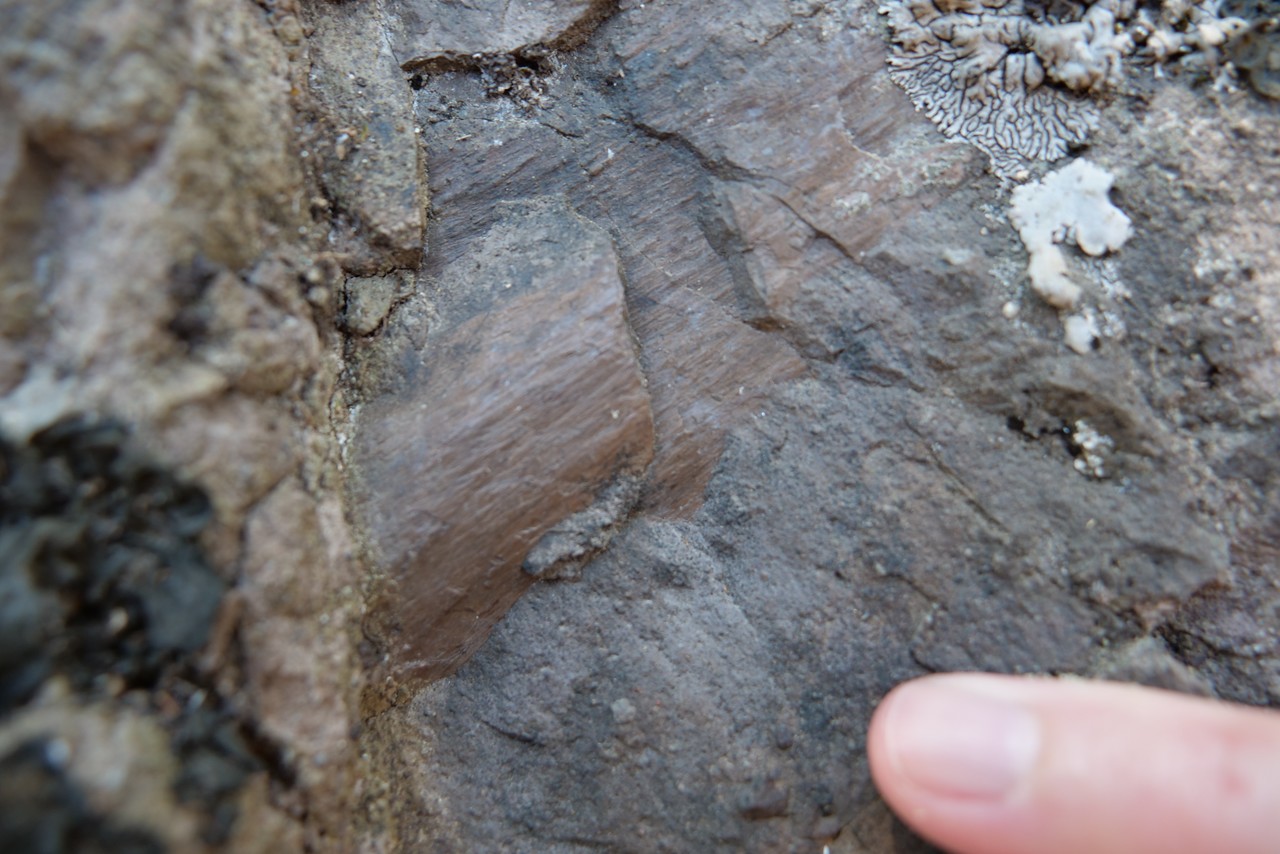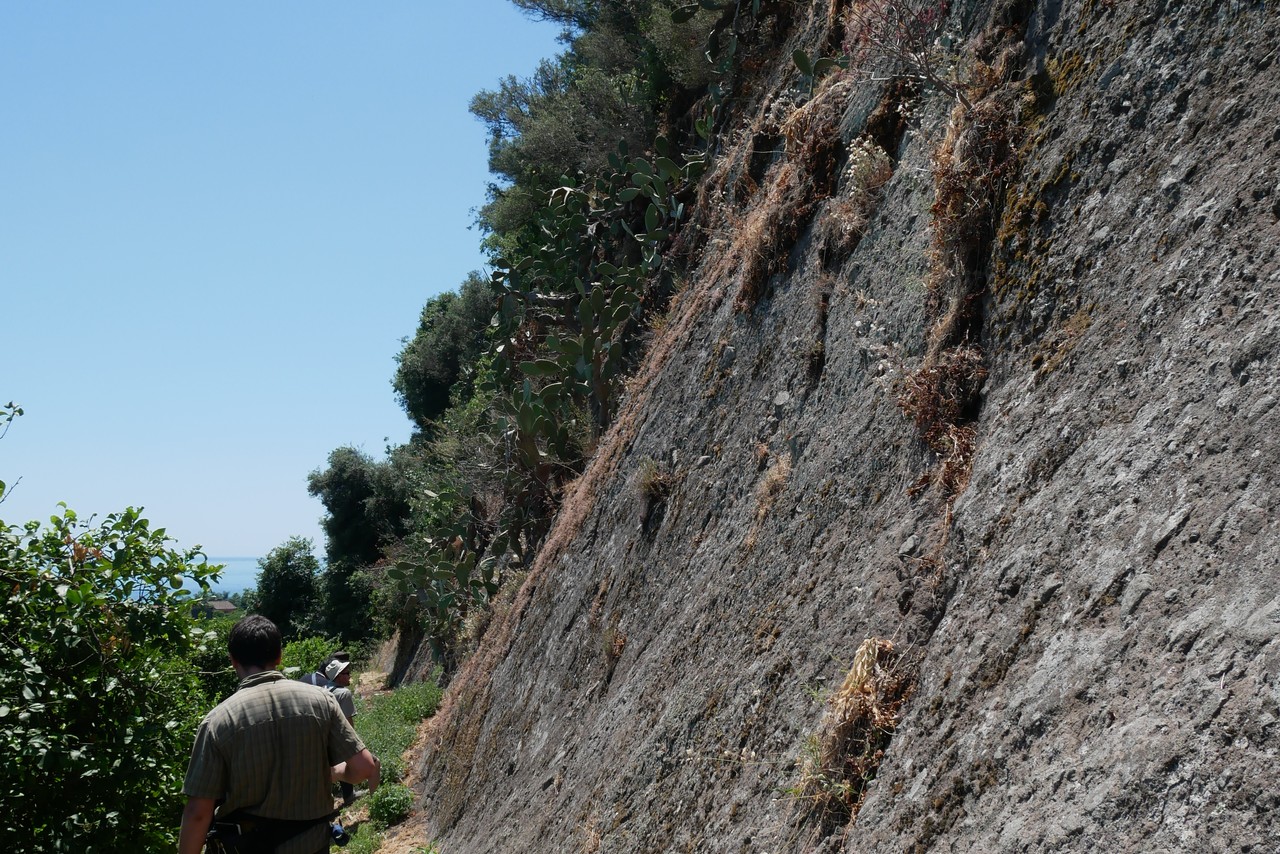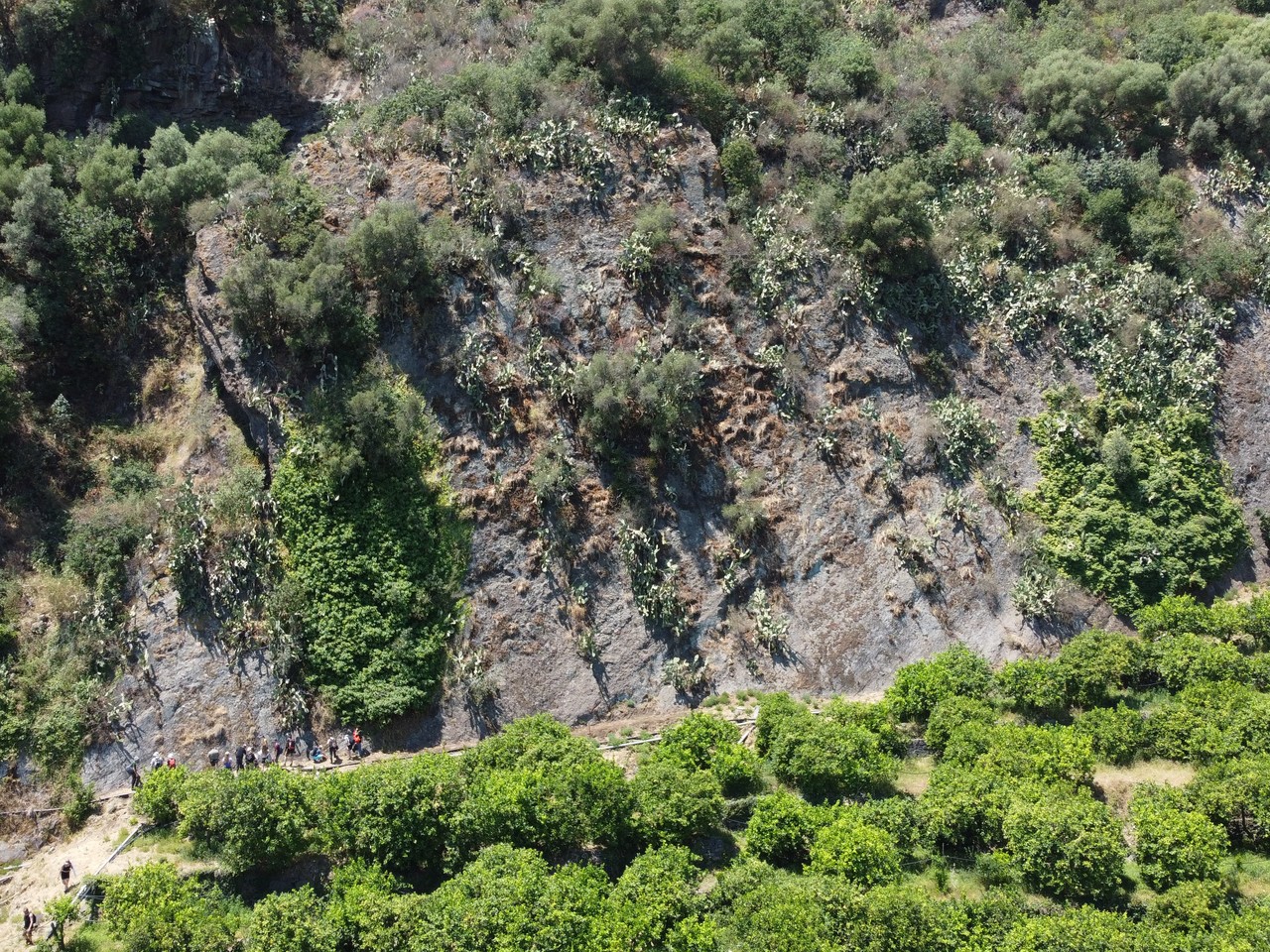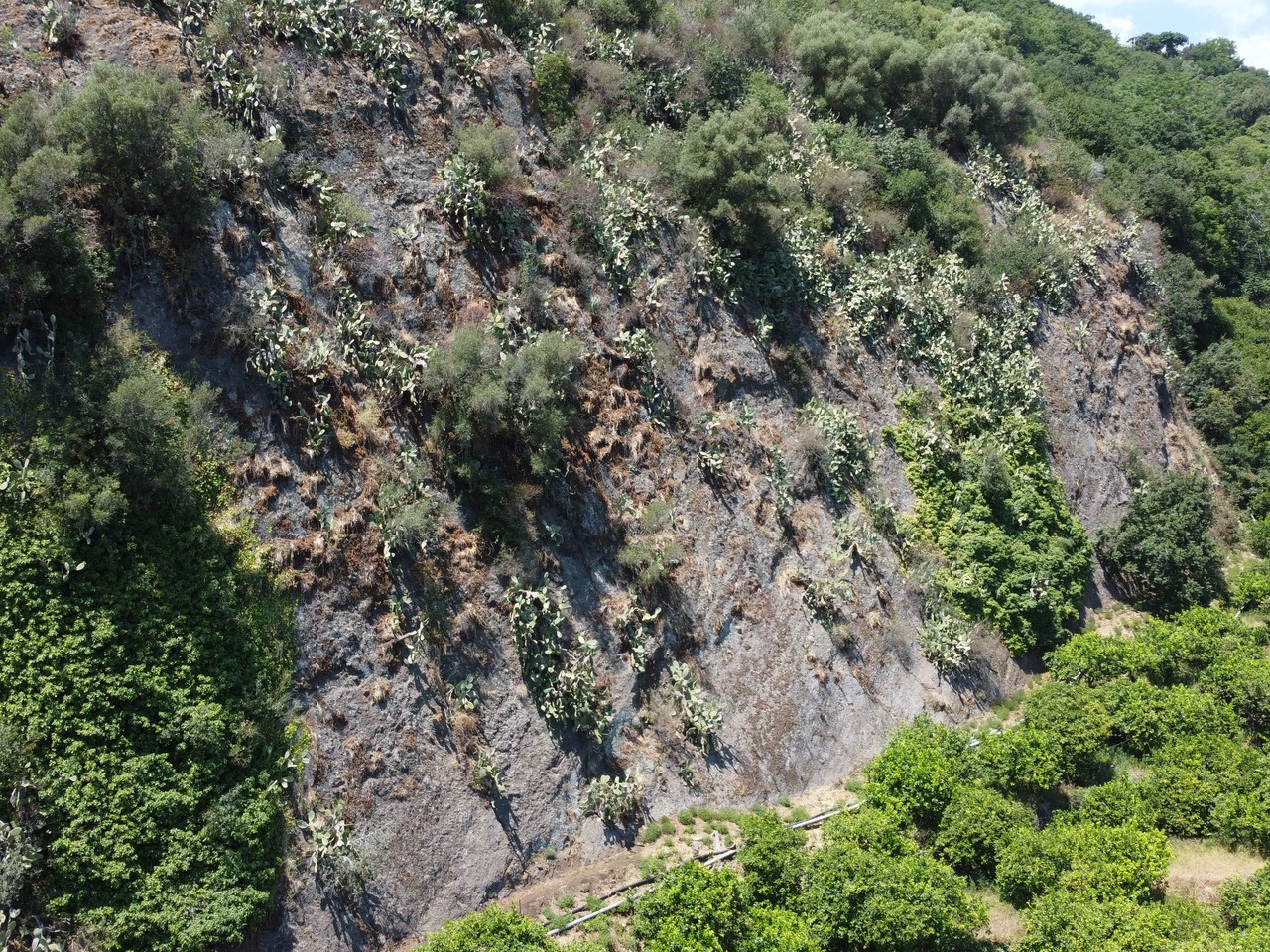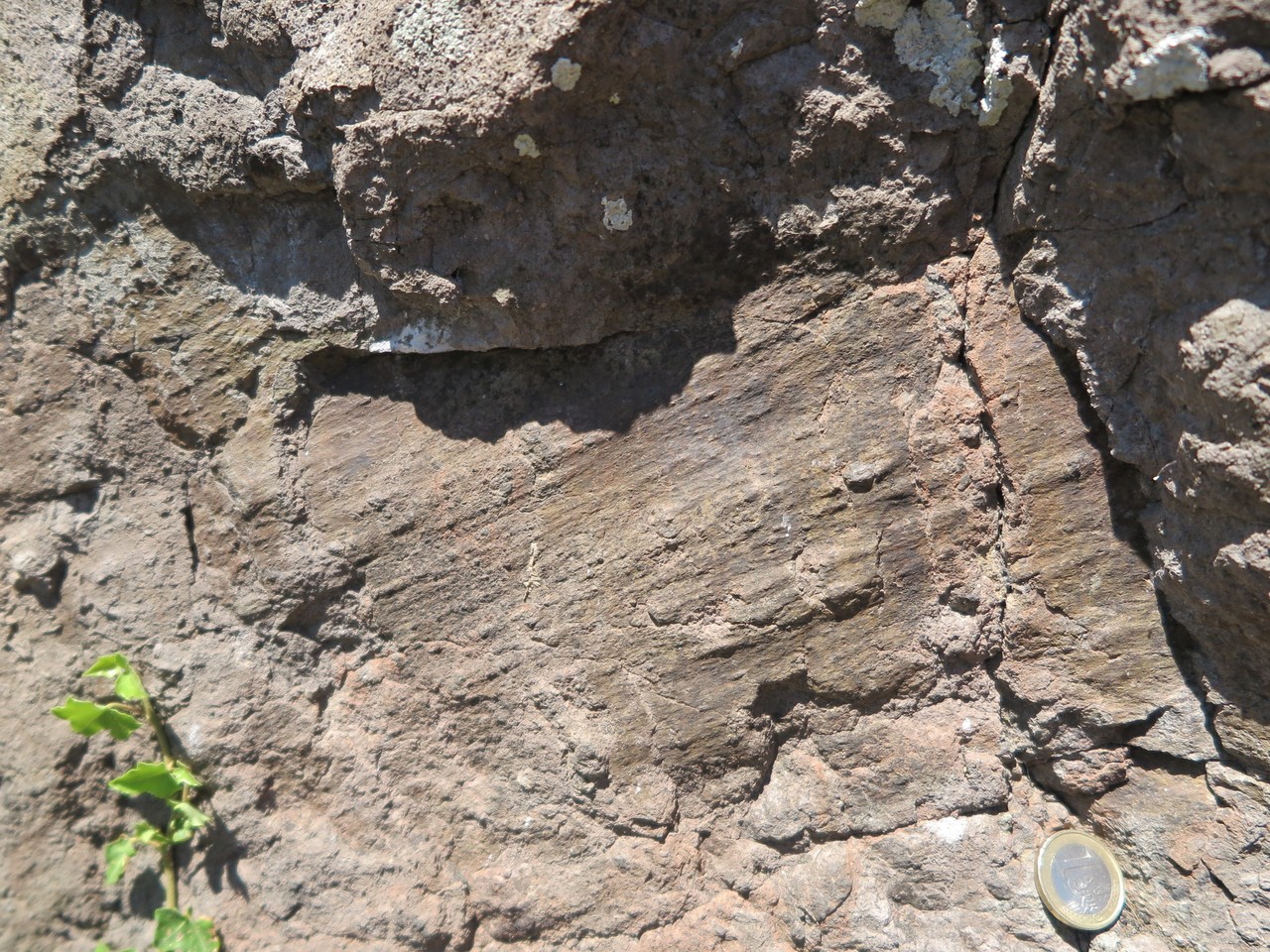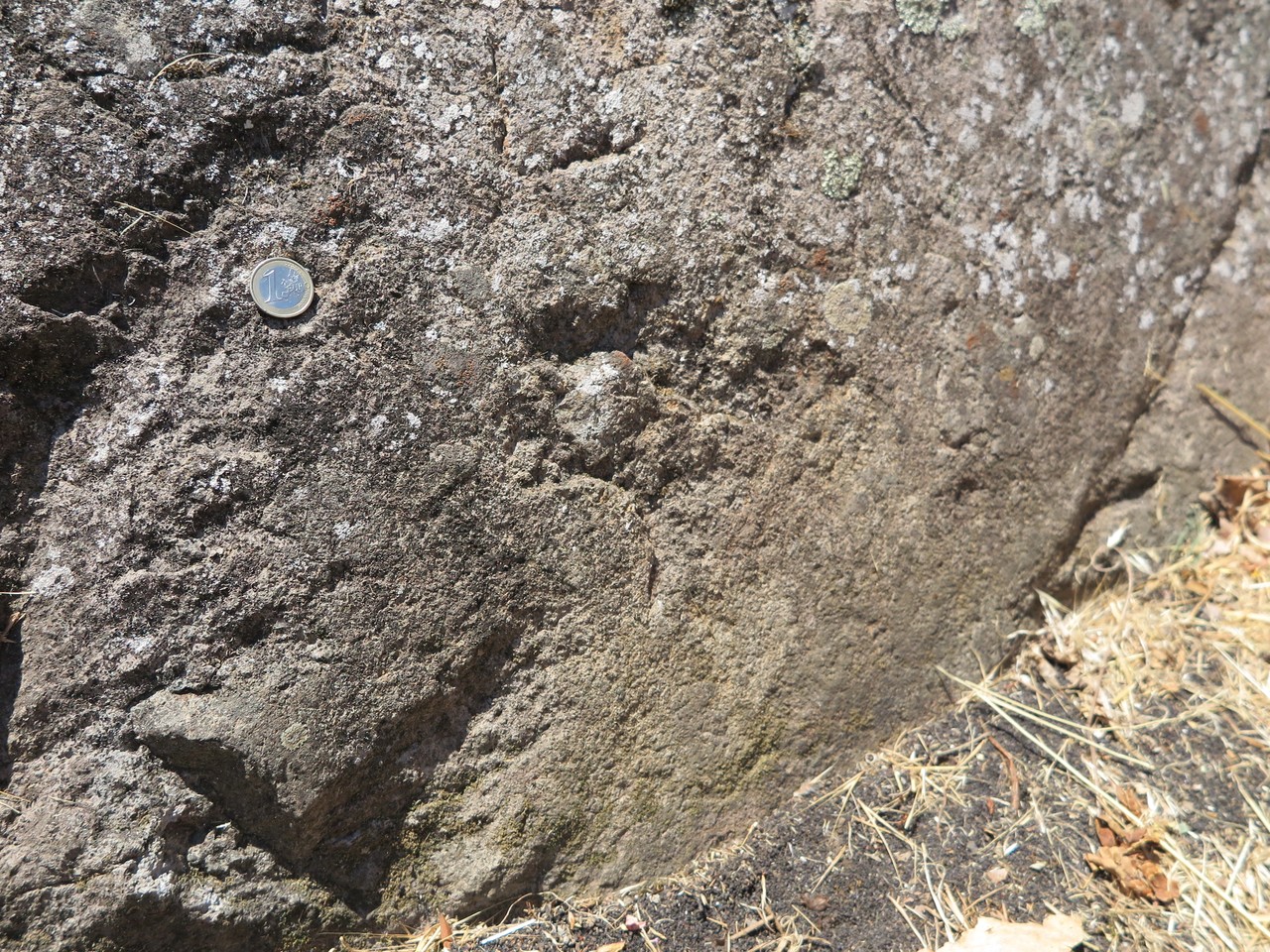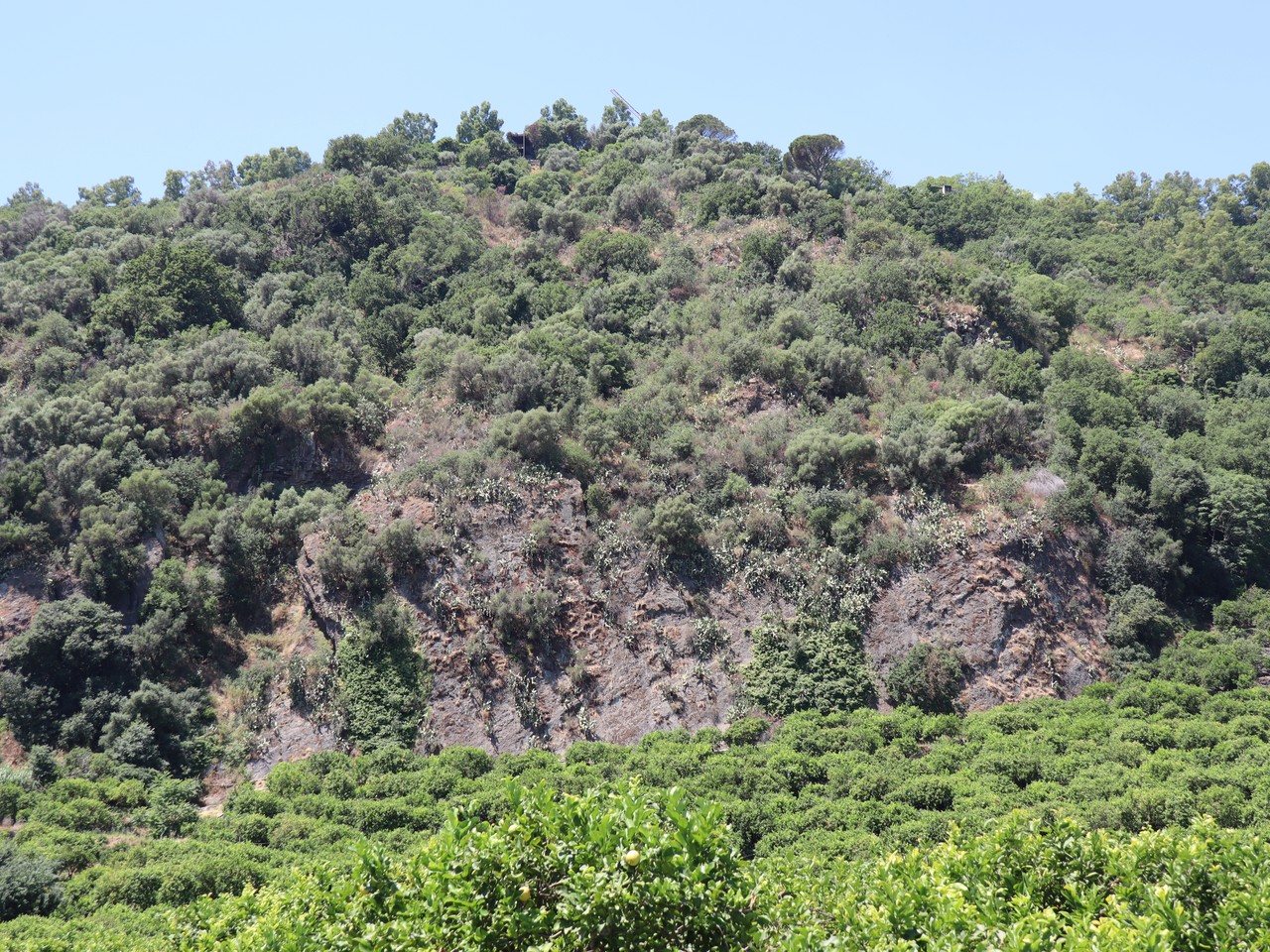
The S. Tecla Fault covers a large area with a scarp height that reaches 190 m a.s.l. It extends for 5 km and reaches 2.5 km offshore. The master fault offsets a 200-0 kyr volcanic sequence, from the bottom to the top. The historical seismicity is characterised by eight events from 1865 until 2005, with magnitude ranging between 3.4 and 4.7. Very important evidence for recent rapid vertical deformation at the base of the fault scarp has been found - a nude surface exposed, for a length of 20 m and with a 0.25 m height of rapid vertical deformation, where oblique slickensides are visible with pitches ranging between 30° and 50°, that indicate a right-lateral component of slip. Through a technique called lichenometry, scientists were able to calculate, through the size of the lichens, a relative time difference between the fresh slickenside and the older part of the scarp. Thanks to a nearby abandoned house they were able to associate this relative time difference with absolute time. Through these measurements they've found that the fresh slickenside can be associated with the earthquake of the 3rd August 1973 (3.8 M).