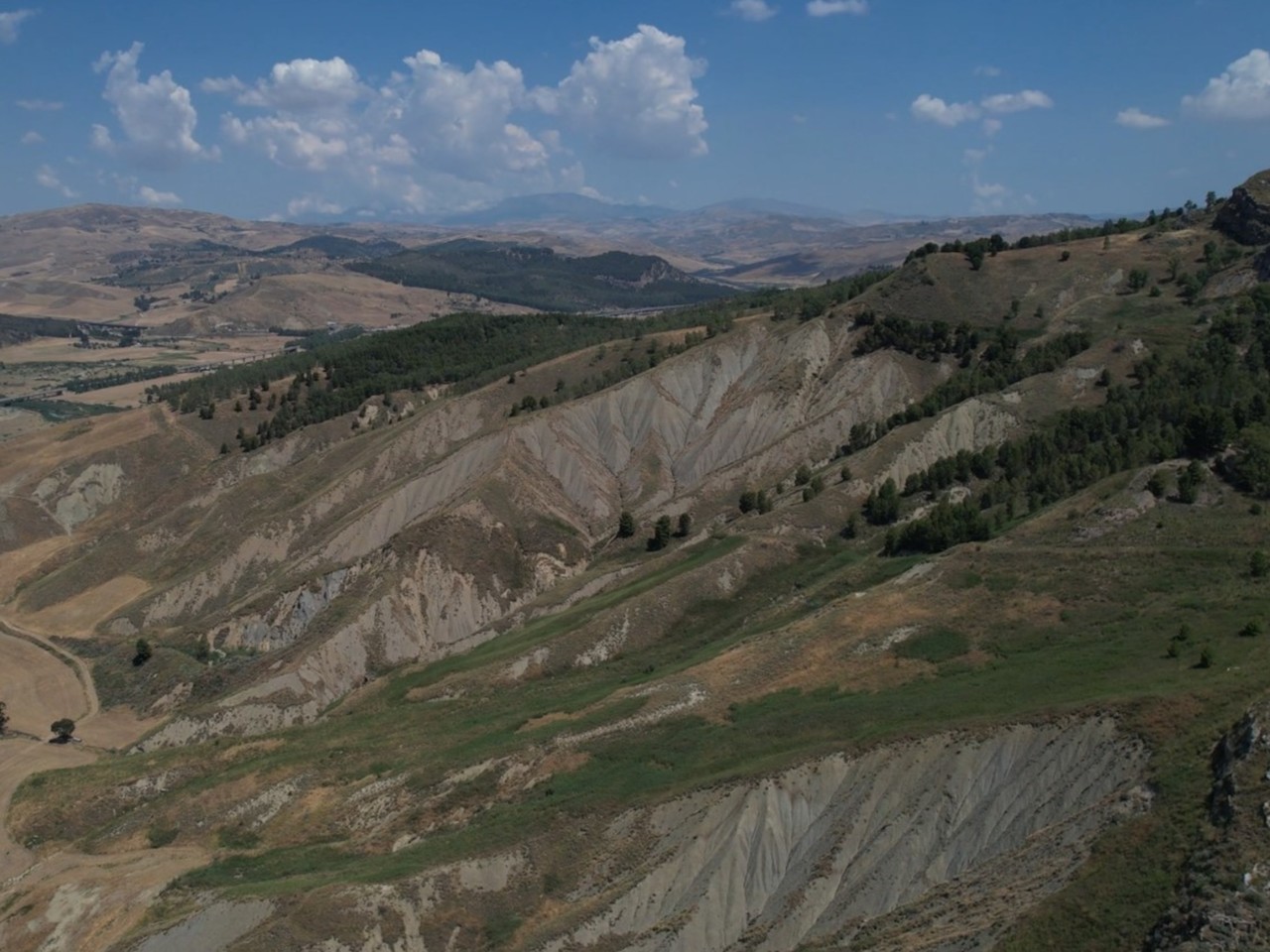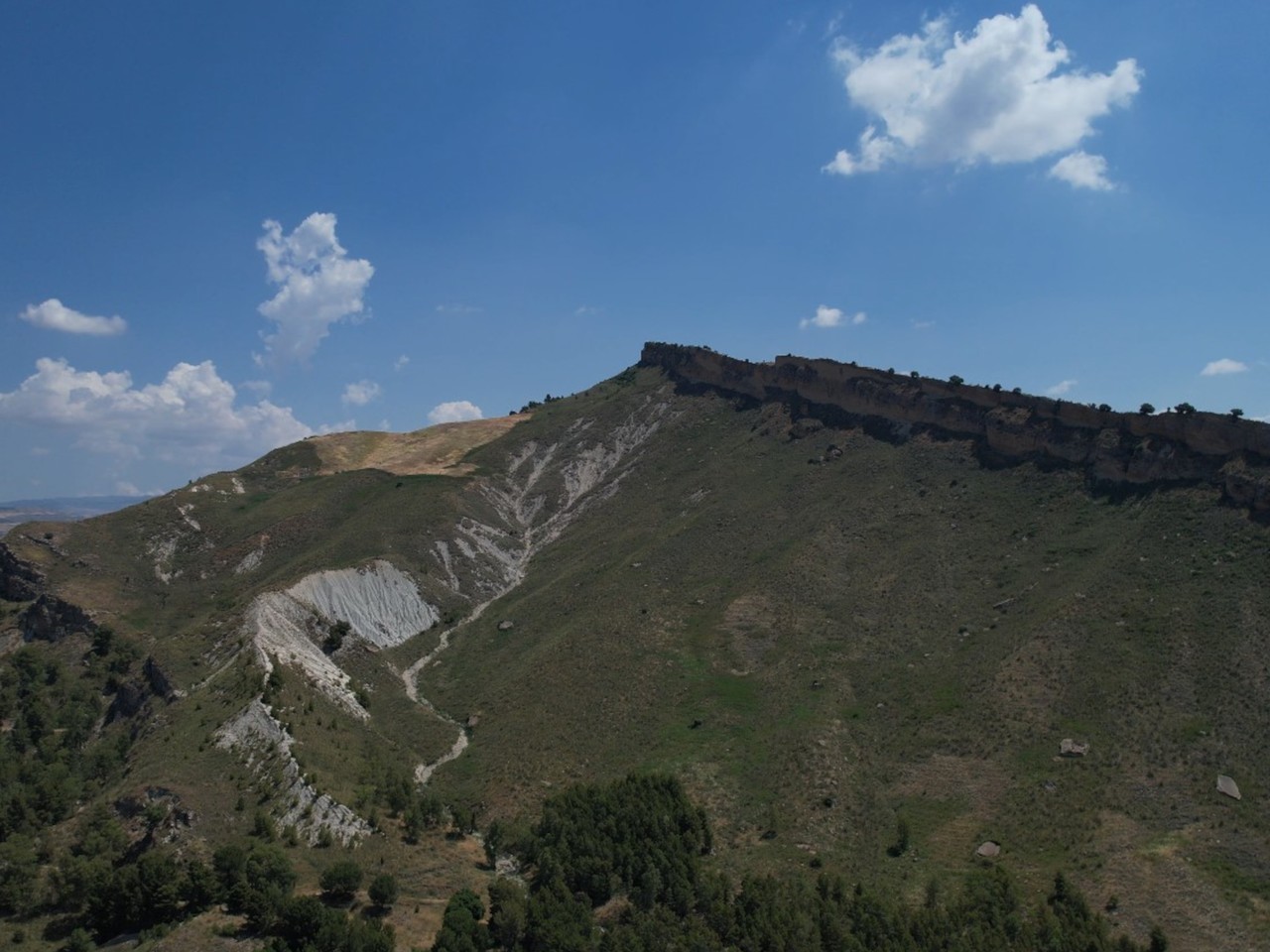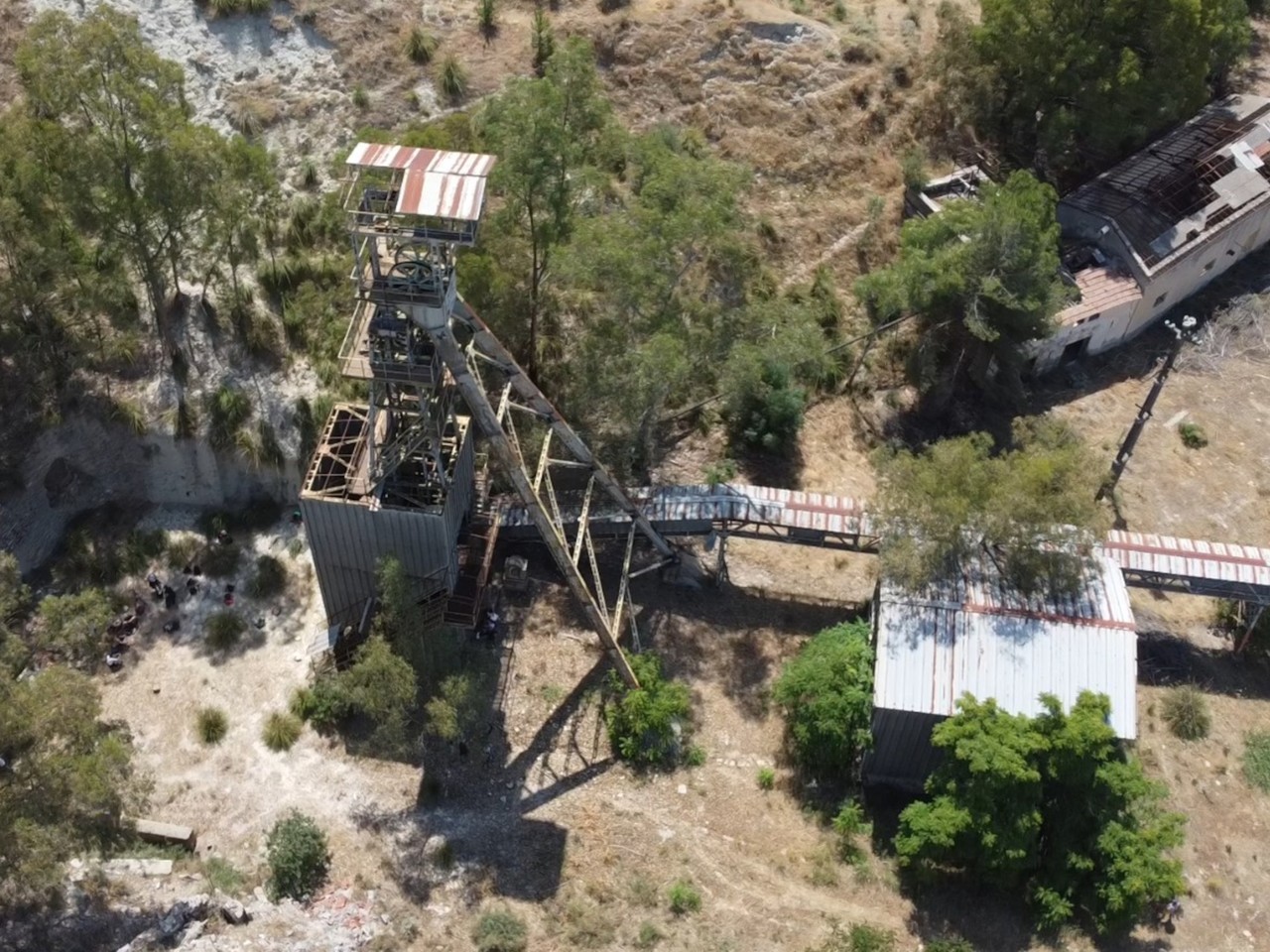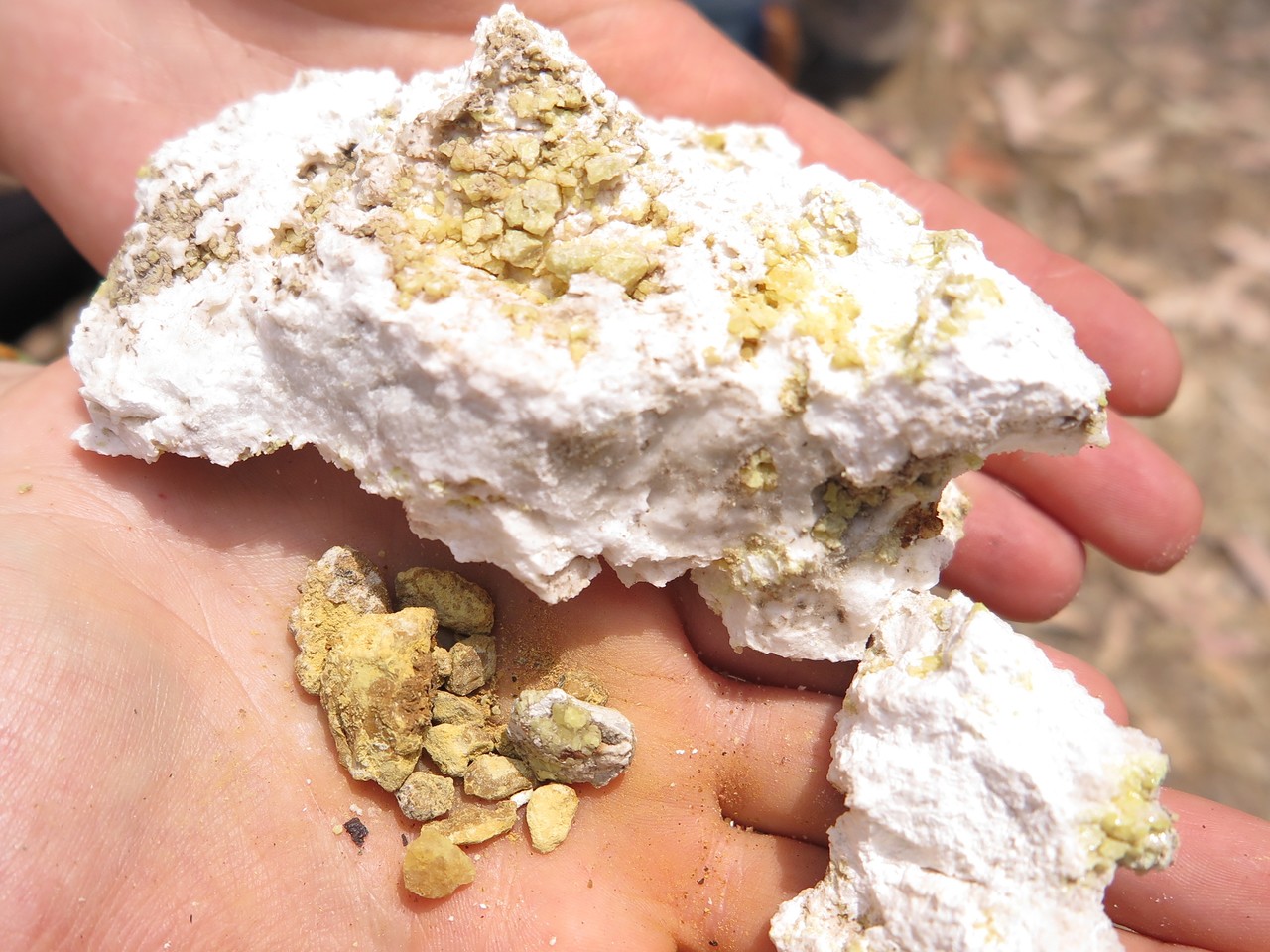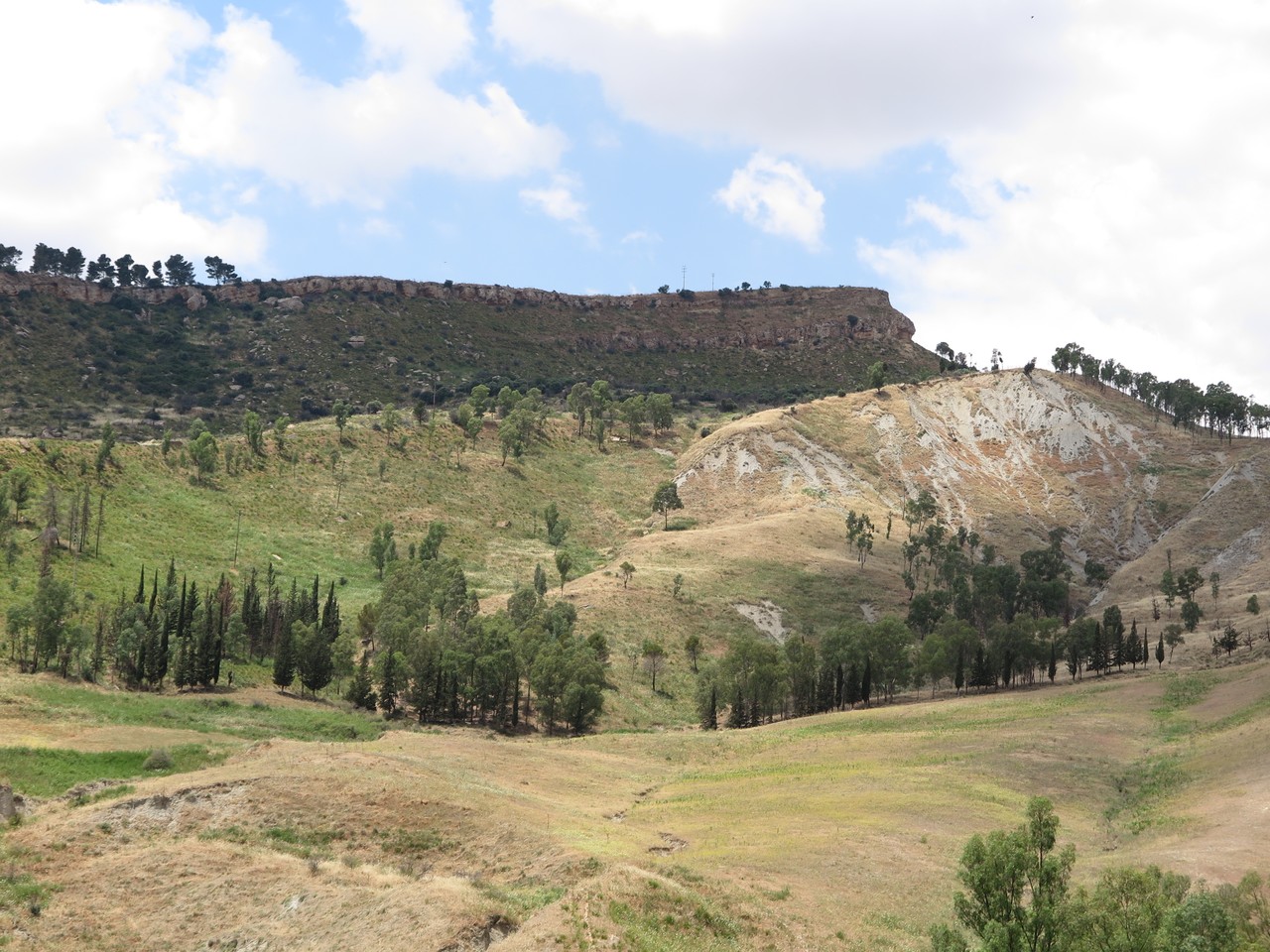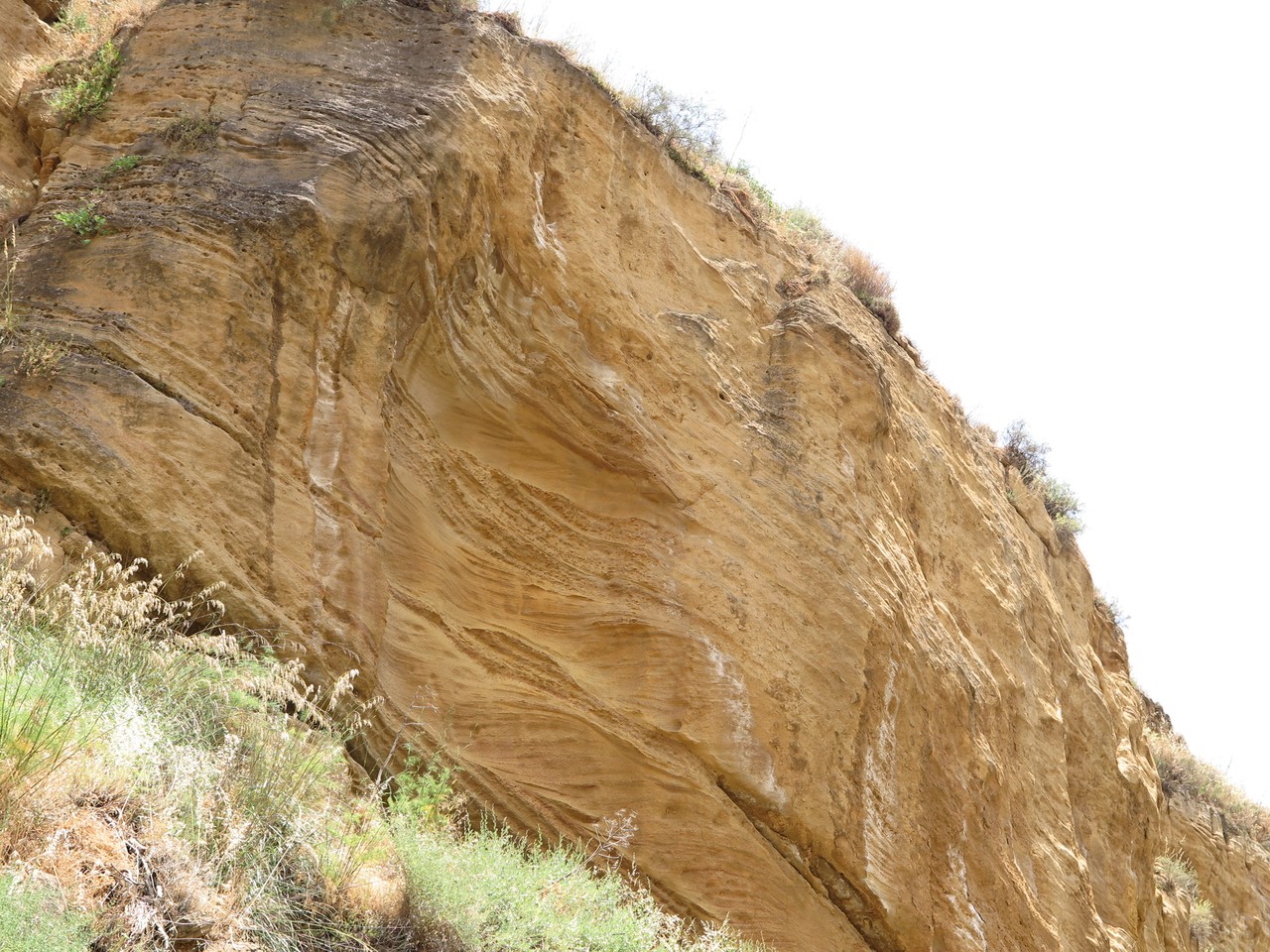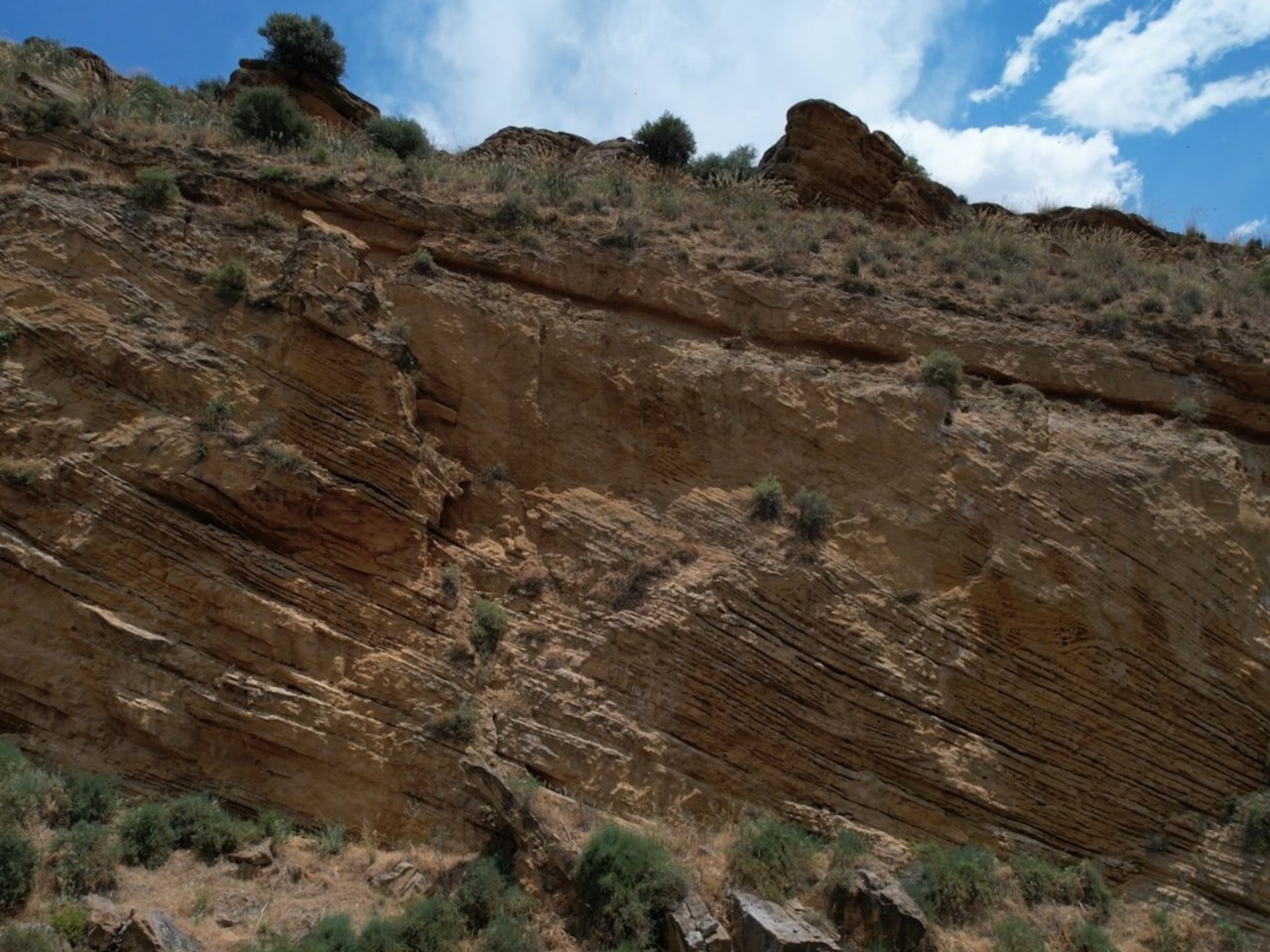
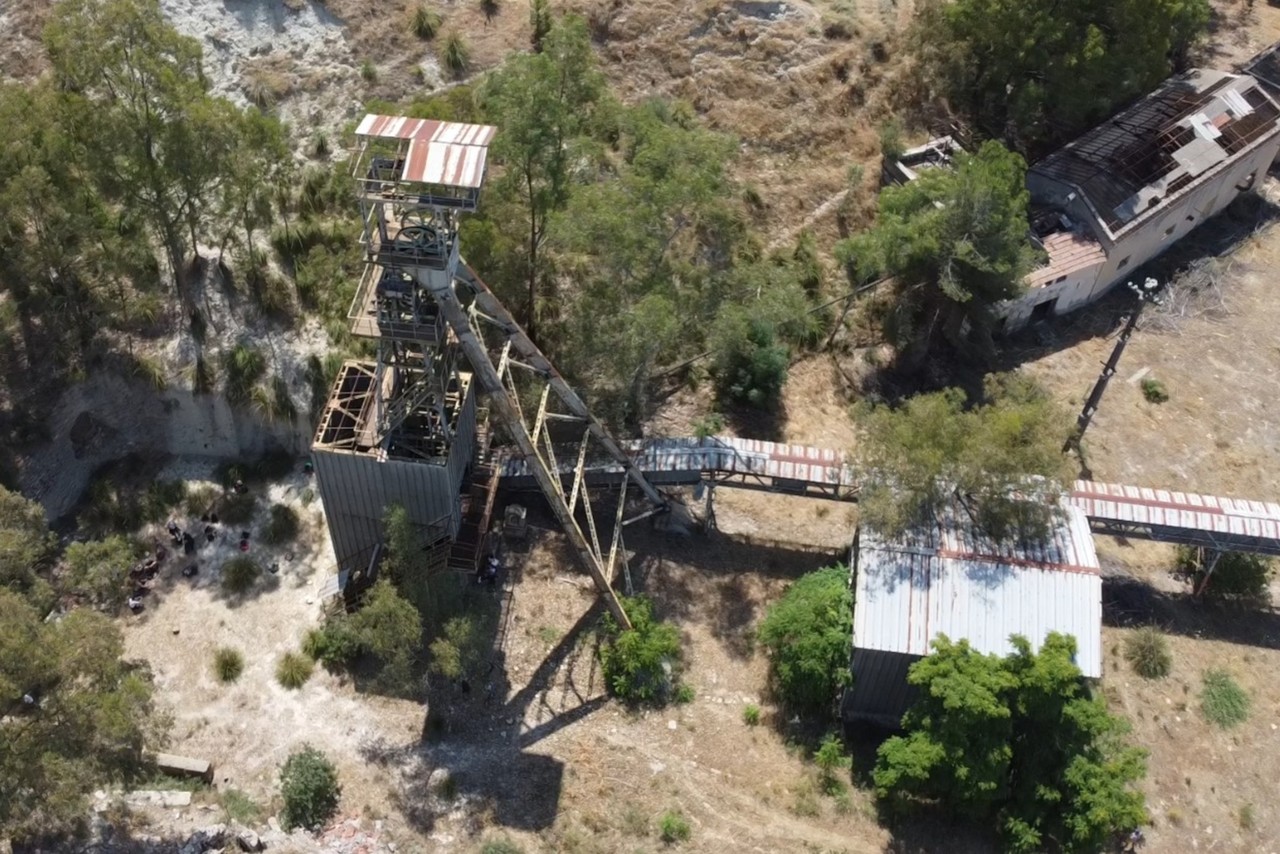
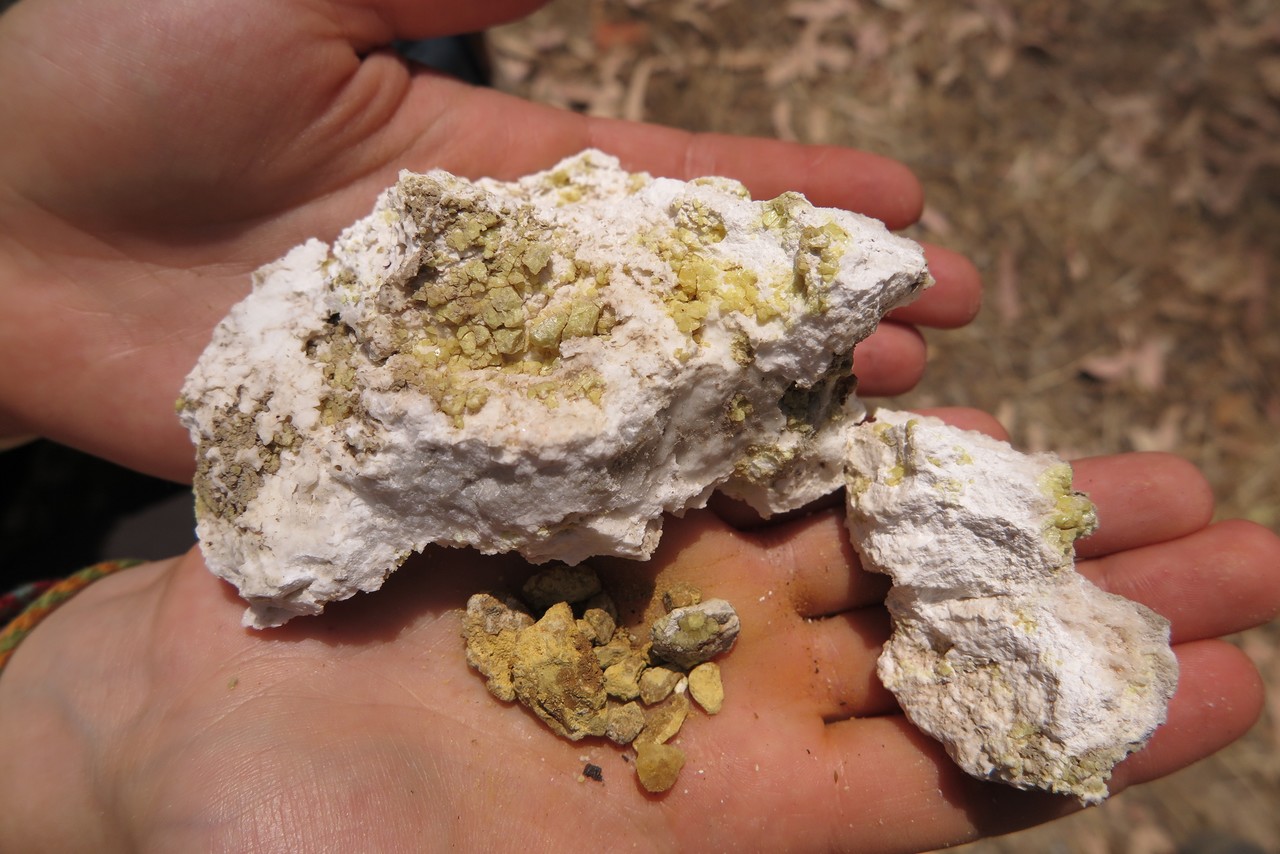
Mount Capodarso is the location with the best stratigraphic record of the late Miocene in Sicily, covering from the Tortonian stage at 11.6 Ma to the Piacenzian stage at 2.65 Ma. In this time frame, we can see all the changes that occurred in the Mediterranean Sea before, during and after the Messinian Salinity Crisis. We start in a marine slope made of fine terrigenous sediments, occasionally cut by sandy turbiditic flows. Then rapid changes caused a collapse of the normal marine conditions. The tectonic movement caused a limited inflow of new water at the Strait of Gibraltar and the basin firstly became anoxic and with greater evaporation, less and less water remained in the Mediterranean Sea. Under these conditions, evaporites were deposited and the microbial life that flourished here started to adapt to the high salinity and lack of oxygen, producing an anomalous sulfur concentration that has been of economic interest in the European mining industry between 1850 and 1983. Shortly after the reopening of the Gibraltar Strait, the reflooding restored the marine conditions to normal. Through subsequent tectonic evolution of the basin, we see a change from deep marine deposits to shallow sandy sediments.
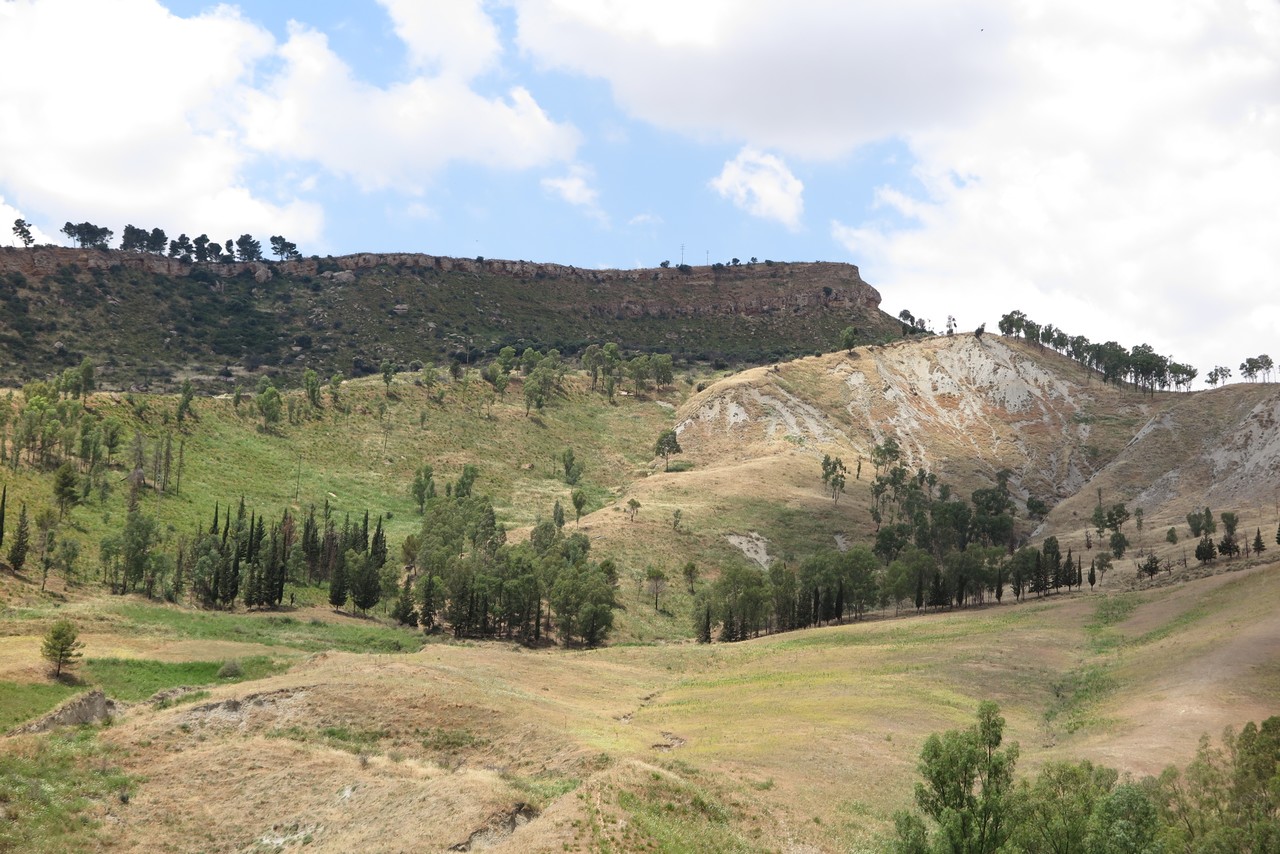
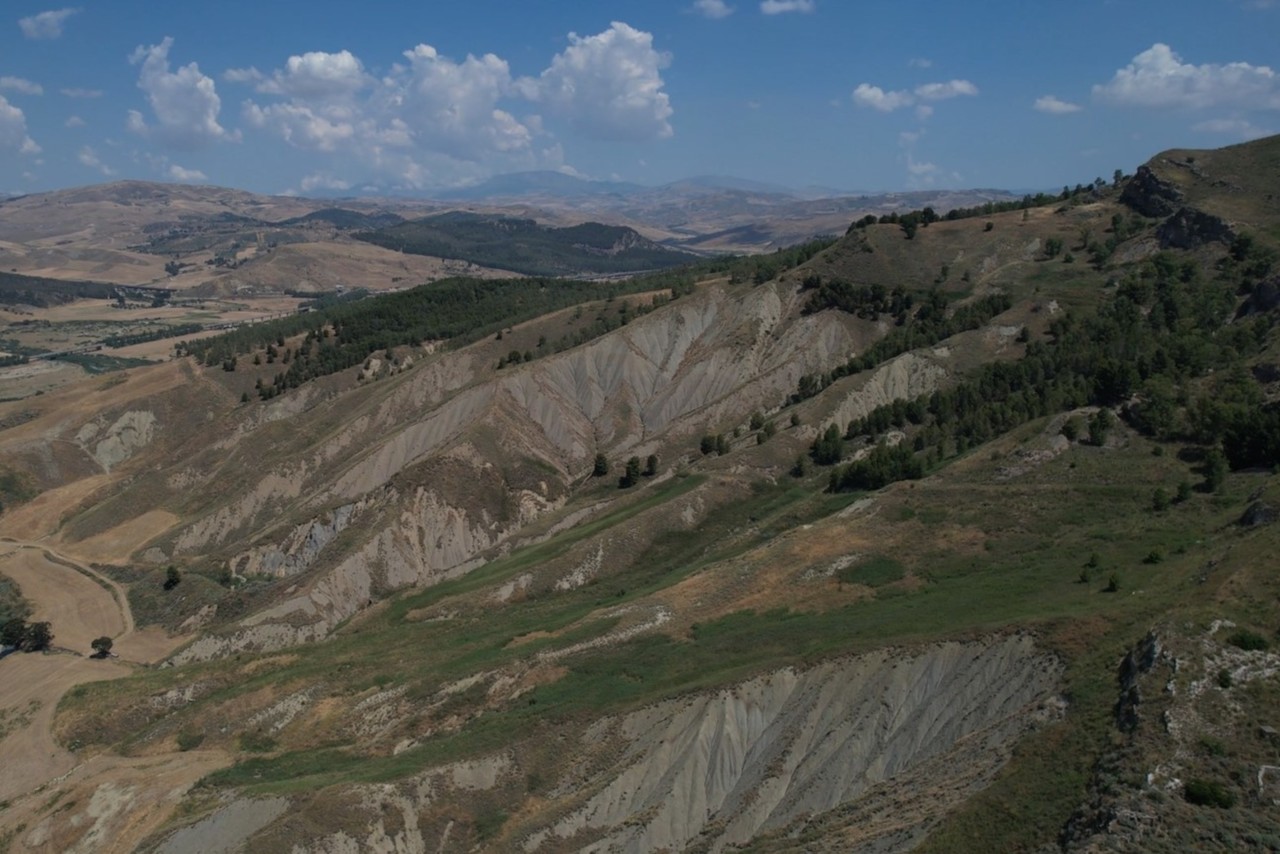
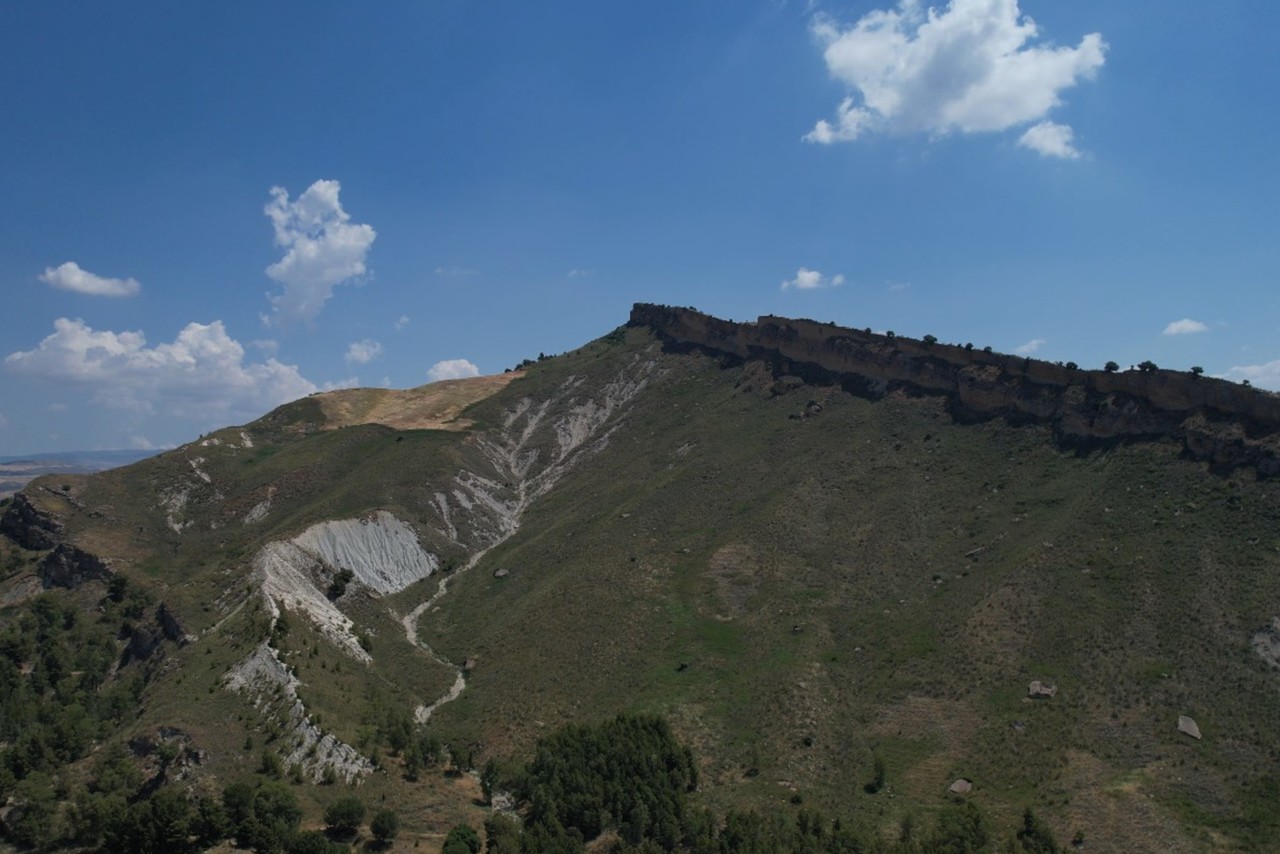

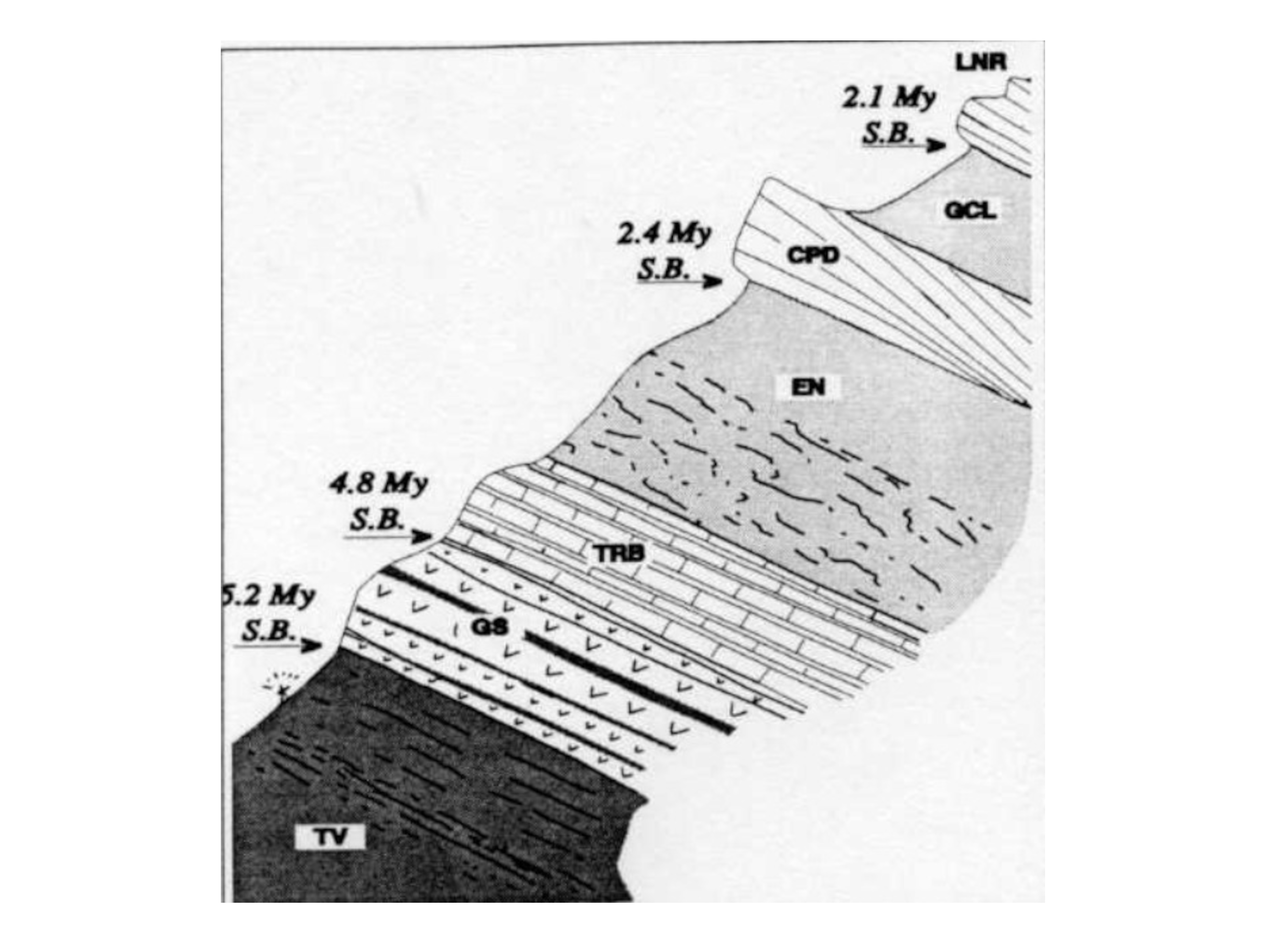
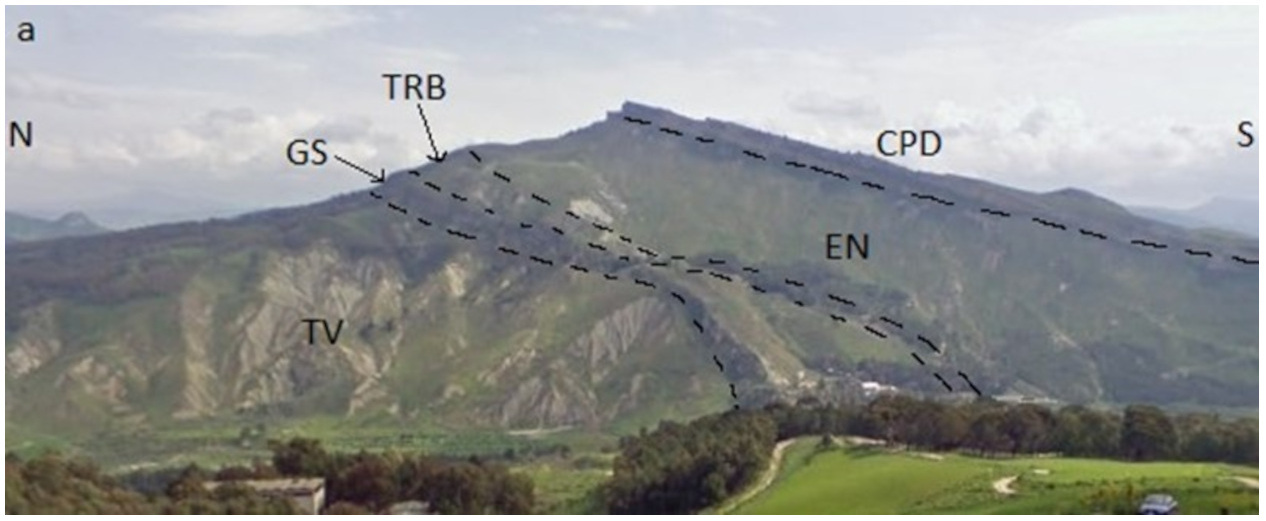
When thinking about the Mediterranean Sea in the Miocene the first thing that comes to mind is the Messinian Salinity Crysis (MSC) and to find the best expressions of this event in Sicily we would need to search in either the central or southern portion of the island. In particular the Caltanissetta basin in central Sicily has arguably the best exposed sedimentary record for the events that occurred in the Miocene, before, during and after the MSC. TV - Sandstones and mudstones, Terravecchia formation, late Tortonian; GS - Evaporites and Marls, Gessoso Solfifera formation, Messinian; TRB - pelagic marly limestones, Trubi fm., early Pliocene; EN - basinal slope claystones and siltstones, Enna fm., middle Pliocene; CPD - silty mudstones, sandstones and beach biocalcarenites, Capodarso fm., middle Pliocene; GCL - sandy and silty mudstones, Geracello fm., middle Pliocene; LNR - calcarenites and siltstones, Lànnari fm., middle-late Pliocene; S.B. - Sequence boundaries physically expressed by abrupt facies changes or erosional truncations due to the downward shift of the costal onlap
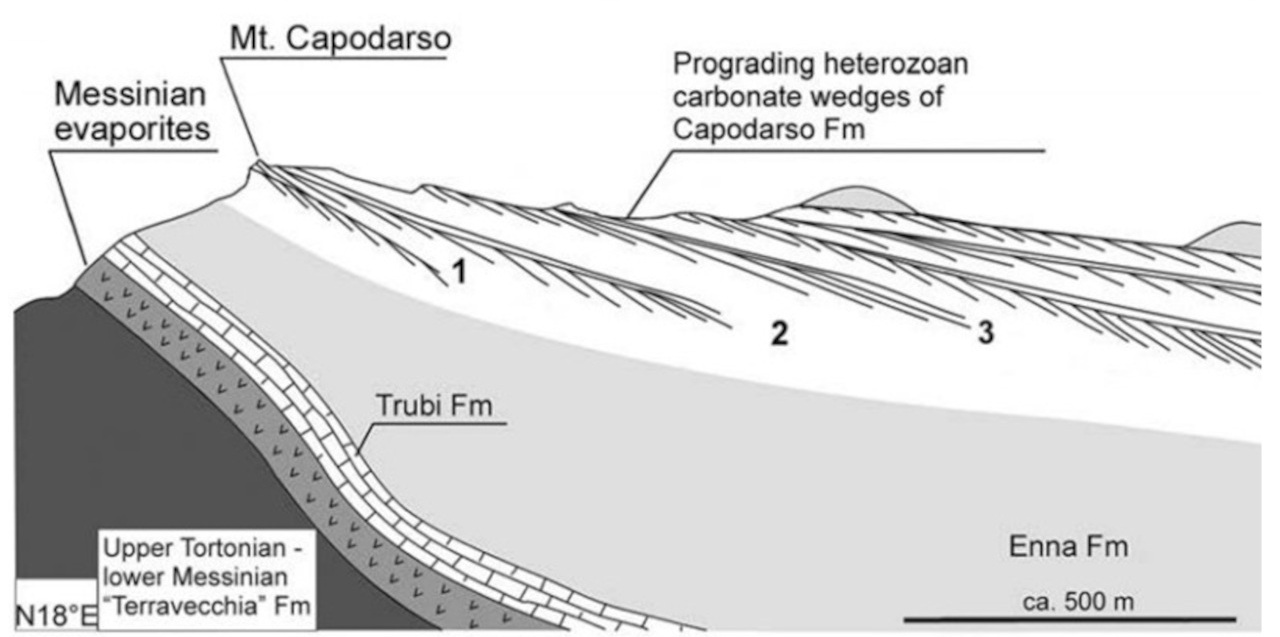
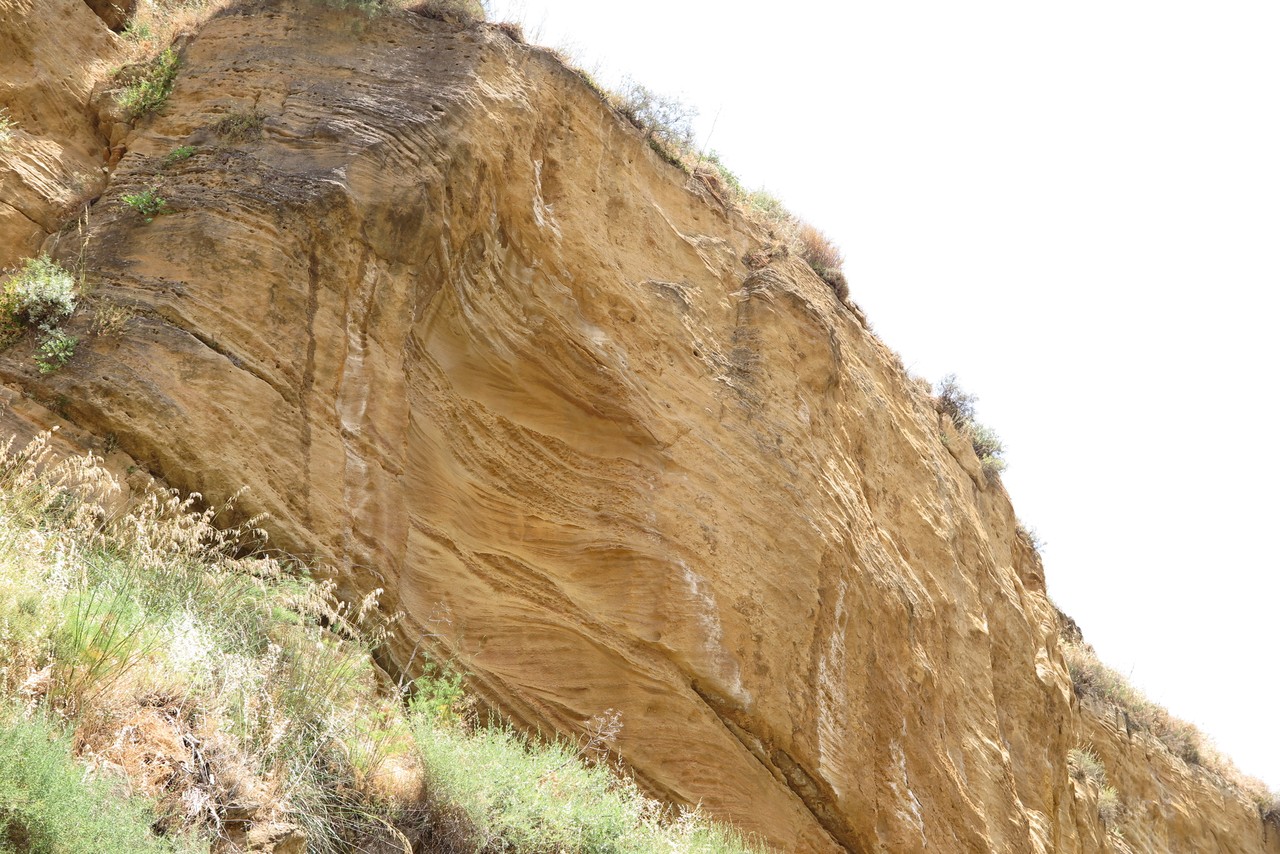
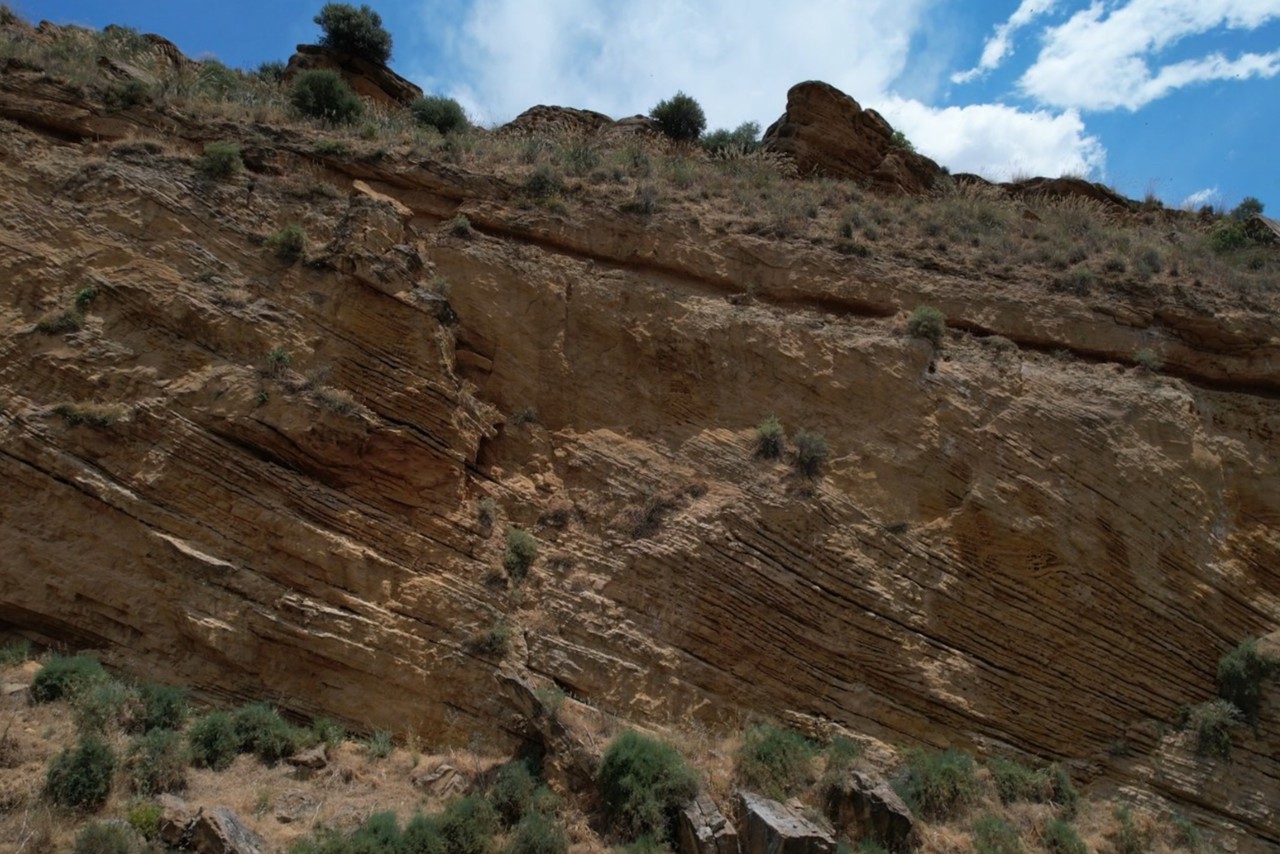
Mount Capodarso is among the best outcrops in the basin for our theme of interest. It’s located between the municipal border of Caltanissetta and Enna and is enlisted in the Rocca di Cerere Geopark. The site displays a continuous stratigraphic section covering from the Tortonian all the way to middle Pleistocene with the following lithostratigraphic sequence (Tortorici, 2014). Terravecchia Formation (Lower Tortonian-Lower Messinian), Marls and silty claystone with interlayered lenses of quartz arenitc or conglomeratic/breccia of Numidian Flysch. Interesting to note the badlands geomorphology. Thickness from 300 to 400m (Schmidt Di Friedberg, 1962) Tripoli (Lower Messinian), diatomite alternated with bituminous marls in which Teleost fish fossils were found like Bregmaceros sp., Myctophum sp., Syngnathus sp. This lithostratigraphic unit is characteristic for the anoxic environment indicative of a switch from normal marine sedimentation to evaporitic conditions. Usual thickness is lower than 30m (Del Frati, 2007) Cattolica Formation (Lower Messinian) belonging to Gessoso Solfifera Group (Roveri & Manzi, 2007). Is divided in four members but only two of this are outcropping in our area of interest, the first being the Calcare di base made up of massive to laminated limestones occasionally containing lenses of Halite pseudomorphs and Gypsum and the second being the Selenitic Member made up of massive to thinly laminated Gypsum. (Del Frati, 2007) Trubi (Zanclean) alternation between calcareous marls and argillaceous marls, depending on the ratio of planktonic foraminifera to clay minerals, with decametric strata and abundant fractures. The analysis of foraminifera and nannofossils allows researcher to estimate the age and the pelagic nature of the depositional environment. (Del Frati, 2007) Enna Formation (Piacenzian) divided in two members, the basal Enna Marls and the apical Capodarso Calcarenite (Roda, 1968). The Enna marls is a 250m thick succession of marlstone and argillaceous marlstones with irregular fractures and weak stratification, rarely interrupted by arenaceous lenses. The arenaceous component gets more abundant upward until it makes up the Capodarso calcarenites. This last member is a 70m thick carbonatic cemented sandstone with clear clinostratification and crossed lamination. There are also fossiliferous levels containing bivalve fragments, rhodolite and echinoderms.